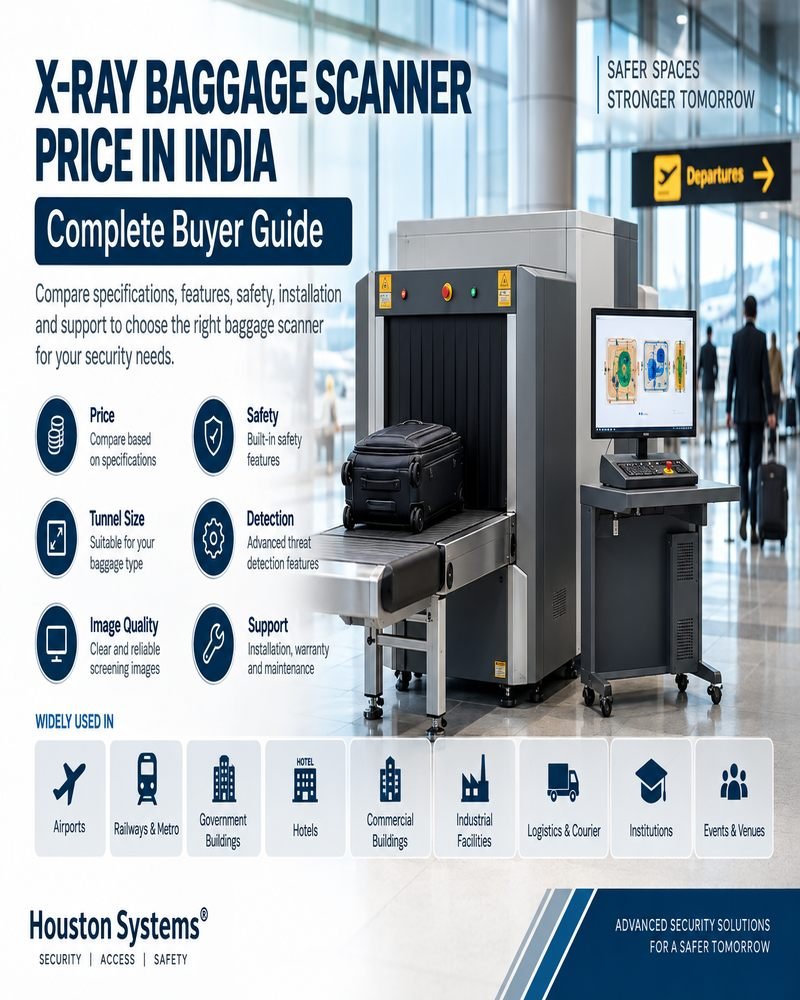
If you are planning to purchase an X-Ray Baggage Scanner in India, price is an important consideration—but it should not be the only factor. The final cost can vary depending on tunnel size, imaging quality, conveyor configuration, detection capabilities, safety features, software, installation requirements, and after-sales support.
This buyer guide explains the key factors to consider when comparing Baggage Scanner Price in India and selecting a suitable security screening system.
How Much Does an X-Ray Baggage Scanner Cost in India?
The price of an X-Ray Baggage Scanner depends on the specifications and configuration required for the installation.
Factors that can influence the overall cost include:
- Tunnel or inspection size
- X-Ray imaging and image quality
- Conveyor configuration
- Detection and image-enhancement features
- Display and operating system
- Safety features
- Installation requirements
- Software and reporting capabilities
- Warranty and technical support
- Spare parts and maintenance requirements
For this reason, buyers should compare the complete system specification and support package, rather than selecting a scanner based only on its initial price.
What Is an X-Ray Baggage Scanner?
An X-Ray Baggage Scanner is a security screening system designed to inspect baggage, parcels, luggage, and other items without manually opening them.
The system uses X-Ray imaging to provide security personnel with an internal view of screened objects. This allows trained operators to identify items that may require further inspection according to the security procedures of the facility.
X-Ray baggage screening systems can be used in environments where controlled inspection and organized security screening are required.
What Factors Affect X-Ray Baggage Scanner Price?
1. Tunnel Size
Tunnel dimensions should match the type and size of baggage being screened.
A facility handling small bags may have different requirements from an airport, logistics centre, industrial facility, or large commercial installation.
Choose a tunnel size according to the actual baggage profile and operating requirements.
2. Image Quality
Image quality is an important consideration when evaluating an X-Ray scanner.
Buyers should assess:
- Image clarity
- Image enhancement options
- Zoom functionality
- Display quality
- Operator interface
- Image-processing capabilities
Clear and practical imaging can help trained security operators perform screening more effectively.
3. Detection Features
Depending on the application, buyers may require specific detection or image-analysis capabilities.
Ask the supplier which features are included as standard and which require additional configuration.
4. Conveyor System
The conveyor should be suitable for the expected baggage flow and operating environment.
Consider:
- Conveyor load capacity
- Belt quality
- Operating speed
- Baggage dimensions
- Expected daily usage
- Maintenance requirements
A suitable conveyor configuration can contribute to smoother screening operations.
5. Safety Features
Safety should be considered alongside system performance.
Ask the supplier about radiation-safety measures, protective design, emergency controls, safety mechanisms, and applicable compliance documentation.
6. Software and User Interface
The software should be practical for the security team operating the system.
Consider:
- Image display
- Image enhancement
- Zoom functionality
- Operator controls
- System monitoring
- Reporting capabilities
- User management
A practical interface can also simplify operator training and daily operation.
What Should You Compare Before Buying?
Before comparing X-Ray Baggage Scanner Price in India, prepare a specification checklist and compare suppliers on the same parameters.
Parameter | What to Check |
|---|---|
Tunnel Size | Suitable for expected baggage |
Image Quality | Clear and usable screening images |
Conveyor | Capacity, speed and durability |
Detection | Required detection capabilities |
Safety | Appropriate safety mechanisms |
Display | Suitable monitor and interface |
Software | Image processing and management features |
Installation | Site and electrical requirements |
Warranty | Coverage and duration |
Support | Service and spare-parts availability |
Comparing these parameters can help buyers understand why quotations may differ between different scanner configurations.
How to Compare X-Ray Baggage Scanner Quotations
When requesting quotations, avoid comparing only the final price.
Ask every supplier to provide details for:
- Exact scanner model and configuration
- Tunnel dimensions
- Conveyor specifications
- Imaging and image-enhancement capabilities
- Detection features
- Safety specifications
- Software and display configuration
- Installation and commissioning
- Warranty terms
- Maintenance and technical support
A standardized quotation comparison makes it easier to identify differences between systems and understand the actual value included in each proposal.
How to Choose the Right X-Ray Baggage Scanner
The right scanner depends on your facility's operational and security requirements rather than simply the lowest quoted price.
Start by identifying:
What Will You Screen?
Determine the typical size, type, and weight of baggage, parcels, or luggage that will pass through the scanner.
How Much Traffic Will You Handle?
Estimate the expected screening volume, operating hours, and peak-period traffic.
Where Will the Scanner Be Installed?
Consider available floor space, electrical requirements, environmental conditions, operator position, and the overall security layout.
What Security Requirements Apply?
Identify the screening and detection capabilities required for your specific application.
What Support Will You Need?
Check installation, commissioning, operator training, maintenance, warranty, spare-parts availability, and technical support.
X-Ray Baggage Scanner Applications
X-Ray baggage scanners can be considered for a variety of controlled-entry and security-screening environments, including:
- Airports
- Railway and metro facilities
- Government buildings
- Hotels
- Commercial buildings
- Industrial facilities
- Logistics and courier facilities
- Educational institutions
- Large events and venues
- High-security premises
The appropriate scanner configuration depends on the facility's screening requirements, baggage profile, and operating conditions.
Manufacturer vs Supplier: What Should Buyers Check?
Whether you purchase directly from a manufacturer or through a supplier, evaluate the complete solution.
Important factors include:
- Product specifications
- Installation capability
- Technical expertise
- Integration support
- Warranty terms
- Service availability
- Spare-parts support
- Response time
- Maintenance options
- Documentation and training
A reliable supplier should understand the application and recommend a configuration based on the facility's actual requirements.
Why Price Should Not Be the Only Consideration
A lower initial Baggage Scanner Price does not necessarily represent a lower overall cost.
Consider the complete ownership cost, including:
- Installation
- Training
- Maintenance
- Spare parts
- Software support
- Service visits
- Downtime
- Future upgrades
Evaluating these factors can help buyers make a more informed purchasing decision.
X-Ray Baggage Scanner Buyer Checklist
Before requesting a quotation, confirm:
☑ Required tunnel size
☑ Expected baggage volume
☑ Image-quality requirements
☑ Required detection capabilities
☑ Conveyor specifications
☑ Safety requirements
☑ Installation conditions
☑ Software requirements
☑ Warranty coverage
☑ Maintenance support
☑ Spare-parts availability
☑ Supplier experience
Frequently Asked Questions
What Is an X-Ray Baggage Scanner?
An X-Ray Baggage Scanner is a security screening system that uses X-Ray imaging to inspect the contents of baggage and other items without opening them.
How Much Does a Baggage Scanner Cost in India?
The cost varies according to specifications such as tunnel size, imaging capabilities, conveyor configuration, detection features, software, installation, and support requirements.
What Affects X-Ray Baggage Scanner Price in India?
Major factors include system configuration, tunnel dimensions, imaging technology, detection features, conveyor specifications, safety features, software, installation, warranty, and after-sales support.
What Should I Check Before Buying a Baggage Scanner?
Check the scanner's specifications, image quality, tunnel size, conveyor capacity, safety features, detection capabilities, installation requirements, warranty, maintenance, and technical support.
Where Are X-Ray Baggage Scanners Used?
They are commonly considered for security screening at airports, railway facilities, government buildings, hotels, commercial facilities, industrial sites, logistics centres, institutions, and other controlled-entry locations.
Final Thoughts
Choosing an X-Ray Baggage Scanner in India should involve more than comparing quotations. Evaluate the scanner according to your baggage type, screening volume, security requirements, installation environment, technical specifications, and long-term support needs.
A clear specification checklist can make it easier to compare different solutions and identify a system that matches your operational requirements.
If you are planning a new security-screening installation, discuss your requirements with a qualified X-Ray Baggage Scanner supplier and request a configuration-based quotation.
About Houston Systems
Houston Systems provides security and access-control solutions for commercial, industrial, institutional, and other controlled-entry environments.
Learn more about X-Ray Baggage Scanner solutions:
https://www.houstonsystems.in/products/baggage-scanners