Wound Suture Techniques: A Complete Guide for Medical Professionals
By triage meditech 21-02-2026 315
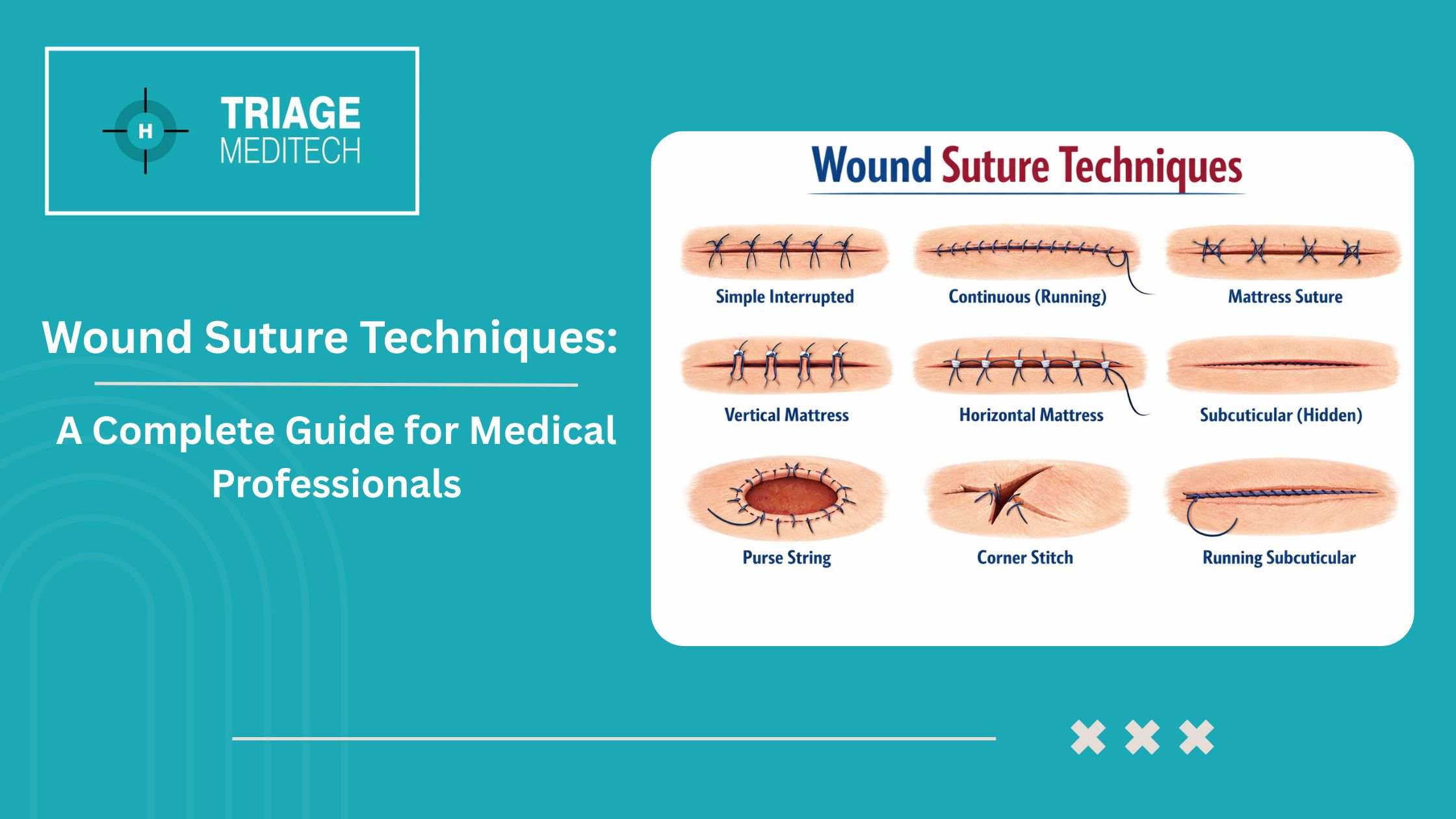
Wound management is a critical aspect of modern healthcare, playing a vital role in preventing infection, minimizing scarring, and promoting optimal healing. Among the various wound closure methods available today, wound suture techniques remain one of the most widely used and reliable approaches in clinical practice. From minor cuts to complex surgical incisions, suturing provides mechanical support to tissues, ensures proper approximation of wound edges, and enhances cosmetic outcomes.
Understanding different wound suture techniques is essential for healthcare professionals, medical students, and anyone involved in clinical wound care. This comprehensive guide explores common suturing methods, materials, indications, advantages, and best practices to support safe and effective wound closure.
What Are Wound Suture Techniques?
Wound suture techniques refer to the methods used to close wounds by stitching tissues together using sterile thread-like materials. These techniques help:
Approximate wound edges
Control bleeding
Reduce infection risk
Promote faster healing
Improve cosmetic results
The choice of technique depends on factors such as wound location, tension, depth, contamination level, and desired cosmetic outcome.
Types of Sutures Used in Wound Closure
1. Absorbable Sutures
Absorbable sutures naturally degrade within the body over time and do not require removal. They are commonly used for internal tissues and deep wound layers.
Examples of applications:
Muscle and fascia repair
Subcutaneous tissue closure
Pediatric wounds
Benefits:
No removal required
Reduced follow-up visits
Useful for internal structures
2. Non-Absorbable Sutures
Non-absorbable sutures remain in place until removed and are often used for skin closure or tissues requiring long-term support.
Common uses:
Skin wounds
Tendon repair
Cardiovascular procedures
Benefits:
Strong tensile strength
Precise wound edge approximation
Reliable long-term support
Common Wound Suture Techniques
1. Simple Interrupted Sutures
The simple interrupted technique is the most frequently used method in wound closure. Each stitch is placed and tied individually.
Advantages:
Excellent wound edge control
Easy removal of individual stitches
Reduced risk of total wound dehiscence
Indications:
Irregular wounds
Contaminated wounds
General skin closure
2. Continuous (Running) Sutures
In this technique, a single strand runs along the wound length without tying off after each stitch.
Advantages:
Faster application
Even tension distribution
Good cosmetic results
Limitations:
Entire suture may fail if broken
Less flexibility in tension adjustment
3. Vertical Mattress Sutures
Vertical mattress sutures provide deep and superficial tissue approximation, making them ideal for wounds under tension.
Benefits:
Improved eversion of wound edges
Strong tension relief
Reduced risk of wound inversion
Common uses:
High-tension areas
Thick skin regions
Surgical incisions
4. Horizontal Mattress Sutures
This technique distributes tension across the wound and is useful for fragile skin.
Advantages:
Tension distribution
Enhanced wound stability
Helpful in delicate tissue
Consideration:
Prolonged placement may affect skin circulation, so monitoring is important.
5. Subcuticular Sutures
Subcuticular suturing is placed beneath the skin surface, providing an aesthetically pleasing closure without visible stitches.
Benefits:
Minimal scarring
No visible suture marks
Ideal cosmetic outcomes
Applications:
Cosmetic surgery
Clean surgical incisions
Facial wounds
Factors Influencing Technique Selection
Choosing the appropriate wound suture technique requires clinical judgment and consideration of multiple factors:
Wound Characteristics
Length and depth
Tissue loss
Contamination level
Anatomical location
Patient Factors
Age
Healing capacity
Medical conditions
Skin integrity
Desired Outcome
Cosmetic appearance
Speed of closure
Tension management
Infection prevention
Best Practices for Effective Suturing
1. Proper Wound Preparation
Thorough irrigation
Removal of debris
Adequate hemostasis
Sterile technique maintenance
2. Correct Needle Handling
Use needle holders rather than fingers
Insert needle at 90-degree angle
Maintain equal bite depth on both sides
3. Optimal Tension Control
Avoid overly tight sutures
Prevent tissue strangulation
Ensure proper edge approximation
4. Appropriate Suture Spacing
Maintain uniform spacing
Balance strength and cosmetic outcome
Adapt spacing to wound characteristics
Potential Complications of Suturing
While suturing is highly effective, complications may occur if techniques are improperly applied:
Infection
Wound dehiscence
Tissue ischemia
Excessive scarring
Suture marks
Adhering to proper technique and postoperative care significantly reduces these risks.
Post-Suturing Care and Follow-Up
Successful wound healing extends beyond closure. Proper aftercare includes:
Keeping wound clean and dry
Monitoring for signs of infection
Timely suture removal
Patient education on wound care
Follow-up assessment
Removal timing varies depending on anatomical location and healing rate, typically ranging from 5 to 14 days.
Future Trends in Wound Closure
Advancements in wound management continue to evolve alongside traditional suturing techniques. Innovations include:
Antimicrobial sutures
Barbed sutures eliminating knots
Tissue adhesives
Absorbable skin closure devices
Smart wound monitoring technologies
These developments aim to improve healing efficiency, reduce complications, and enhance patient comfort.
Conclusion
Wound suture techniques remain a cornerstone of clinical wound management, offering reliable and versatile solutions for tissue closure across diverse medical settings. From simple interrupted sutures to advanced subcuticular methods, each technique serves a specific purpose based on wound characteristics and clinical goals. Mastery of these techniques, combined with proper wound preparation and aftercare, ensures optimal healing outcomes and patient satisfaction.
As medical technology advances, suturing practices continue to evolve, integrating innovative materials and methods while preserving the fundamental principles of wound closure. Whether used in emergency care, surgery, or outpatient settings, understanding wound suture techniques empowers healthcare providers to deliver safe, effective, and high-quality patient care.