Why You Need an Inches to Pixels Converter for Web and Graphic Design
By robinson brown 13-02-2026 103
In modern web and graphic design, accuracy is everything. Designers work in a digital environment, but many projects begin with physical measurements such as inches. Whether you are preparing artwork for print, designing a website layout, or creating graphics for multiple screen sizes, understanding how physical dimensions translate into digital units is essential. This is exactly why an inches to pixels converter has become an important tool for designers, developers, and content creators.
An inches to pixels converter helps bridge the gap between real-world measurements and digital displays, allowing professionals to produce consistent, high-quality results across devices and platforms.
Understanding the Relationship Between Inches and Pixels
Before diving into why this tool is necessary, it is important to understand what inches and pixels actually represent. An inch is a physical unit of measurement, while a pixel is a digital unit used to display content on screens. The conversion between the two depends on screen resolution, usually measured in dots per inch (DPI) or pixels per inch (PPI).
Because different screens and output formats use different resolutions, the same physical size in inches can result in different pixel values. This is why simply guessing or using fixed numbers often leads to design inconsistencies. A reliable inches to pixels converter automatically handles these calculations and provides accurate results based on the selected resolution.
Why Designers Frequently Need Inches to Pixels Conversion
Many design projects involve both digital and physical outputs. For example, a graphic designer might create a poster that will be printed but also displayed online. A web designer may receive layout instructions in inches from a client who is familiar with print measurements.
In these situations, converting inches to px correctly becomes crucial. Without proper conversion, images may appear stretched, blurry, or incorrectly scaled. An inches to pixels converter allows designers to quickly determine the exact pixel dimensions needed for any given physical size.
This saves time and prevents costly revisions, especially when working with tight deadlines.
Supporting Accurate Web Design Layouts
Web design is built entirely around pixels. Layouts, margins, images, and fonts are defined using pixel-based measurements or responsive units that still depend on pixel calculations behind the scenes.
When designers receive design briefs that include physical measurements, they must translate those values into pixels to ensure visual consistency. Using an inches to pixels converter ensures that the original proportions are preserved.
For example, a banner specified as 4 inches wide in a design mockup must be accurately converted into pixels for proper implementation on a website. Performing manual calculations can easily lead to errors, especially when multiple resolutions are involved. A reliable converter simplifies this process and produces precise results in seconds.
Improving Print and Digital Consistency
One of the biggest challenges for designers is maintaining consistency between printed materials and digital assets. Colors, dimensions, and proportions must match across formats to preserve brand identity.
This is where converting inches to pixels becomes especially valuable. By using an inches to pixels converter, designers can create artwork that maintains the same physical size and appearance whether it is printed on paper or displayed on a screen.
For example, business cards, brochures, and posters often begin as designs created in digital software. Accurately converting physical dimensions into pixel values ensures that the final output meets professional printing standards while still being suitable for digital previews.
Saving Time and Reducing Design Errors
Manual conversion between inches and pixels requires knowing the correct DPI and performing calculations every time. This process is slow and increases the risk of mistakes, particularly when working on multiple projects simultaneously.
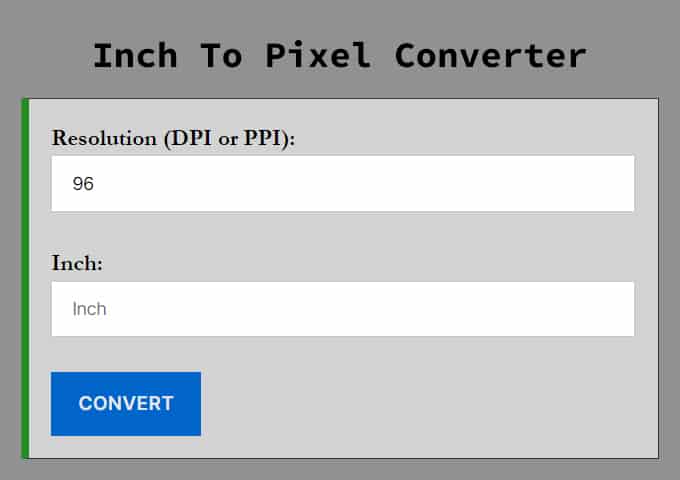
An inches to pixels converter eliminates this repetitive work. Designers simply enter the desired inch value and resolution, and the tool instantly provides the correct pixel measurement. This efficiency allows designers to focus more on creativity and problem-solving rather than technical calculations.
In professional environments, even small dimension errors can cause misaligned layouts or improperly sized graphics. Using a dedicated conversion tool significantly reduces these risks.
Supporting Different Screen Resolutions and Devices
Modern users view content on a wide range of devices, including smartphones, tablets, laptops, and large desktop monitors. Each device uses a different screen resolution and pixel density.
Because of this, converting inches to px without considering resolution can lead to inconsistent results. A design that looks perfect on one screen may appear too small or too large on another.
An advanced inches to pixels converter allows designers to specify DPI or PPI values, helping them understand how a design will appear across different devices. This insight is especially valuable for responsive web design and cross-platform applications.
Enhancing Graphic Design Workflow
Graphic designers often move between design software, web platforms, and print production tools. Each environment may use different measurement systems. Having quick access to an inches to pixels converter improves workflow and ensures smoother collaboration between designers, developers, and printers.
For example, when exporting artwork for a website, designers must ensure that the pixel dimensions match the intended physical size. When preparing assets for print, the same design may need to be adjusted using accurate conversions.
By converting inches to pixels consistently, teams can avoid misunderstandings and ensure that all stakeholders are working with the same specifications.
Helping Beginners and Non-Technical Users
Not everyone working in design has a technical background. Many small business owners, content creators, and marketing professionals handle basic design tasks without formal training.
For these users, understanding how inches relate to pixels can be confusing. An easy-to-use inches to pixels converter simplifies the process and removes the need to learn complex formulas. This accessibility makes professional-quality design more achievable for non-experts.
By entering a few values and selecting the appropriate resolution, users can confidently convert inches to pixels without worrying about calculation errors.
Essential for Branding and Marketing Materials
Branding relies heavily on consistent sizing across all visual assets. Logos, promotional banners, social media graphics, and printed materials must follow precise guidelines.
Using an inches to pixels converter ensures that brand elements are reproduced correctly in both digital and physical formats. Marketing teams can easily convert brand specifications from inches to px when creating online advertisements or website visuals.
This consistency helps maintain a professional appearance and strengthens brand recognition across platforms.
The Growing Importance of Accurate Conversions in Design
As digital platforms continue to expand, the demand for high-quality visuals and precise layouts is increasing. Designers are expected to deliver assets that look perfect on any device and in any format.
This makes reliable conversion tools more important than ever. Converting inches to pixels accurately allows designers to maintain creative intent while meeting technical requirements. Whether designing websites, mobile interfaces, social media graphics, or printed materials, having access to an inches to pixels converter is no longer optional—it is essential.
Conclusion
An inches to pixels converter plays a vital role in modern web and graphic design by connecting physical measurements with digital dimensions. It allows designers to convert inches to px accurately, maintain consistent layouts, and support multiple devices and resolutions.
By simplifying the conversion process, reducing errors, and improving workflow efficiency, an inches to pixels converter helps designers deliver professional and visually consistent results. In a design world where precision directly affects user experience and brand credibility, the ability to convert inches to pixels correctly has become a fundamental skill and an indispensable tool.
Tags : .....