Key Takeaways
- Visiting Delhi and Agra in the rainy season offers cooler weather for sightseeing.
- The Taj Mahal looks especially beautiful with cloudy skies and fresh surroundings.
- Gardens and parks become greener and more enjoyable after rainfall.
- Smaller crowds create a quieter and more relaxed travel experience.
- Hotels often offer better prices during the monsoon season.
- Local food feels even more enjoyable in cool weather.
- Rain creates excellent conditions for unique travel photography.
- Most major tourist attractions remain open during normal weather.
- Flexible planning helps you enjoy the trip despite occasional showers.
Have you ever wondered why some experienced travelers prefer Delhi Darshan and Agra during the rainy season instead of the busy winter months? Most people think monsoon is not the right time to travel, but that idea is slowly changing.
Light showers, fresh air, fewer crowds, and greener surroundings give these famous cities a completely different feel.
The rainy season in North India usually arrives between July and September. During this time, occasional rain cools down the temperature after the hot summer.
You may not get sunshine all day, but you often enjoy pleasant weather between showers. That gives travelers a comfortable chance to explore historical places, gardens, markets, and cultural attractions.
The thing is, every season offers a different travel experience. Monsoon adds fresh colors, peaceful surroundings, and unique views that many visitors never expect.
Why Visiting Delhi and Agra in the Rainy Season Can Improve Your Travel Experience?
Your travel experience depends on more than famous landmarks. The weather, crowd levels, hotel prices, and overall comfort all play a big role. Choosing the right season can completely change how much you enjoy your journey.
If you want peaceful sightseeing, beautiful photographs, and a more relaxed trip, the rainy season may surprise you. You can spend less time waiting in long queues and more time enjoying each destination at your own pace.
Many travelers also find that cooler weather after rainfall makes walking around historical sites much easier than during the intense summer heat.
Top Reasons Why Travelers Love Visiting Delhi and Agra in the Rainy Season
Cooler Weather Makes Sightseeing More Comfortable
One of the biggest reasons people enjoy visiting these in the rainy season is the cooler weather. Summer temperatures can become very high, especially during May and June. Monsoon showers bring welcome relief.
You can spend more time exploring outdoor attractions like India Gate, Humayun's Tomb, Qutub Minar, and the Taj Mahal without feeling exhausted. A light umbrella or rain jacket is usually enough for short showers.
The Taj Mahal Looks Even More Beautiful
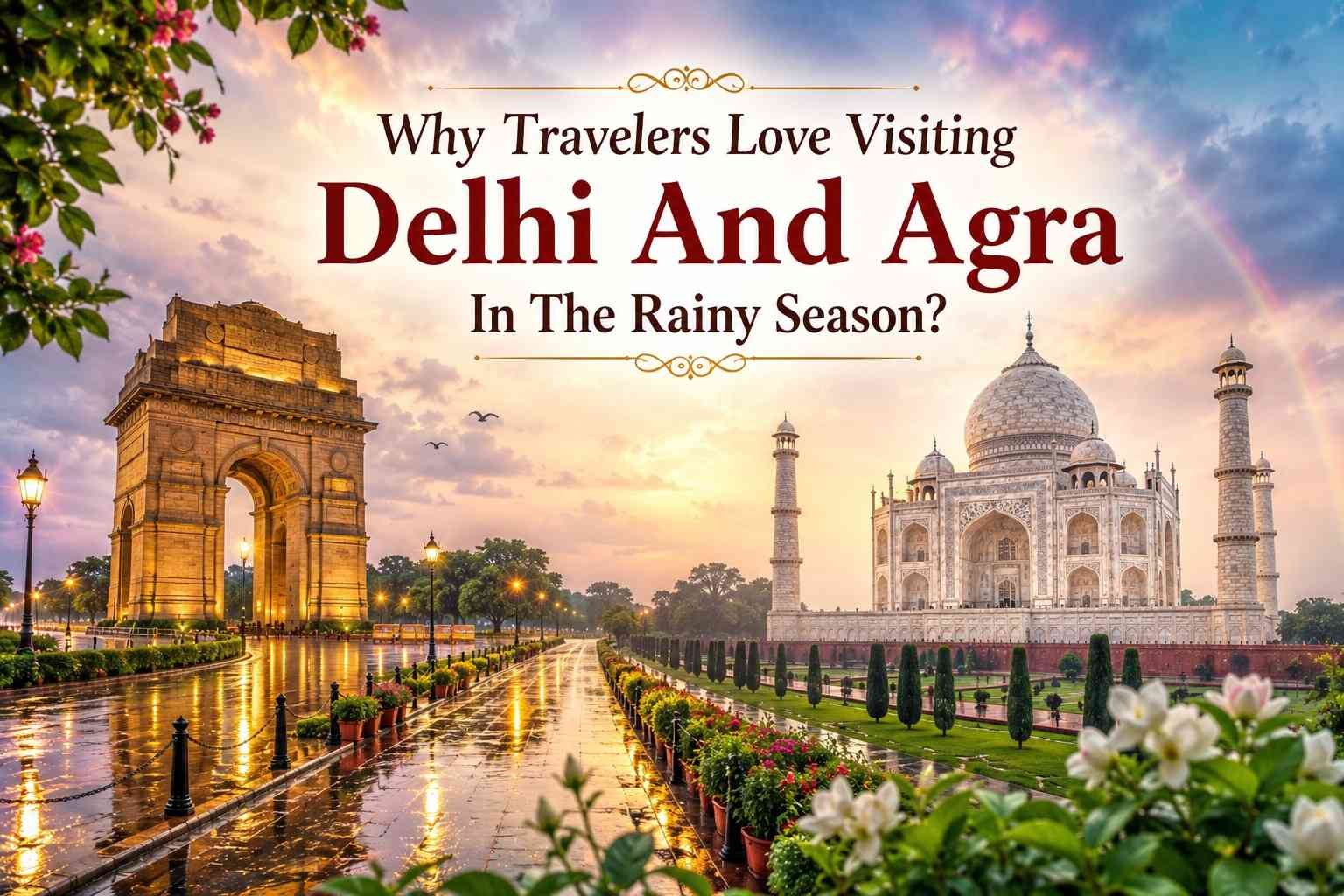
Many photographers believe the Taj Mahal looks magical during the rainy season. Clouds create a dramatic background that makes the white marble shine even more.
After rainfall, the surroundings appear cleaner and fresher. The gardens become greener, and reflections on wet pathways often create beautiful photo opportunities. If you're lucky, you may even see the monument under soft morning clouds instead of harsh sunlight.
Green Parks and Gardens Come Alive
Rain transforms many public gardens across Delhi and Agra. Places like Lodhi Garden, Mughal Garden areas, and Mehtab Bagh become full of fresh greenery.
The cooler air encourages visitors to spend more time outdoors. Families, couples, and photographers often enjoy these peaceful spaces after the rain stops. The natural beauty adds something special to every visit.
Smaller Crowds Mean Better Experiences
Peak tourist season usually arrives during winter. During monsoon, many popular attractions receive fewer visitors.
This gives you more space to walk around, take photographs, and appreciate the architecture without constant crowds. You also spend less time waiting for tickets or entering major monuments.
Better Hotel Deals and Travel Savings
Many hotels offer attractive prices during the rainy season because visitor numbers are lower than during peak months.
This allows travelers to enjoy better rooms or longer stays within the same budget. You may also find discounts on travel packages and local tours. Saving money gives you more freedom to enjoy local food, shopping, or extra sightseeing.
Local Food Feels More Enjoyable
Rainy weather often makes local food even more enjoyable. Delhi's famous street snacks, hot chai, stuffed parathas, and fresh sweets become even more tempting after a cool shower.
Agra also offers delicious local dishes and its famous petha. Of course, choose clean and trusted food outlets for the best experience. Good food often becomes one of the most memorable parts of any trip.
Photography Gets a Fresh New Look
Every traveler wants memorable photos. Monsoon gives you natural lighting that photographers often appreciate.
Cloudy skies reduce harsh sunlight and strong shadows. Wet roads, fresh leaves, and dramatic clouds create interesting backgrounds. Even familiar monuments can look completely different during this season.
Cultural Attractions Stay Open Throughout the Season
Some travelers worry that rain will stop them from enjoying the trip. In reality, most major attractions remain open during normal visiting hours unless weather conditions become unusually severe.
Museums, historical monuments, art galleries, and indoor attractions give you plenty of options if rain becomes heavier. You can easily adjust your schedule and continue exploring.
The Journey Feels More Relaxed
Travel is not only about ticking famous places off your list. It's also about enjoying the atmosphere around you.
During the rainy season, many travelers notice that Delhi and Agra feel calmer. Roads often become quieter outside busy hours, gardens look fresher, and the cooler air creates a more pleasant mood for walking and exploring.
It's always smart to check the daily weather forecast before heading out. Planning your day around expected showers helps you enjoy more and worry less.
Monsoon Shows a Different Side of Delhi and Agra
Every destination changes with the seasons. Monsoon allows you to experience Delhi and Agra from a fresh perspective that many tourists never see.
Historical buildings appear cleaner after rainfall. Trees look greener. Local markets become lively once the rain stops. Even simple moments like sipping tea while watching light rain can become lasting memories.
This different atmosphere gives repeat visitors a new reason to return and first-time travelers a unique experience that feels less crowded and more personal.
Final Words
Visiting Delhi and Delhi to Agra One Day Tour by Bus in the rainy season offers much more than cooler temperatures. Fresh greenery, beautiful monuments, peaceful sightseeing, and better travel value all come together to create a rewarding experience. The weather may include occasional showers, but those short breaks often improve the beauty of these historic cities.
If you prepare well with comfortable clothing, waterproof footwear, and a flexible schedule, monsoon travel can become one of your favorite ways to explore North India. Instead of avoiding the rainy season, consider seeing how it transforms some of India's most famous
FAQS
Is the rainy season a good time to visit Delhi and Agra?
Yes. Many travelers enjoy visiting Delhi and Agra during the rainy season because the weather becomes cooler than summer, gardens turn green, and tourist attractions are less crowded. Short rain showers usually leave enough time for sightseeing.
Which months are considered the rainy season in Delhi and Agra?
The rainy season generally lasts from July to September. You can expect occasional rainfall, cloudy skies, and lower temperatures compared to the hot summer months.
Does the Taj Mahal look better during the rainy season?
Many visitors believe the Taj Mahal looks more beautiful during monsoon. The white marble contrasts with dark clouds, the gardens become greener, and the fresh atmosphere creates excellent photography opportunities.
Can I visit major tourist attractions during the rainy season?
Yes. Most popular attractions, including the Taj Mahal, Red Fort, Qutub Minar, Humayun's Tomb, and India Gate, remain open during normal weather conditions. It's a good idea to check the weather forecast before you plan your day.
Are hotels cheaper in Delhi and Agra during the monsoon?
Many hotels offer lower room rates during the rainy season because it is not the peak tourist period. This gives travelers a chance to enjoy better accommodation at more affordable prices.
What should I pack for a Delhi and Agra trip during the rainy season?
Carry a lightweight umbrella, a raincoat, waterproof footwear, quick drying clothes, a small towel, and waterproof covers for your phone and other electronics. Comfortable walking shoes are also a good choice.
Is it safe to travel to Delhi and Agra during the rainy season?
Yes, it is generally safe to travel during the rainy season. Stay updated on local weather reports, avoid waterlogged areas after heavy rain, and plan your sightseeing around the forecast for a smoother experience.
What are the benefits of visiting Delhi and Agra in the rainy season?
Travelers enjoy cooler weather, fewer crowds, greener parks and gardens, beautiful views of historical monuments, better hotel deals, and a more relaxed sightseeing experience.
Can I enjoy local food during the rainy season?
Yes. Delhi and Agra offer a wide variety of local food throughout the year. Choose clean and popular restaurants or food stalls to enjoy local dishes safely during the monsoon.
How many days are enough to explore Delhi and Agra?
A trip of 3 to 5 days is ideal for most travelers. You can spend 2 to 3 days exploring Delhi and 1 to 2 days visiting Agra, including the Taj Mahal, Agra Fort, and other nearby attractions.