Why Traditional Bag Checks Fail in High-Security Environments
By sunilkumar housysgroup 01-05-2026 442
At a crowded security checkpoint, hundreds of bags move through every hour. Under pressure to keep lines moving, even trained personnel can overlook subtle warning signs—not due to negligence, but because manual inspection has inherent limitations.
In high-security environments where risks are constantly evolving, relying solely on traditional bag checks is no longer sufficient. As threat concealment techniques become more sophisticated, the gap between what humans can detect and what needs to be detected continues to widen.
The Inherent Limitations of Manual Inspection
Manual bag checks involve opening luggage and visually inspecting contents. While this approach may work in low-risk settings, it struggles in high-volume, high-risk environments.
1. Limited Internal Visibility
Inspectors can only see what is immediately accessible. Items hidden beneath layers, inside electronics, or within concealed compartments often remain undetected.
2. Pattern Recognition Limitations
Modern threats are rarely obvious. Identifying suspicious packing patterns—such as irregular density distribution or disguised components—requires more than visual inspection.
3. Inconsistent Detection Standards
Different personnel bring different levels of experience and attention, leading to variation in screening quality across shifts and locations.
Time Pressure Compromises Accuracy
In real-world scenarios, security teams must balance speed and vigilance.
- High-traffic checkpoints may process hundreds of bags per hour
- Long queues increase pressure to move faster
- Faster checks often mean less thorough inspection
In such environments, even a small compromise in attention can result in missed threats.
Evolving Threat Concealment Techniques
Threats today are designed to blend in, not stand out.
- Weapons can be disassembled and distributed across items
- Hazardous materials may be disguised as harmless objects
- Contraband is often hidden within layered or modified luggage
These techniques are specifically intended to bypass manual inspection, which lacks the ability to analyze material composition or internal structure.
Human Fatigue and Cognitive Load
Security personnel often work long, repetitive shifts under constant pressure.
Over time, this leads to:
- Reduced concentration
- Slower decision-making
- Increased likelihood of oversight
Even highly trained staff are affected by fatigue, making consistent detection difficult to maintain across extended operations.
Lack of Standardized Detection Capability
Manual inspection does not provide measurable or consistent detection parameters.
There is no built-in way to:
- Distinguish organic vs inorganic materials
- Analyze object density
- Identify concealed structures within bags
This absence of standardization makes manual checks unreliable in critical security environments.
Scalability Challenges in High-Volume Settings
As footfall increases, the effectiveness of manual screening decreases.
- More people → more bags
- More bags → longer queues
- Longer queues → rushed inspections
This creates a cycle where security quality declines as volume rises, exactly when higher vigilance is required.
Transition to Technology-Driven Screening
To address these limitations, high-security environments are increasingly adopting technology-driven screening systems that enhance both accuracy and efficiency.
Unlike manual checks, these systems provide:
- Internal visibility of bag contents
- Consistent detection standards
- Faster processing without compromising accuracy
- Reduced dependence on human judgment alone
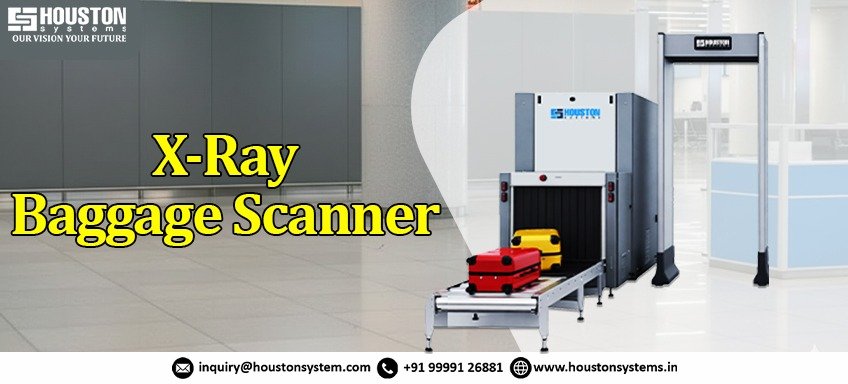
To overcome the limitations of manual inspection at scale, many facilities now rely on x-ray baggage scanner systems that enable deeper analysis, faster throughput, and more reliable threat detection in high-risk environments.
Real-World Impact
In locations such as:
- Airports
- Metro stations
- Government facilities
- Commercial complexes
The shift from manual inspection to automated screening has led to:
- Improved detection accuracy
- Reduced wait times
- Lower operational strain on staff
This transition reflects a broader move toward smarter, more resilient security infrastructure.
Final Thoughts
Traditional bag checks were designed for a different era—one with lower volumes and less sophisticated threats. In today’s high-security environments, they struggle to meet the demands of speed, consistency, and precision.
As risks evolve and expectations rise, relying solely on manual inspection creates vulnerabilities that cannot be ignored. Integrating advanced screening technologies is no longer just an upgrade—it’s a necessary step toward ensuring effective and scalable security.