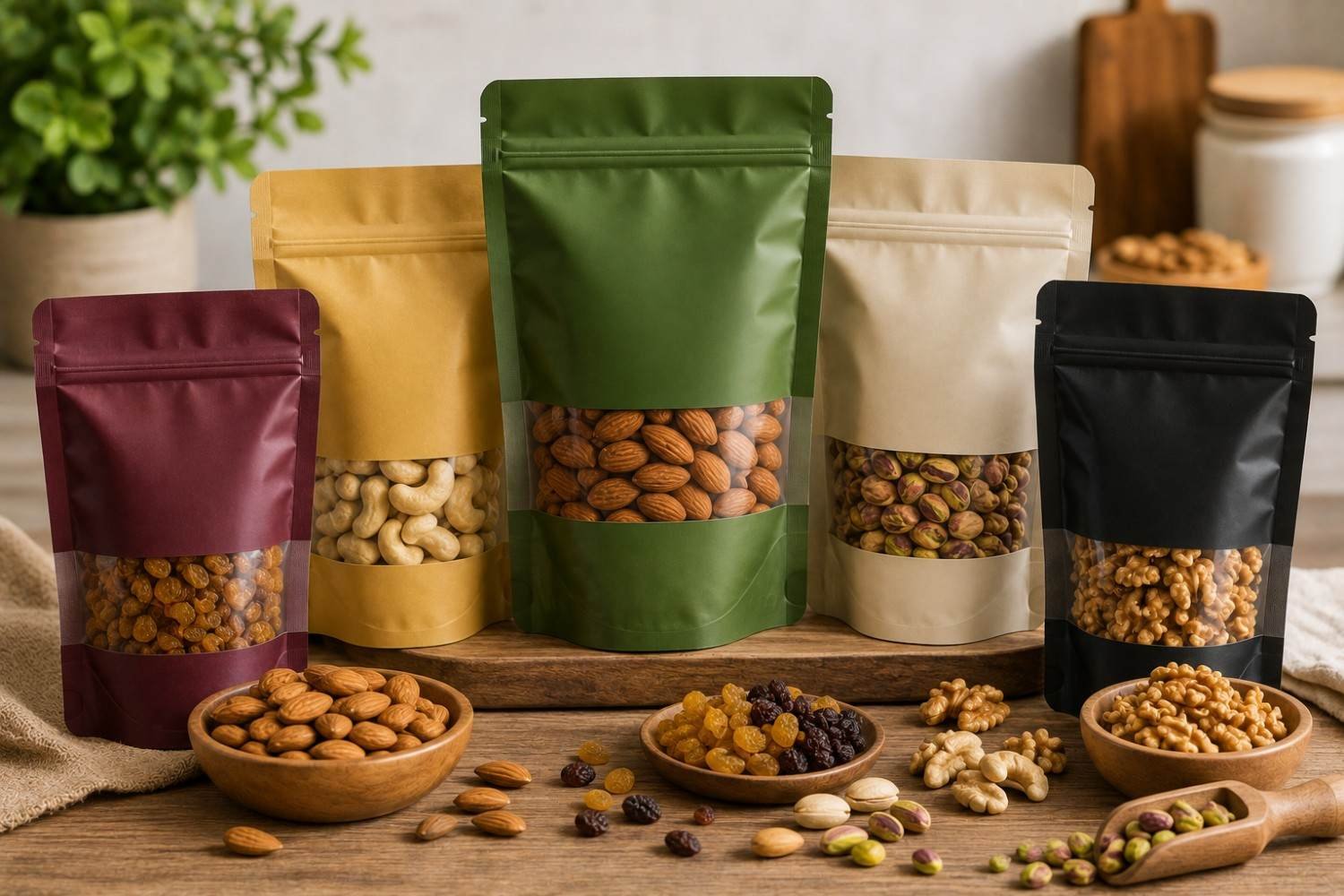
Dry fruits need packaging that can protect their quality while also making storage, handling, and everyday use convenient. Products such as almonds, cashews, raisins, pistachios, walnuts, and other dried fruits can benefit from packaging that helps maintain their condition throughout storage and distribution. The packaging also plays an important role in how the product is presented to customers, particularly when it is displayed on retail shelves.
Stand-up pouch formats bring together a practical shape, flexible construction, and convenient closure options. Their ability to remain upright can improve shelf presentation, while resealable features can make the package easier to use after opening. Selecting the right structure and material can therefore help brands balance product protection with consumer convenience.
Protecting Dry Fruits During Storage
Dry fruits can be affected by moisture, air, light, and other external conditions if the packaging does not provide suitable protection. Maintaining an appropriate barrier is therefore an important consideration when selecting packaging for dried food products.
The dry fruit pouches featured by PalsPack use laminated structures designed to provide protection against moisture, oxygen, and other external elements. This type of packaging can help maintain the quality of the contents while the product moves through storage, transportation, and retail environments.
Keeping Packaging Convenient to Use
Consumers may not always finish a pack of dry fruits immediately after opening it. A package that can be closed again can make storage between uses more practical and reduce the need to transfer the contents into another container.
Resealable zipper closures make dry fruit packaging pouches particularly suitable for products that may be consumed over several occasions. The pouch can be opened when needed and closed again afterward, creating a convenient format for everyday household use.
Stand-Up Structure for Better Display
Packaging presentation can influence how a dry fruit product appears on a retail shelf. A package that maintains an upright position can create a more organized display and make the front-facing design easier for customers to notice.
The stand-up construction allows the pouch to remain upright because of its bottom structure. This provides a stable presentation while also creating a broad surface for product information, branding, and graphics.
Lightweight and Easy to Handle
Packaging that is easy to carry can improve convenience for both retailers and consumers. Flexible pouches are lightweight compared with many rigid packaging formats, making them practical to handle during transportation, storage, and everyday use.
The flexible structure can also make the package easier to hold while consumers open, close, and store it. This can be particularly useful for dry fruits that are commonly purchased in different quantities for household consumption.
Resealable Zipper Options
A zipper closure can add practical value to dry fruit packaging because it allows the package to be resealed after opening. This can help consumers manage products that are used gradually instead of being consumed in one sitting.
Different zipper options can be incorporated according to the packaging requirements. The stand-up pouch range includes resealable designs that combine a flexible pouch structure with an opening mechanism intended to make repeated access more convenient.
Support Product Presentation
Dry fruit products are often sold in competitive retail environments where packaging needs to communicate the product clearly. The large surface area of a stand-up pouch creates useful space for printing and visual presentation.
Custom printing can incorporate brand elements, product information, graphics, colours, and other details. A well-designed pouch can therefore support a consistent visual identity while giving customers important information about the product.
Barrier Properties Matter
The packaging structure needs to be selected according to the protection required by the dry fruit product. Different products and storage conditions may require different levels of barrier performance.
The website highlights laminated packaging structures that provide barrier protection against moisture, oxygen, and other external factors. Selecting an appropriate material combination can help brands balance flexibility with the protection needed for the packaged product.
Convenient Flexible Packaging
Dry fruit brands may need packaging that combines protection with practical handling and attractive presentation. Different sizes, structures, closures, and printing options can help manufacturers develop packaging around their product requirements.
Within the broader range of standup zipper pouches, resealable formats can provide a practical option for dry fruits and similar products that consumers may access multiple times. The combination of an upright structure and zipper closure can make the package convenient while also supporting shelf presentation.
Suitable for Different Dry Fruits
Not every dry fruit product is identical. Almonds, cashews, raisins, pistachios, walnuts, and mixed dry fruit products can differ in quantity, shape, and packaging requirements.
Pouch packaging can be developed in different sizes and configurations to accommodate these variations. This allows manufacturers to consider the quantity being sold, desired presentation, closure requirements, and material structure when selecting a suitable package.
Support Retail and Transportation Needs
Packaging needs to remain practical throughout the distribution process. Dry fruit products may pass through multiple stages of handling before reaching the consumer, making durable construction and suitable sealing important considerations.
A flexible pouch can provide a lightweight packaging format while maintaining the laminated structure required for the product. Proper sealing can also help protect the contents during transportation and storage while keeping the package intact for retail presentation.
Customization for Brand Requirements
Packaging is often part of a product's identity, especially for food brands competing for attention on retail shelves. Manufacturers may require particular pouch dimensions, printing styles, colours, finishes, or closure options.
Customized stand-up pouches can be developed according to these requirements. This gives dry fruit brands greater control over the appearance and functional characteristics of their packaging while maintaining a format designed around the product.
Choose the Right Size and Structure
The ideal pouch should match the quantity and characteristics of the dry fruit being packaged. A small consumer pack may require different dimensions from a larger family-size or bulk-oriented package.
Considering pouch capacity, material structure, zipper type, printing, and sealing requirements together can help manufacturers choose a more appropriate packaging solution. This approach can also make the final package easier to handle and more consistent with its intended use.
Consider Consumer Convenience
Good packaging should make the product easy to access without creating unnecessary difficulty after opening. For dry fruits, resealing, carrying, storing, and repeated access can all influence how consumers perceive the package.
A stand-up pouch with a zipper closure addresses several of these requirements in one format. It can remain upright during storage, open conveniently, and be resealed after use, making it a practical choice for products consumed over time.
Final Thoughts
Stand-up pouches are well suited to dry fruit packaging because they combine practical storage, convenient handling, resealable functionality, and strong shelf presentation. Their flexible structure can also accommodate different sizes, printing requirements, and material combinations according to product needs.
For brands packaging almonds, cashews, raisins, pistachios, walnuts, or mixed dry fruits, selecting the right pouch involves considering product protection, capacity, barrier properties, closure, printing, and consumer usage. When these factors are considered together, stand-up packaging can provide a balanced solution that supports both product quality and everyday convenience.