The real estate industry has always been considered one of the most stable investment sectors, yet it has also remained one of the least accessible. High capital requirements, lengthy paperwork, limited liquidity, and geographical barriers have prevented many investors from participating in premium property markets. While digital transformation has reshaped banking, healthcare, and retail, property investment has continued to rely on traditional ownership structures that often involve multiple intermediaries and slow transaction cycles.
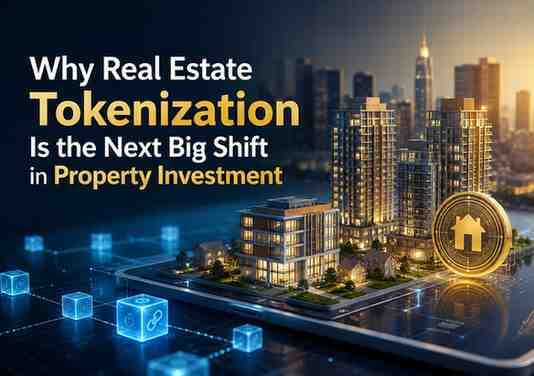
Real estate tokenization is changing this narrative. By combining blockchain technology with property ownership, tokenization converts real-world real estate assets into digital tokens that represent fractional ownership. Instead of purchasing an entire property, investors can acquire a percentage of a commercial building, residential complex, or industrial asset through blockchain-backed tokens. This approach improves market accessibility while introducing greater transparency, efficiency, and investment flexibility.
Breaking the Barriers of Traditional Property Investment
Conventional real estate investment presents several operational and financial challenges. Investors often need substantial capital to purchase quality assets, while cross-border investments involve legal complexities, currency conversion, compliance checks, and lengthy settlement procedures. In addition, selling a property may take weeks or even months due to valuation, documentation, and buyer negotiations.
Tokenization addresses these inefficiencies by digitizing ownership records on a blockchain network. Each token represents a predefined share of the property's value and can be securely transferred between verified investors. Blockchain technology creates an immutable ownership ledger, reducing disputes and improving trust among participants.
This model significantly lowers the entry barrier for individual investors while enabling institutional investors to diversify portfolios across multiple real estate categories without committing large amounts of capital to a single asset.
Why Investors Are Paying Attention to Tokenized Real Estate
Several technological and financial advantages have positioned tokenized real estate as one of the fastest-growing innovations in digital asset markets.
- Fractional ownership enables investors to participate in premium real estate without purchasing an entire property.
- Improved liquidity allows token holders to trade ownership shares more efficiently than conventional property sales.
- Greater transparency is achieved through blockchain records that permanently store ownership and transaction history.
- Portfolio diversification becomes easier by spreading investments across multiple properties, locations, and sectors.
- Global accessibility allows investors from different countries to participate in compliant investment opportunities.
- Reduced administrative overhead minimizes dependence on multiple intermediaries, lowering transaction costs and improving operational efficiency.
These benefits are particularly attractive for younger investors who seek digital investment opportunities while maintaining exposure to tangible assets.
The Technology Driving Property Tokenization
Real estate tokenization is supported by several advanced blockchain technologies working together to create secure digital ownership ecosystems.
Smart contracts automate investment workflows by executing predefined conditions without manual intervention. These contracts can manage investor onboarding, ownership allocation, dividend distribution, compliance verification, and transaction settlement with minimal operational delays.
Security tokens represent legally recognized ownership interests that comply with applicable securities regulations. Unlike speculative cryptocurrencies, these tokens are directly linked to underlying physical assets, providing measurable intrinsic value.
Blockchain consensus mechanisms ensure that ownership records cannot be altered without network validation. This creates a tamper-resistant audit trail that benefits investors, regulators, property managers, and financial institutions alike.
Identity verification technologies, Know Your Customer (KYC), and Anti-Money Laundering (AML) frameworks further strengthen investor protection while ensuring regulatory compliance across jurisdictions.
Businesses planning to launch digital property investment platforms often collaborate with a Real estate tokenization development company to build secure blockchain infrastructure, implement smart contracts, integrate compliance modules, and create investor-friendly marketplaces capable of handling large transaction volumes.
How Tokenization Is Reshaping the Global Property Market
The impact of tokenization extends beyond individual investors. Developers, real estate funds, asset managers, and financial institutions are increasingly exploring blockchain-enabled ownership models to improve capital formation and operational efficiency.
Some of the emerging industry transformations include:
- Commercial buildings being divided into thousands of digital ownership units.
- Luxury residential developments attracting international investors through fractional investment models.
- Real estate funds expanding investor participation without geographical restrictions.
- Faster fundraising for property development projects through regulated digital asset offerings.
- Secondary marketplaces improving liquidity for previously illiquid real estate assets.
- Automated revenue distribution where rental income is allocated to token holders through programmable smart contracts.
These developments create a more inclusive investment ecosystem while reducing friction across property acquisition, management, and exit strategies.
The Future of Property Investment Is Becoming Digital
The growing adoption of blockchain technology indicates that real estate tokenization is not simply another fintech trend. It represents a structural evolution in how ownership is created, transferred, verified, and managed.
As governments introduce clearer regulatory frameworks and institutional confidence continues to increase, tokenized assets are expected to become an important component of diversified investment portfolios. Integration with decentralized finance, digital identity systems, and regulated digital exchanges will further expand investment opportunities while improving market efficiency.
Although traditional property ownership will continue to exist, tokenization offers a complementary investment model that aligns with the digital economy. Investors gain greater flexibility, property owners unlock new funding opportunities, and financial institutions benefit from automated compliance and streamlined operations.
The next generation of property investment will likely be defined by accessibility, transparency, and programmable ownership rather than paper-intensive transactions and geographical limitations. Organizations that embrace blockchain-powered real estate solutions today are positioning themselves for a market where digital assets and physical properties coexist seamlessly. As technology matures and regulatory confidence strengthens, real estate tokenization is set to redefine global property investment by making high-value assets more inclusive, liquid, efficient, and accessible than ever before.
Tags : .....