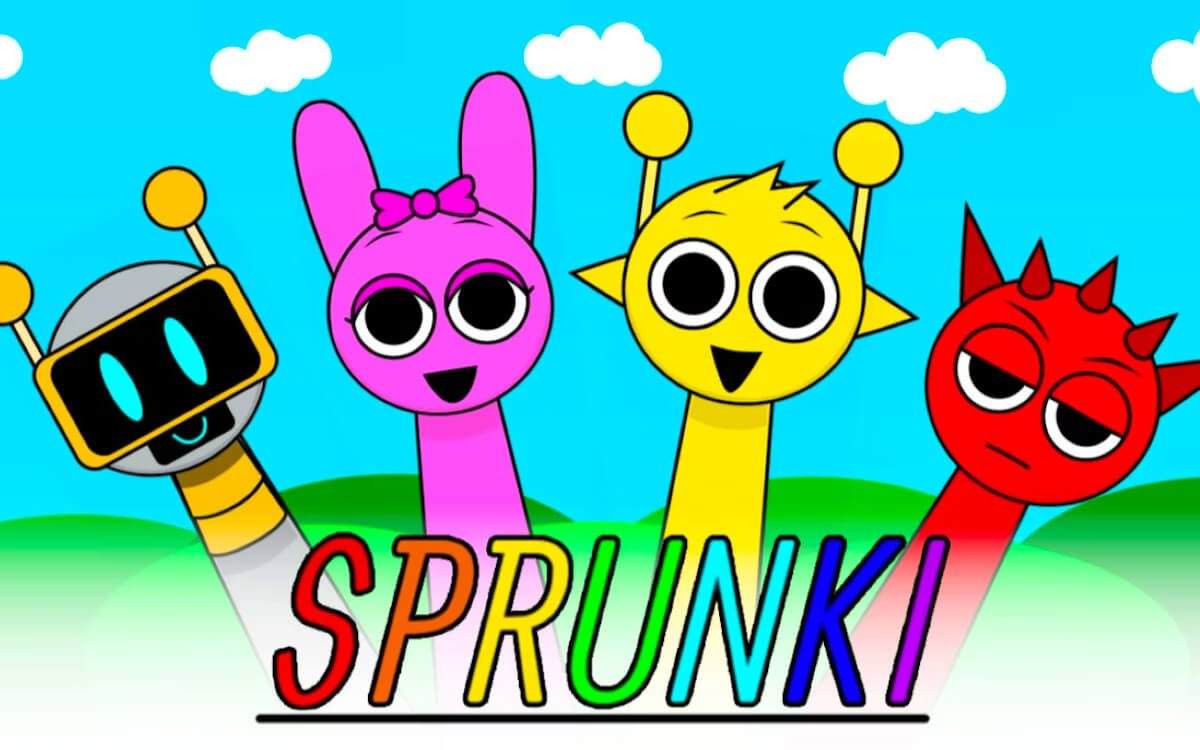
The popularity of sprunki content highlights a broader shift in how people interact with games and digital media today. In the past, games were mainly defined by interaction—you had to play to experience them. But with projects like Sprunki, especially community-driven versions such as Sprunki Phase content, many people now engage with the experience passively. They watch, listen, and react without ever touching the controls.
This trend is closely tied to the rise of passive entertainment. Sprunki works almost like a hybrid between a music visualizer, an animation loop, and a rhythm experiment. Instead of requiring active decision-making, it delivers a continuous flow of audio-visual stimulation. Viewers can simply press play and let it run in the background, similar to how people listen to playlists or watch looping videos on platforms like YouTube or TikTok.
One of the strongest reasons people enjoy Sprunki without playing it is the audio structure. The sound design is usually built around layered beats, repeating patterns, and character-based sound triggers. Even without understanding the mechanics, viewers can quickly pick up on rhythm changes and anticipate how the sound will evolve. This creates a sense of engagement that does not depend on gameplay skills. The brain naturally reacts to rhythm, and Sprunki takes advantage of that instinct.
Another important factor is the visual simplicity combined with variation. Characters often represent different sound elements, and when they are combined, they create both visual and audio feedback. Watching these combinations change feels satisfying, almost like watching a system build itself in real time. Even if someone is not playing, they can still enjoy the cause-and-effect relationship between action and sound.
The community aspect also plays a huge role in its popularity. Sprunki is not a single fixed experience. Instead, it exists as multiple versions, remixes, and fan interpretations. Some creators modify visuals, others change sound layers, and some build entirely new “phases” inspired by the original idea. Because of this, viewers are constantly exposed to new variations. This makes watching Sprunki content feel fresh, even if the core concept remains the same.
In addition, Sprunki fits very well into modern content consumption habits. Many people prefer content that does not require full attention. After school, work, or daily stress, viewers often look for something relaxing but still engaging. Sprunki provides that balance—it is stimulating enough to keep attention, but not demanding enough to feel tiring.
There is also a psychological element behind its appeal. Humans are naturally drawn to patterns, repetition, and rhythm. Sprunki uses these elements in a way that feels almost hypnotic. Even without interaction, viewers can become absorbed in the flow of sounds and animations. Over time, this creates a passive form of immersion where watching feels satisfying on its own.
In the end, Sprunki is no longer just a “game” in the traditional sense. It has evolved into a piece of interactive media that can be enjoyed both actively and passively. Some people play it, others remix it, and many simply watch it like a visual music experience. That flexibility is exactly why it continues to grow in popularity—even among people who never actually press a single button.
Tags : .....