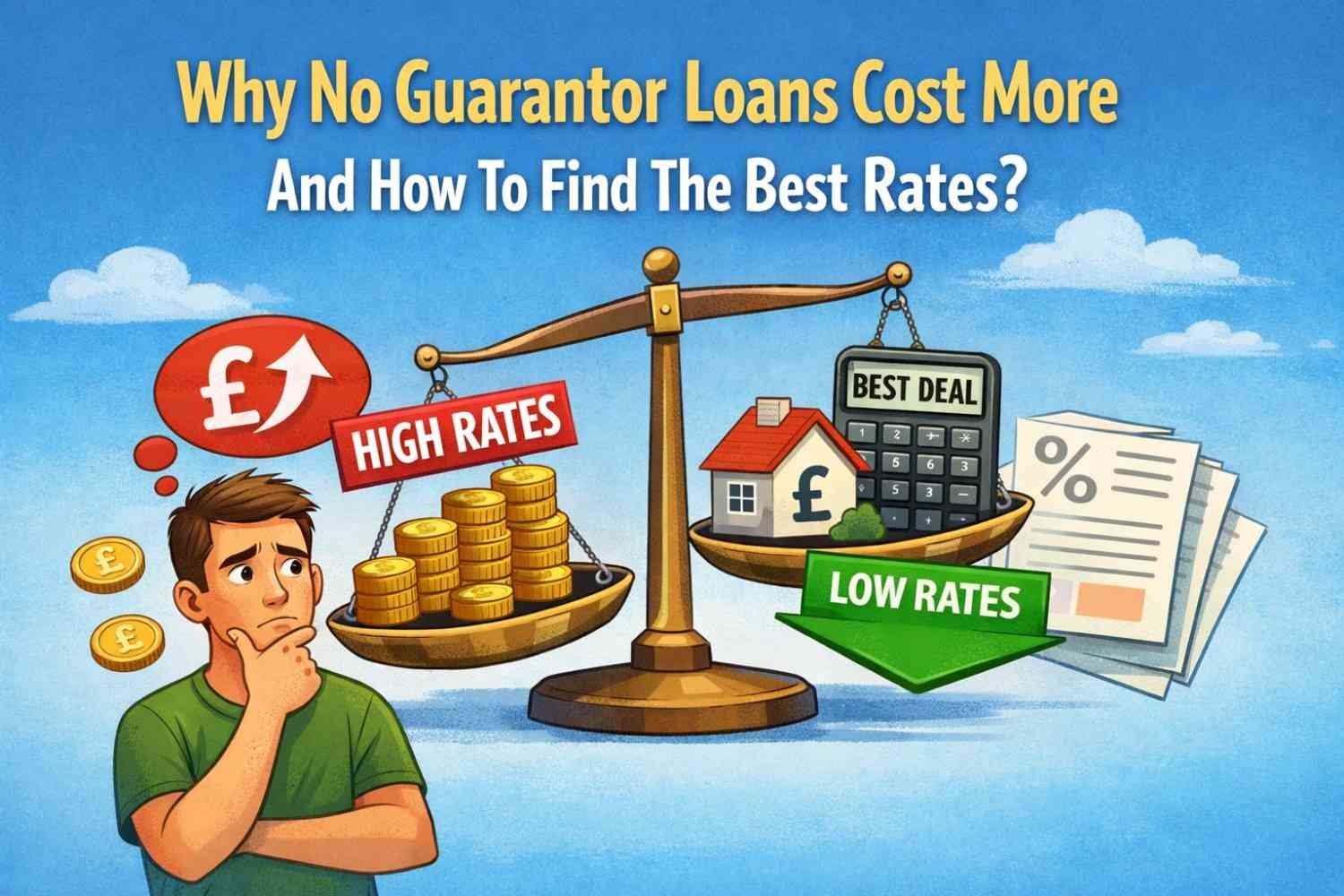
No guarantor loans let you borrow money without having to ask family or friends to back you. The privacy and independence are worth paying a little extra amount. Only a few people understand exactly why that extra cost exists. The lenders charge higher interest rates to offset the much higher risk of lending without a backup person to cover repayments.
Why Lenders Charge Higher Interest On No Guarantor Loans?
Almost every other form of lending gives the lender a backup plan if things go wrong. With a guarantor loan, that backup is another person who has agreed to make the repayments if you cannot.
If you stop paying, the lender only ever has one person to chase for repayment. They cannot make a claim against any third party's income, savings or assets. They have to do far more detailed and expensive risk checks before approving any application. If you default, they have no viable options to recover the money outside of a lengthy and expensive court process.
There is no collateral to seize and sell to recoup their losses. The lenders build an expected level of bad debt into every rate they offer.
Reasons:
- Lenders cannot sell this debt on for anywhere near as much as guarantor loan debt
- Far fewer lenders operate in this space so there is less competitive pressure on rates
- Regulators place stricter capital requirements on lenders for this type of lending
- Lenders receive far higher numbers of applications from people who have been rejected elsewhere
Many people choose to look for no guarantor loans from direct lender rather than going through a broker. You will usually find that direct lenders price their risk more. You do not add extra hidden fees on top of the advertised rate.
Most will also give you a full quote in less than two minutes, with no obligation to proceed. You will also never have to pass your details on to multiple third parties.
Guarantor vs No Guarantor Loans
At the lowest end of the market, guarantor loans start at around 9.9% APR, and go up to a maximum of around 49.9% APR for applicants with poor credit. No guarantor loans by comparison start at 15% APR, and can go as high as 99.9% APR for people with very damaged credit.
On average, you will pay between 10 and 20 percentage points more for the same loan, same term and same applicant profile. For a typical £5000 loan paid back over 3 years, that works out to somewhere between £500 and £1500 extra in total interest. That gap is largest for short term loans under 12 months, and narrows slightly for loans over 5 years.
How To Find The Best No Guarantor Loan Rates?
A higher base rate for this type of lending does not mean you have to accept the first rate you are offered. There is a difference between the cheapest and most expensive lender for any given applicant.
Always start with the major comparison sites, but be aware that not all lenders list on every platform. Always do an eligibility check before you submit a full application. Every full application leaves a mark on your credit file that can bring your score down and make other lenders charge you more.
You should only ever apply to a maximum of 3 or 4 lenders, and you should make all of those applications inside a 14-day window. All credit reference agencies agree to count all similar loan applications made within this window as a single search. It will not damage your score. Look out for promotional rates offered to new customers. This can be 5-10% lower than the standard advertised rate.
It is also better to look for no guarantor loans from direct lender. Many of the best rate lenders do not list on comparison platforms. You will only find their rates by going. They also will not add any broker fees to the final cost of your loan.
Factors That Affect Your Individual Interest Rate
Two different people can apply to the exact same lender for the exact same loan and get offered two completely different rates.
Your credit score is the single biggest factor. If you have a score over 750 you will qualify for the lowest rate a lender offers. If your score is under 600 you will usually be offered a rate close to the lender's maximum. Your income level is the second most important factor.
Lenders strongly prefer applicants in permanent employment, and will charge more for temporary workers, agency staff or self-employed people.
Your debt to income ratio should be under 30% to get the best rates. If you are already paying out more than a third of your income in debt repayments every month, you will be seen as a much higher risk.
The large loan amounts come with lower APR rates. Most lenders reserve their cheapest rates for loans of £3000 and above. The long terms will reduce your monthly repayment. This will increase the total amount of interest you pay over the full term. Many lenders will also offer an extra 5% discount if you already hold a current account with them.
Ways To Improve Your Chances Of Getting A Better Rate
1. First, get a full copy of your credit report from all three agencies. One in four people has at least one error on their report that is bringing their score down, and removing that error can add 100 points or more in 10 days. Pay down as much of your existing revolving debt as you can before you apply.
2. Make sure you are registered on the electoral roll at your current address. This is one of the quickest and easiest ways to boost your score, and most lenders will not even offer you their best rates if you are not registered.
3. Never make another application for at least 30 days if you have been rejected. Multiple rejected applications in a short space of time are the single biggest red flag to lenders, and will make every other lender charge you more.
Conclusion
No guarantor loans will never be the cheapest form of borrowing available. They are the only option that lets you borrow money without putting a personal relationship at risk for many people. You will always pay a small premium for that independence, but you never have to overpay.