Why Natural Language Processing Is Making Citizen Grievance Categorization 10X Faster in 2026
By Pranshu Sharma 28-09-2026 6
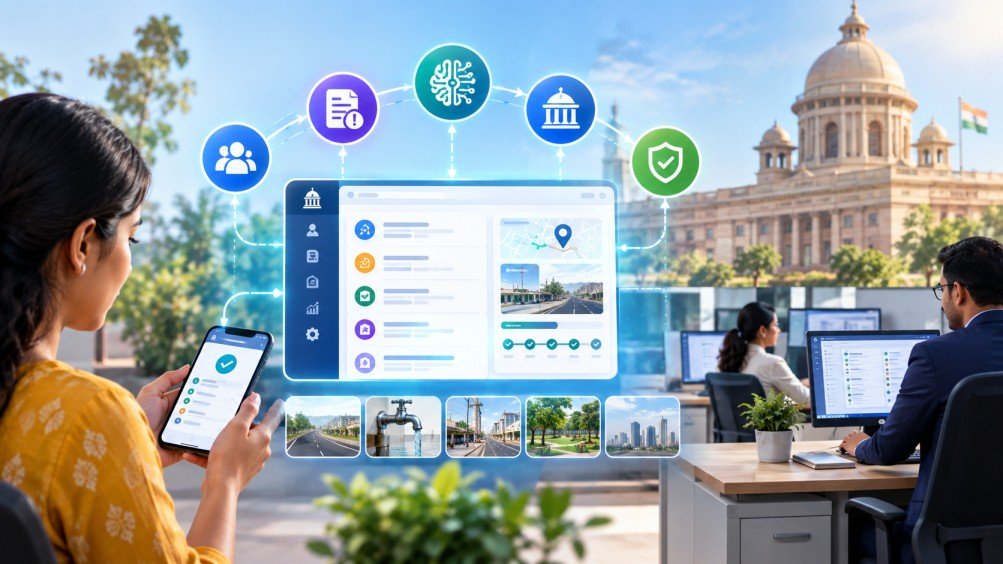
A municipal grievance cell in a mid-sized city receives close to 3,000 complaints daily—water supply issues, potholes, sanitation delays, billing disputes, and pension queries, all arriving through web portals, mobile apps, WhatsApp, and phone calls. Each one has to be read, understood, and routed to the correct department by staff already stretched thin. By the time a complaint about a burst water pipe reaches the water board, three days have passed and the citizen has called back twice asking why nothing has happened. This is the operational reality that an Advance Citizen Grievance Management System, powered by Natural Language Processing, is designed to fix.
Natural Language Processing enables government grievance redressal systems to automatically read, interpret, and categorize citizen complaints by department, urgency, and issue type—reducing manual processing time from hours to seconds. This article explains how that speed is achieved, what it means for citizens and government staff, and what's involved in implementing it.
What Is NLP-Based Grievance Categorization?
NLP-based grievance categorization is the automated process of using language processing algorithms to read citizen complaints, identify the core issue, and assign the correct department, category, and priority level without manual review. An Advance Citizen Grievance Management System uses this technology to eliminate the reading and interpretation bottleneck that slows down traditional grievance redressal.
Where a manual system requires a staff member to open each complaint, read it, decide which department it belongs to, and forward it accordingly, an NLP-driven system performs this same sequence of decisions automatically, using trained language models rather than human judgment.
Manual Categorization vs. NLP-Based Categorization — Key Differences
The consistency factor deserves particular attention. Two different staff members reviewing an identical complaint about irregular water supply might categorize it differently—one under "water supply," another under "infrastructure maintenance"—simply based on individual interpretation. This inconsistency creates downstream reporting problems that make it difficult for policy-makers to accurately track issue trends across a city or region.
Why Manual Grievance Processing Can't Keep Up in 2026
Manual grievance processing is breaking down because complaint volumes have grown across multiple digital channels simultaneously, citizens submit grievances in diverse regional languages and dialects, and human reviewers create routing bottlenecks that delay resolution. These three pressures combine to overwhelm staffing models designed for a much smaller, slower complaint volume.
Rising Complaint Volumes Across Digital Channels
Citizens no longer submit grievances through a single channel. A single government body might receive complaints via a dedicated web portal, a mobile app, WhatsApp Business messaging, an IVR phone system, and public social media posts—often for the same underlying issue reported multiple times across different platforms.
Each channel requires someone to monitor, read, and manually transfer the complaint into the central grievance tracking system. As digital adoption increases, this multi-channel intake creates a volume of incoming text and voice complaints that manual review teams simply cannot process at the speed citizens now expect.
Language and Dialect Diversity
Citizens frequently submit grievances in regional languages, mixed scripts, or informal colloquial phrasing that doesn't match the formal language training many grievance officers received. A complaint written partly in a regional language and partly in English, using local terms for a civic issue, can easily confuse or slow down a reviewer who isn't fluent in that specific combination.
Manual reviewers are inherently limited to the languages they personally understand. A grievance cell staffed primarily by reviewers fluent in one or two languages will struggle to accurately process complaints submitted in a third or fourth regional language, leading to delays or misrouting.
Human Bottlenecks in Routing and Escalation
Even when a complaint is read correctly, manual routing introduces delay. A grievance mistakenly sent to the wrong department must be identified, redirected, and re-queued—a process that can add days to resolution time. During high-volume periods, such as monsoon-related infrastructure complaints or tax season billing disputes, these bottlenecks compound significantly, creating backlogs that take weeks to clear.
How NLP Categorizes Citizen Grievances (Step-by-Step)
NLP categorizes citizen grievances through a sequence of automated steps: capturing the complaint text or voice input, detecting the language, extracting the core issue and relevant entities, classifying it against a department taxonomy, scoring urgency, and automatically routing it to the correct authority. This entire sequence typically completes within seconds of complaint submission.
- Text/Speech Intake – The grievance is captured either as submitted text or, for voice complaints via IVR or call centers, converted into text using speech-to-text technology before processing begins.
- Language Detection & Normalization – The system identifies which language or dialect the complaint is written in and standardizes the text format, correcting for mixed scripts or informal spelling variations.
- Intent and Entity Extraction – NLP models identify the core issue being reported (such as "water leakage" or "delayed pension payment"), along with relevant details like location, ward number, or scheme name mentioned in the text.
- Classification Against Department Taxonomy – Machine learning models compare the extracted intent and entities against a predefined taxonomy of departments and issue categories, assigning the grievance to the most appropriate classification.
- Urgency and Sentiment Scoring – The system analyzes language patterns to flag complaints indicating high distress, safety risk, or urgency, ensuring these are prioritized ahead of routine complaints in the resolution queue.
- Auto-Routing to Relevant Authority – Once classified, the grievance is automatically forwarded to the responsible department or officer, without requiring manual review or reassignment.
The Technology Behind the Speed
This process relies on several NLP components working together. Multilingual NLP models handle the language diversity inherent in citizen complaints. Named Entity Recognition (NER) identifies specific details like locations, scheme names, and department references within unstructured text. Text classification algorithms perform the actual category assignment, while a dedicated sentiment and urgency detection layer identifies complaints that require immediate attention rather than standard queue processing.
What "10X Faster" Actually Means in Practice
The speed improvement from NLP-based categorization comes primarily from eliminating manual reading time, removing reassignment delays caused by miscategorization, and enabling parallel processing of thousands of complaints simultaneously rather than one at a time. This combination compresses a process that once took hours into one measured in seconds.
Where the Time Savings Come From
- Eliminating manual reading and interpretation time — no staff member needs to read each complaint individually before deciding where it belongs
- Removing back-and-forth reassignment caused by initial miscategorization, which previously added days when a complaint was sent to the wrong department
- Parallel processing of thousands of grievances simultaneously, rather than working through a sequential queue one complaint at a time
- Instant routing versus queued manual review, meaning a complaint reaches the correct department the moment it's classified, not whenever a staff member gets to it
Realistic Efficiency Comparison
It's worth clarifying that "10X faster" refers specifically to the categorization and routing stage—the time between complaint submission and it reaching the correct department for action. It does not mean the underlying civic issue itself gets resolved 10 times faster, since actual resolution still depends on the responsible department's operational capacity. What an Advance Citizen Grievance Management System guarantees is that the complaint reaches the right hands almost immediately, removing the delay that previously occurred before any actual resolution work could even begin.
Key Benefits of NLP-Driven Grievance Systems for Government Bodies
NLP-driven grievance systems benefit government bodies by accelerating first response times, reducing administrative workload, and providing consistent categorization regardless of staff turnover or complaint volume spikes. These systems also generate structured data that policy-makers can use to identify emerging civic issues before they escalate.
- Faster first-response and resolution times for citizens, since complaints reach the responsible department almost immediately after submission
- Reduced administrative burden on grievance cell staff, freeing them to focus on complex cases requiring human judgment rather than routine sorting
- Consistent categorization regardless of complaint volume or staff turnover, since the classification logic doesn't change when new staff join or volumes spike
- Better data visibility for policy-makers, enabling trend analysis across wards, regions, or issue types that would be difficult to compile manually
- Improved citizen trust through faster acknowledgment, as automated systems can confirm receipt and initial categorization within moments of submission
- Early detection of emerging civic issues, such as a sudden spike in water supply complaints concentrated in one specific zone, signaling a possible infrastructure failure before it becomes widespread
This last benefit is particularly valuable for government planning. When grievance data is categorized consistently and in real time, administrators can spot patterns—like a cluster of sanitation complaints in a specific neighborhood—that might otherwise take weeks to notice through manual reporting.
Common Types of Grievances NLP Can Automatically Classify
NLP models can automatically classify a wide range of citizen grievance types, from civic infrastructure complaints to welfare scheme disputes, provided the system has been trained on relevant historical data for each category. The breadth of classification depends on how comprehensively the underlying taxonomy has been designed.
- Civic infrastructure — roads, water supply, sanitation, electricity outages, and street lighting complaints
- Public service delays — issues related to certificates, licenses, permits, or document processing timelines
- Corruption or misconduct complaints — reports involving alleged bribery or improper conduct by officials
- Billing and taxation disputes — incorrect charges, payment discrepancies, or property tax disagreements
- Welfare scheme grievances — problems with pension disbursement, subsidy delays, or ration distribution issues
- Law and order/safety concerns — complaints related to public safety, policing response, or neighborhood security
Each category typically maps to a specific department or authority, which is why accurate classification directly determines how quickly a complaint reaches someone capable of acting on it.
Challenges and Limitations of NLP in Grievance Categorization
NLP-based grievance categorization faces real limitations, particularly with vague or multi-issue complaints, regional language accuracy gaps, and emotionally charged language that can be misread by classification models. These challenges mean human oversight remains an essential part of a well-designed Advance Citizen Grievance Management System.
- Handling vague, multi-issue, or emotionally charged complaints — a citizen describing frustration with multiple unrelated problems in one submission can confuse models trained on single-issue patterns
- Regional language and dialect accuracy gaps — languages or dialects with less representation in training data typically see lower classification accuracy
- Sarcasm, local idioms, and informal phrasing misinterpretation — colloquial expressions that carry specific local meaning can be misread by models trained on more formal language patterns
- Need for human review on sensitive or high-stakes complaints — corruption allegations or safety concerns often require human judgment beyond automated categorization
- Data privacy considerations — processing citizen information through NLP systems requires appropriate safeguards around data storage, access, and retention
- Initial taxonomy design and training data requirements — government-specific categories need careful definition and sufficient historical examples before the model can classify accurately
Government bodies implementing these systems should treat human review not as a failure of the technology, but as a permanent safety net for the categories of complaints where automated judgment isn't appropriate.
How Government Bodies Can Implement NLP-Based Grievance Systems
Implementing an NLP-based grievance system starts with auditing historical complaint data and defining a standardized taxonomy, followed by selecting a multilingual-capable platform and validating its accuracy through parallel testing before full deployment. Skipping the validation phase is one of the most common causes of poor early performance.
- Audit historical grievance data to identify common categories, complaint patterns, and volume distribution across departments
- Define a standardized department/issue taxonomy that applies consistently across all intake channels, from web portals to phone-based IVR systems
- Select an NLP platform with multilingual and regional dialect support appropriate to the languages actually used by the citizen population being served
- Train the model using historical grievance records paired with their correct manual categorization labels, giving the system real examples to learn from
- Run parallel testing comparing NLP classification against manual categorization on the same complaints to identify accuracy gaps before full rollout
- Deploy with human oversight for flagged or low-confidence cases, ensuring ambiguous complaints still receive appropriate attention
- Continuously retrain the model using corrected classifications and newly emerging grievance patterns, since citizen language and civic issues evolve over time
Problem: A state grievance department receives complaints in six different regional languages, with manual staff able to confidently process only two of them.
Approach: Deploy a multilingual NLP model trained specifically on historical grievance data across all six languages.
Implementation: Historical complaints are labeled by native speakers of each language, then used to train and validate the classification model before go-live.
Outcome: Complaints in previously under-served languages reach the correct department without requiring a bilingual staff member to manually translate and interpret each one.
NLP Grievance Categorization vs. Other GovTech AI Applications
NLP-based grievance categorization is often confused with related but distinct GovTech AI applications, each serving a different function within the broader citizen service ecosystem. Understanding these distinctions helps government bodies select the right combination of tools rather than assuming one technology covers every use case.
How It Differs From:
- Chatbots for Citizen Services — handle direct, real-time interaction with citizens answering questions or guiding them through processes, whereas grievance categorization operates in the backend, processing complaints that have already been submitted
- Predictive Analytics for Public Services — forecasts future service demand or infrastructure needs based on historical trends, while grievance categorization classifies existing, already-submitted complaints
- Sentiment Analysis Alone — measures citizen emotion or satisfaction as a standalone metric, while full grievance categorization includes sentiment as one input alongside department assignment and issue classification
- E-Governance Portals — provide the citizen-facing interface for submitting complaints and accessing services, while NLP categorization functions as the backend processing layer that interprets what's been submitted
These technologies frequently operate together within a single Advance Citizen Grievance Management System, with the e-governance portal serving as the intake point, NLP handling classification, and analytics tools using the resulting structured data for broader policy insights.
Key Takeaways
- NLP enables an Advance Citizen Grievance Management System to automatically read, categorize, and route citizen complaints in seconds instead of the minutes or hours required by manual review
- The speed gain comes specifically from eliminating manual reading, interpretation, and reassignment delays—not from resolving the underlying civic issue faster
- Multilingual and regional dialect support is essential for accurate categorization in diverse citizen populations, particularly in regions with significant linguistic variation
- Human oversight remains necessary for ambiguous, sensitive, or low-confidence grievance classifications, and should be built into the system rather than treated as a fallback failure
- Successful implementation requires a well-defined taxonomy, sufficient historical training data, and a parallel testing phase before full rollout across all intake channels
- Beyond speed, NLP categorization gives policy-makers real-time visibility into emerging civic issues, enabling faster institutional response to developing problems
Conclusion
The gap between when a citizen submits a complaint and when it reaches someone capable of acting on it has historically been the weakest link in grievance redressal—not the resolution itself, but the delay before resolution work even begins. Natural Language Processing closes that gap by reading, interpreting, and routing complaints in seconds rather than hours or days.
An Advance Citizen Grievance Management System built around this technology doesn't replace the human officers who investigate and resolve civic issues. It ensures those officers spend their time solving problems instead of sorting through backlogs, while giving citizens the faster acknowledgment and quicker department assignment they increasingly expect from digital government services. For government bodies still relying on manual categorization, the operational case for making this shift only grows stronger as complaint volumes and channel diversity continue to increase.