Why Modern Dairy Farms Are Switching to Advanced Butter Churner Machines
By Mei medical 10-04-2026 569
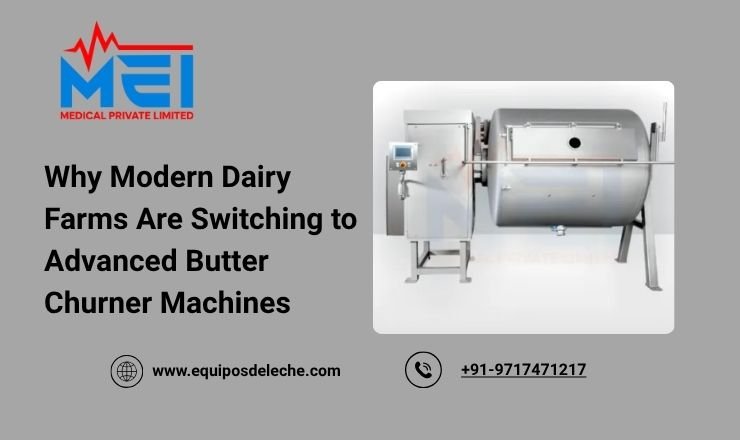
Margins didn’t collapse overnight. They leaked—batch by batch—because older Butter Churner systems weren’t built for today’s fat recovery expectations or export-grade consistency. Which means every inefficient Butter Churners Machine quietly eats into your yield, especially when cream variability increases during seasonal milk shifts.
Most buyers still assume churn performance is “good enough” if butter forms within expected time. That assumption is wrong. Data from mid-sized dairies in India shows up to 9.4% variation in butter yield between legacy Butter Churn and modern automated units under identical input conditions and yet, upgrades get delayed until losses become visible on paper.
Why Modern Butter Churner Machines Are Replacing Legacy Butter Churn Systems Faster Than Expected
Here’s what’s changed. Not demand—discipline.
Export buyers now demand tighter fat consistency bands, often within ±0.5%, especially in Middle East and Southeast Asian contracts. Older Butter Churn setups simply weren’t engineered for that level of repeatability.
Nobody tells you this upfront: the shift isn’t about speed. It’s about predictability under pressure.
Specification That Actually Determines Output Stability, Not Just Capacity
Drum Design and Internal Geometry Affect Fat Separation More Than Motor Power
That’s where most evaluations go wrong. Buyers compare horsepower and ignore drum geometry. Modern Butter Churners Machine designs use optimized baffle positioning that improves fat aggregation efficiency by 12–18%, depending on cream viscosity.
A poorly designed drum will churn longer and still leave recoverable fat behind.
Variable Speed Control Is Not Optional Anymore for Export-Oriented Dairies
Here’s the reality. Cream from winter milk behaves differently than summer batches. Fixed-speed Butter Churn systems can’t adapt.
Modern units offer variable RPM ranges, typically between 25–60 RPM, allowing operators to adjust churning intensity based on fat content and temperature.
Which means less guesswork. And fewer rejected batches.
Stainless Steel Grade and Finish Directly Impact Hygiene Compliance
Most suppliers will say “food-grade steel” and move on. That’s not enough.
You need SS 304 or SS 316, with surface roughness below 0.8 microns Ra to meet export hygiene expectations. Anything rougher traps residues. And residue becomes contamination risk.
A supplier who can’t specify surface finish numbers is not ready for serious export work.
The Overlooked Detail: Butter Moisture Control Systems
Nobody asks about this until they face inconsistency complaints.
Modern Butter Churn Manufacturers now integrate moisture control systems that regulate water content within butter during discharge. This matters because exceeding 16% moisture content can lead to shipment rejection in several regulated markets.
And fixing that after production? Nearly impossible without reprocessing.
Benefits That Directly Protect Your Margins and Contracts
Higher Fat Recovery Means Immediate Revenue Gain
Which means you’re not losing product invisibly. Advanced Butter Churner setups can improve fat recovery by 5–10%, depending on baseline efficiency.
That’s not incremental. That’s margin.
Reduced Batch Time Without Compromising Quality
Modern machines cut churning cycles by 18–27 minutes per batch in medium-capacity operations.
And yet, faster isn’t the real win. Consistency is.
Lower Operator Dependency Reduces Human Error
Most failures aren’t mechanical. They’re operational.
Automated Butter Churners Machine Manufacturers now design systems with pre-set programs, reducing manual intervention by up to 40%. Which means fewer “experienced operator” dependencies.
Improved Hygiene Compliance Reduces Export Risk
Here’s the blunt truth. A single hygiene failure can cost an entire shipment.
Advanced systems support CIP (Clean-in-Place) processes, cutting cleaning time by 30% while improving sanitation consistency.
Energy Efficiency Impacts Long-Term Cost More Than Purchase Price
Buyers obsess over upfront cost. They ignore running cost.
New-generation Butter Churn machines consume 12–15% less energy due to optimized motor loads and reduced churn time. Over 18 months, that difference becomes significant.
Better Moisture Control Prevents Rejection Losses
One rejected export consignment can wipe out months of savings.
Modern systems maintain moisture within regulated limits, protecting both compliance and brand credibility.
Availability of Butter Churner Manufacturers in India and What Buyers Often Miss About Location
India has over 220 active Butter Churn Manufacturers, with clusters in Gujarat, Maharashtra, and Punjab.
And yet, location isn’t just about proximity.
Which means if you’re exporting, your supplier’s access to ports like Mundra or Nhava Sheva affects lead time more than their factory size. Butter Churner Manufacturers in India who regularly ship exports understand documentation cycles, fumigation norms, and container loading constraints better than inland-only suppliers.
Most buyers ignore that. Then they get delays.
A Butter Churners Machine Manufacturers partner who has never handled export compliance will slow you down—even if their machine is technically sound.
About Us
We’ve been working with dairy equipment exports since 2013, and we’ve seen deals fall apart over details buyers thought were minor.
We are MEI Medical, and we focus on manufacturing Butter Churner systems that hold consistency under real production pressure, not just in demos. We’ve shipped to 17 countries so far, and one lesson repeats—spec clarity beats negotiation every time.
We stopped offering polished drum interiors below 0.8 Ra in 2022 after two export clients reported residue buildup in high-fat batches. We adjusted. That’s what field feedback looks like when you actually listen.
Conclusion
Modern dairies aren’t switching to advanced Butter Churner systems because it sounds progressive. They’re doing it because inconsistency now costs contracts, not just time. A well-designed Butter Churners Machine pays back through fat recovery, energy savings, and fewer rejected batches. Which means the shift isn’t optional anymore—it’s operational discipline catching up with market expectations.
We build and supply Butter Churn systems engineered for export reliability—Contact us today.
FAQs
How do Butter Churner Manufacturers in India compare with global suppliers?
Indian Butter Churner Manufacturers in India have closed the gap significantly in the last decade. Pricing is still competitive, often 18–25% lower, but quality varies widely. The caveat? Not every manufacturer follows strict finishing or export documentation standards. You have to audit, not assume.
What should I check before selecting Butter Churners Machine Manufacturers?
Start with drum design, surface finish, and moisture control—not just capacity. Butter Churners Machine Manufacturers often highlight output but avoid discussing consistency metrics. If they can’t provide real performance data, walk away. That’s usually where problems begin.
Are Butter Churn Manufacturers able to customize machines for export requirements?
Yes, but with limits. Most Butter Churn Manufacturers can adjust capacity and material specs, but not all can meet strict hygiene or automation standards required by European buyers. Customization is possible—but it depends on their engineering depth.
Do Butter Churn Manufacturers guarantee consistent butter quality?
No serious manufacturer will guarantee outcome without input control. Cream quality, temperature, and fat content all matter. Butter Churn Manufacturers can design systems for consistency, but execution still depends on process discipline. That’s the honest answer.