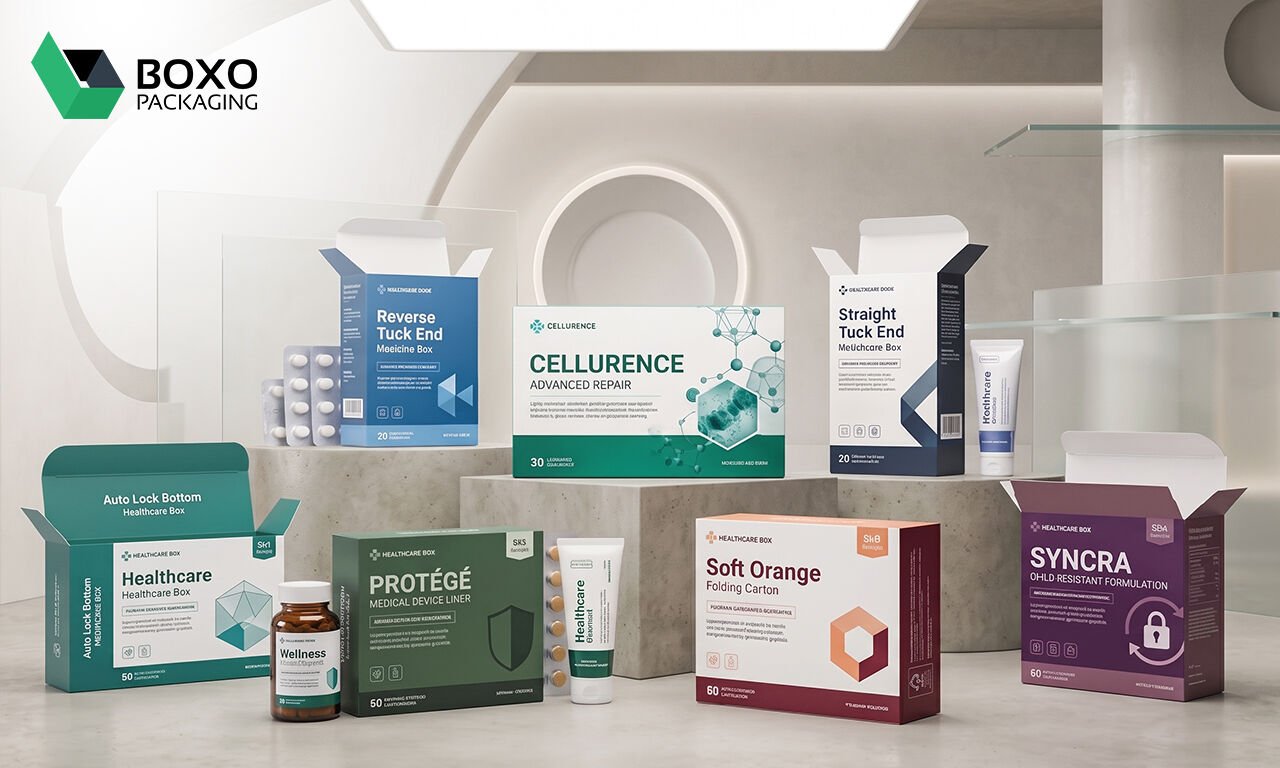
Medicine Boxes plays an essential role in protecting pharmaceutical products. It also helps patients identify, store, and use medicines correctly.
Proper packaging can protect products from moisture, light, contamination, and physical damage. Therefore, manufacturers must select Medicine packaging based on each medicine's specific requirements.
Clear labeling also supports safer product handling. Patients need essential information about dosage, ingredients, storage, warnings, and expiration dates.
Moreover, professional packaging strengthens trust in pharmaceutical brands. Clean designs can communicate quality while maintaining a clear focus on essential information.
Common Types of Medicine Packaging
Pharmaceutical companies use different packaging formats for different products. Each format offers specific benefits for protection, transportation, storage, and patient use.
Common options include bottles, blister packs, tubes, sachets, cartons, and vials. Furthermore, manufacturers may combine several formats within one packaging system.
For example, tablets often use blister packs inside printed cartons. Liquid medicines may use bottles with measuring devices and protective closures.
The right choice depends on the medicine's physical properties and intended use.
Blister Packaging for Tablets and Capsules
Blister packaging provides individual compartments for tablets or capsules. Each compartment helps separate doses and offers a protective barrier.
Additionally, blister packs can display important product information on their backing material. Patients can also see individual doses clearly.
The sealed structure can help protect medicines from environmental exposure. However, manufacturers must select suitable materials according to the product's stability requirements.
Blister packs also support organized medication use. Consequently, they remain widely used for many pharmaceutical products.
Medicine Bottles and Containers
Bottles provide a practical option for tablets, capsules, liquids, and other medicines. They can accommodate different capacities and closure systems.
Child-resistant closures can provide additional protection in appropriate applications. Tamper-evident features can also indicate whether packaging has been opened.
Moreover, bottles can include labels with essential product information. Their shapes can also support comfortable handling during everyday use.
Material selection remains important for pharmaceutical containers. Manufacturers must consider compatibility between the container, closure, and medicine.
Child-Resistant Medicine Packaging
Child-resistant packaging helps reduce accidental access to medicines by young children. These designs can use specialized closures or other opening mechanisms.
However, child-resistant packaging should still remain manageable for intended adult users. Therefore, manufacturers must balance safety with usability.
Clear instructions can help users understand how to open the package correctly. Packaging designers should also consider accessibility during product development.
Child-resistant systems can become especially important for medicines that may cause harm if accidentally consumed.
Tamper-Evident Pharmaceutical Packaging
Tamper-evident features can help users identify potential package interference. These features may include seals, bands, films, or other visible indicators.
Once the package opens, the feature may show a visible change. Therefore, consumers can check the package before using the medicine.
Tamper evidence supports product integrity throughout distribution. It can also strengthen consumer confidence in pharmaceutical products.
However, packaging features should remain clear and easy to understand. Users need to recognize the intended tamper indication without confusion.
Important Information on Medicine Labels
Labels provide critical information about pharmaceutical products. Therefore, designers must prioritize readability and accurate information placement.
A typical medicine label may include the product name, strength, dosage instructions, ingredients, warnings, and expiration information.
Manufacturers may also need to include storage instructions and identification details. Regulatory requirements vary according to the product and market.
Consequently, pharmaceutical companies should ensure packaging follows applicable regulations. Professional packaging design should never compromise mandatory information for decorative elements.
Materials Used in Medicine Packaging
Pharmaceutical packaging uses materials selected for protection and compatibility. Common materials include glass, plastics, aluminum, paperboard, and specialized films.
Glass can provide strong barrier properties for certain pharmaceutical products. Plastic containers can offer lightweight handling and flexible design options.
Meanwhile, aluminum can provide effective protection against several environmental factors. Paperboard cartons can provide additional protection while offering space for printed information.
Material selection should consider the medicine, storage conditions, transportation, and intended shelf life.
Sustainable Medicine Packaging Solutions
Environmental considerations are becoming increasingly important across packaging industries. Pharmaceutical companies are therefore exploring ways to reduce unnecessary packaging materials.
Lightweight structures can potentially reduce material consumption and transportation requirements. Recyclable materials may also support responsible packaging strategies where suitable systems exist.
However, sustainability should never weaken medicine protection. Pharmaceutical products require packaging that maintains quality and safety throughout their intended shelf life.
Therefore, manufacturers should evaluate environmental goals alongside product stability and regulatory requirements.
Custom Medicine Packaging for Pharmaceutical Brands
Custom packaging allows pharmaceutical companies to create packaging around specific product requirements. Brands can customize dimensions, printing, materials, closures, and structural features.
Custom designs can also create stronger visual consistency across product ranges. Consistent colors and typography can help customers identify products more easily.
Furthermore, customized cartons can provide additional space for instructions and product information. This feature can become useful when packaging requires extensive labeling.
A carefully designed package can therefore combine protection, usability, compliance, and brand recognition.
How to Choose Effective Medicine Packaging
Selecting suitable packaging requires careful consideration of several factors. First, manufacturers should evaluate the medicine's physical and chemical characteristics.
Next, they should consider environmental exposure during transportation and storage. Moisture, light, temperature, and oxygen can influence packaging requirements for certain products.
The package should also support safe handling and clear identification. Furthermore, manufacturers should evaluate opening mechanisms and accessibility.
Finally, packaging should comply with applicable regulatory requirements. Testing and validation can help confirm that the selected system performs as intended.
Medicine Packaging Safe, Clear, and Reliable Product Protection
Medicine packaging combines product protection, patient safety, information delivery, and brand presentation. Different medicines require different containers, closures, materials, and protective features.
Blister packs, bottles, cartons, tubes, and specialized containers each serve distinct purposes. Meanwhile, child-resistant and tamper-evident features can provide additional safety benefits.
Ultimately, effective pharmaceutical packaging should protect the medicine while keeping essential information clear. With thoughtful design, suitable materials, and appropriate testing, packaging can support safer product handling from manufacturing to everyday use.