Why Load Capacity Matters When Selecting Shock Mounts for Marine Equipment
By Christie & Grey 25-08-2026 238
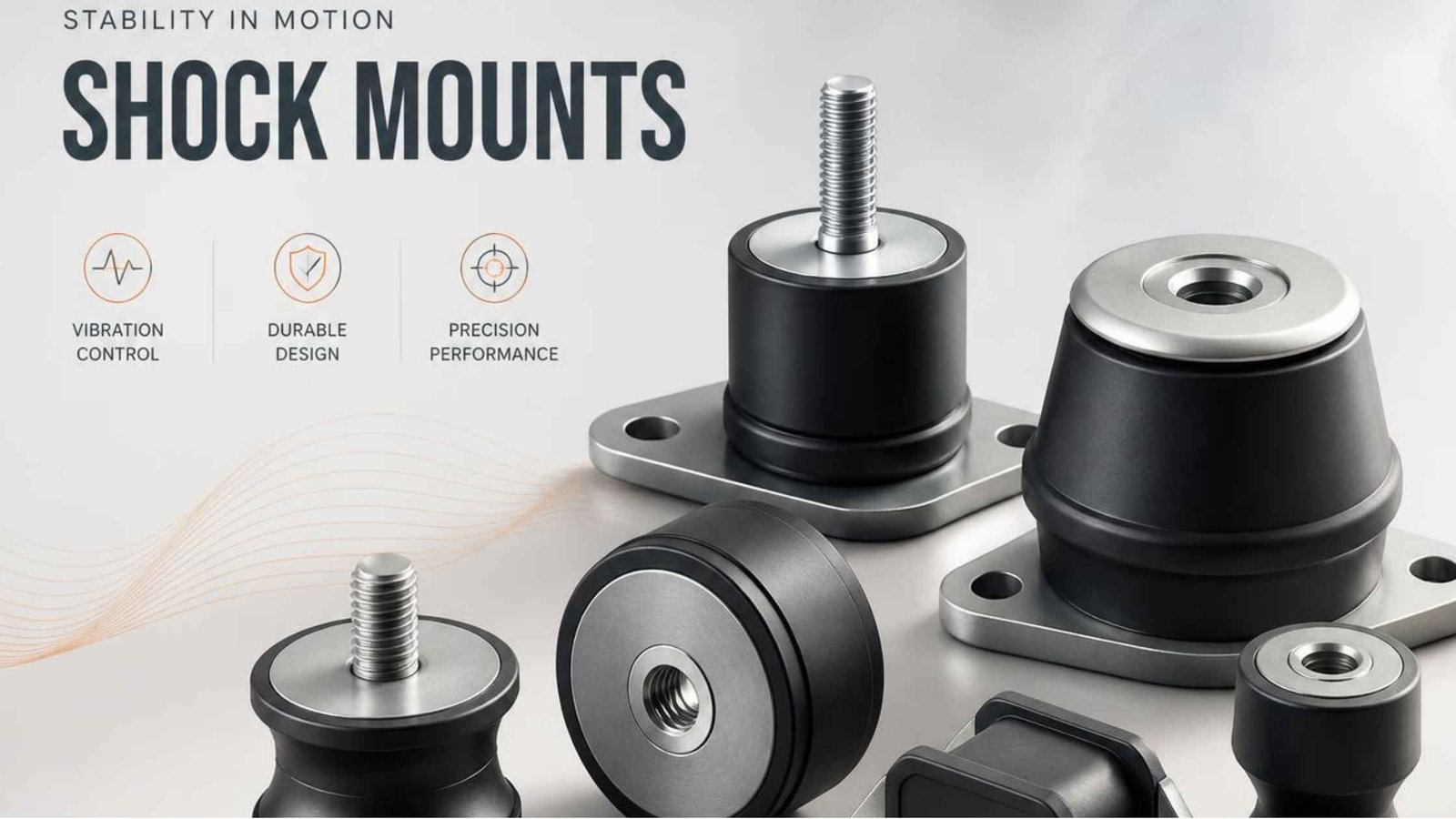
Shock mounts play a silent but critical role in the marine industry. Fitted beneath engines, generators, and other sensitive equipment, they help control vibrations generated by heavy machinery, rough sea conditions, and demanding offshore operations, and demanding offshore work. When conditions turn challenging, the right rubber shock mounts help protect equipment, reduce vibration transmission, minimise structure-borne noise, and keep essential systems stable.
That’s why reliable marine mounting solutions are known across commercial shipping, offshore operations, and naval fleets globally, where equipment is required to operate for long periods with minimal interruption. For marine engineers and naval architects, though, selecting a mount involves more than finding a product that fits. Load capacity, stiffness, and expected operating conditions all matter. In today’s blog, we will help you choose the right shock mounts, understand their isolation performance, and see why load capacity deserves careful consideration.
What Does Load Capacity Mean in a Marine Shock Mount?
Load capacity refers to the amount of weight a shock mount can safely support while maintaining its designed performance. In marine equipment, that weight doesn’t rest on one mount. The overall load must be shared across the complete mounting arrangement, according to the equipment’s centre of gravity, mass, and the way the load is distributed between individual mounts.
A mount’s capacity also relates to more than static weight. Engines, generators, and other machinery create additional forces during start-up, operation, and sudden changes in movement. Waves, boat motion, and impact can add further dynamic loads. The right shock mounts must support the equipment without unwanted movement or excessive compression.
Load capacity works closely with stiffness and deflection. A properly rated mount allows controlled movement and vibration isolation to protect the machinery. If the load rating is too low, then the rubber can perform outside its designed range. Conversely, a mount that is too stiff may transmit more vibration to the adjacent structure, reducing isolation performance.
For marine engineers and naval architects, checking the manufacturer’s load data is an essential step. The operating weight, loading conditions, and isolation criteria help determine the appropriate mount stiffness and vibration-isolation characteristics for the equipment.
What Happens When a Shock Mount Is Incorrectly Rated for the Load?
Selecting shock mounts based only on physical dimensions can create critical issues. But when, say, a mount's load capacity doesn't match up with the gear, there could be an element of inoperability where it moves outside its functional range. That can impact isolation and stability, as well as the longevity of both the machines themselves and their foundation.
- Excessive deflection:
When a mount has more weight than it is designed to hold, its rubber element can compress too far. Excessive deflection can contribute to shaft misalignment and reduce the available clearance during shock events. - Reduced shock isolation:
A wrongly rated mount may not absorb sudden impact. An overloaded mount can reach the end of its movement too quickly, allowing greater forces to pass into the equipment and supporting structure. This matters at the time of high wave impact and rough manoeuvring. - Increased vibration transmission:
The wrong capacity can also affect daily vibration control. An overloaded mount may provide poorer vibration isolation, while a mount selected above actual load may not perform well. In both cases, more vibration can travel through the ship, generating noise and wear. - Equipment instability:
Unequal loading across the mounting arrangement can make machinery position uneven or move excessively during operations. This may place extra load on connected pipes, couplings, and adjustable connections. Checking the load capacity of each mount helps engineers to identify uneven distribution and maintain a safer installation.
Key Factors to Consider When Selecting Shock Mounts for Marine Equipment
Choosing suitable shock mounts starts with understanding the behaviour of equipment. A mount that performs well under certain conditions may not deliver the same results on another ship.
Here are some factors worth considering:
- Equipment weight and load distribution:
Do evaluate the equipment’s complete operating weight, including fluids, connected components, and its supporting frame. Also, check the load capacity of each mount, as an offset centre of gravity can create uneven loading. If the load isn’t balanced, the equipment may deflect unevenly, affecting alignment and connected couplings. - Static and dynamic load requirements:
Static load refers to the equipment's weight under stationary conditions, while dynamic loads can result from engine operation, rotating components, vessel motion, and transient events. The mounting system should be selected to accommodate both normal operating loads and expected shock conditions. - Required stiffness and deflection:
Stiffness influences vibration isolation, alignment and shock performance. A mount that is too rigid may transfer vibration, while one that moves too much will decrease stability and support. Choose a mount that allows for controlled deflection within the proper range. - Shock and vibration levels:
Consider factors including shock direction, vibration levels, pulse duration, and available support. These factors help ensure the mount can isolate vibration while safeguarding equipment during sudden impacts.
How PD Rubber Shock Mounts Support Marine Equipment Reliability
PD rubber shock mounts are designed to support marine machinery while helping control vibration and shock. These are available in P5D, P7D, and P8D sizes; the range offers different load options for various equipment types.
- Multiple load capacities
Different sizes help engineers match the mount to the equipment’s operating weight and load distribution. Correct selection keeps the rubber within its intended capabilities. - Shock and vibration isolation:
PD mounts help reduce vibration transmission and control shock movement. Optional VSU (Vertical Stop Unit) provides additional movement control during sudden vessel motion. - Suitable for marine machinery:
These mounts are suitable for diesel generator sets, marine propulsion engines, and marine chiller units. Protective finishes also help protect the rubber and metal components in marine environments.
Final Thoughts
Choosing the right shock mounts is essential for protecting marine equipment from vibration, movement, and sudden impact. Your decision should depend on load capacity, weight distribution, stiffness, deflection, and operating conditions. A properly rated mounting solution is a small but crucial addition to the life of marine machinery.