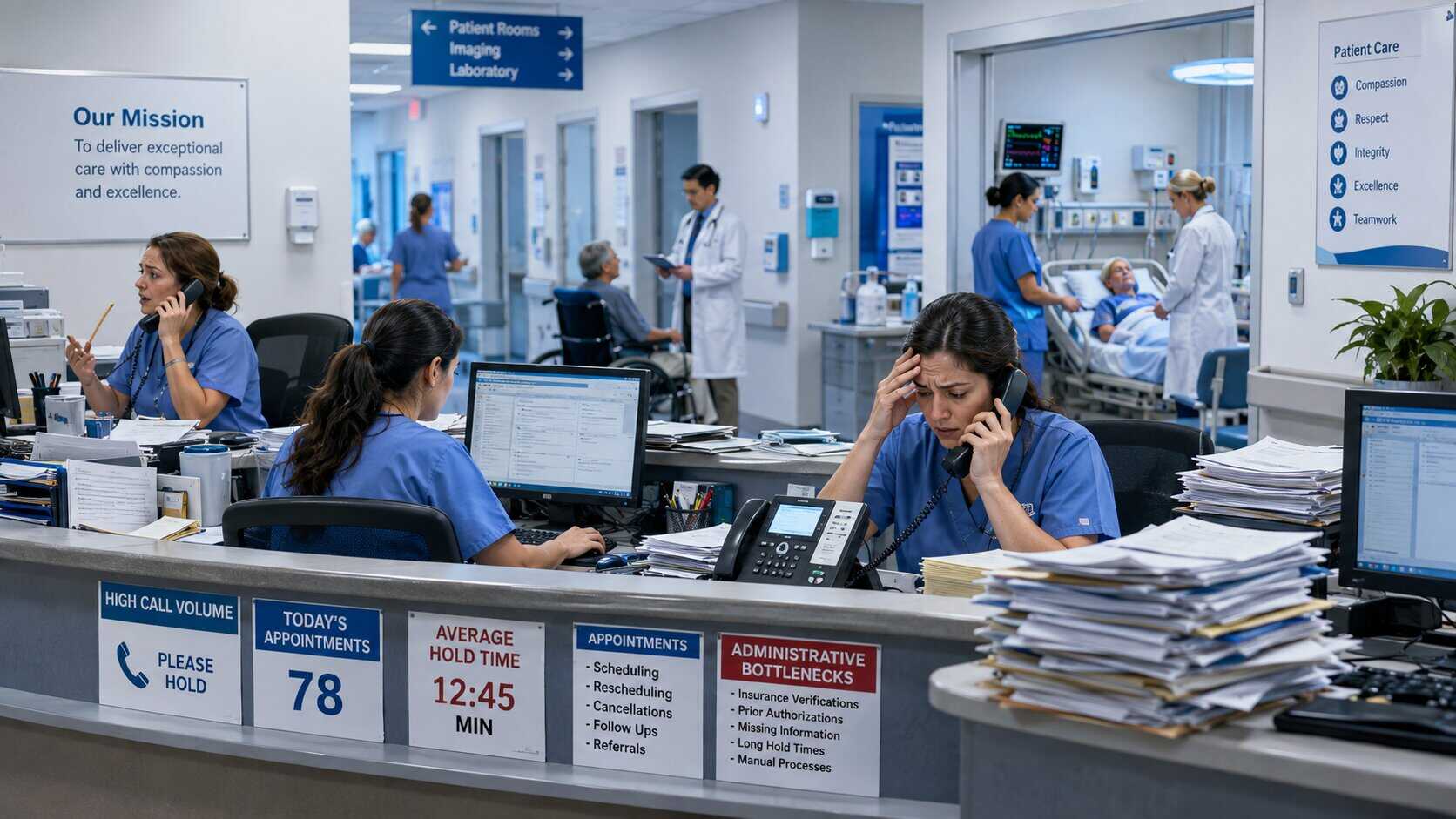
Healthcare systems across the world are under immense pressure. Whenever long waiting times, delayed appointments, or overwhelmed hospitals make headlines, the immediate assumption is that there simply are not enough doctors. While physician shortages certainly exist, they are only one piece of a much larger problem.
The reality is that many hospitals and clinics lose valuable time long before a patient even meets a physician. Phone lines remain busy, appointments are rescheduled repeatedly, administrative teams juggle thousands of routine tasks, and patients struggle to get accurate information. These operational inefficiencies create delays that affect everyone involved.
The biggest challenge is no longer just clinical capacity. It is how healthcare organizations manage communication, coordination, and patient flow. Improving these areas allows existing medical teams to spend more time practicing medicine instead of handling repetitive administrative work.
Where Healthcare Really Loses Time
Hospitals function through hundreds of connected processes. When even one of them slows down, the impact spreads throughout the entire patient journey.
Some of the biggest operational bottlenecks include:
- High call volumes overwhelming reception staff
- Missed or cancelled appointments
- Slow patient registration
- Manual scheduling across departments
- Delayed follow-up communication
- Administrative paperwork consuming clinical time
- Poor coordination between departments
These issues often appear small individually, but together they create significant delays that reduce efficiency across the organization.
Administrative Work Is Consuming Clinical Capacity
Doctors spend years developing medical expertise. Yet many continue spending valuable hours on tasks that do not require medical judgment.
Examples include:
Managing Appointment Requests
Many physicians still review scheduling conflicts, cancellations, or referral requests instead of focusing entirely on patient care.
Answering Routine Patient Questions
Patients frequently call about:
- Clinic timings
- Prescription refills
- Diagnostic reports
- Insurance queries
- Follow-up instructions
Most of these conversations require administrative assistance rather than medical expertise.
Documentation and Coordination
Healthcare professionals also spend considerable time updating records, coordinating referrals, and communicating with multiple departments. While necessary, these activities reduce the number of patients they can actually treat.

Communication Gaps Create Longer Patient Journeys
One unanswered phone call can quickly become a missed consultation.
Patients often experience frustration because they cannot:
- Reach the hospital easily
- Confirm appointments
- Receive timely reminders
- Understand preparation instructions
- Get post-treatment guidance
The result includes:
- Higher no-show rates
- Delayed treatments
- Increased emergency visits
- Lower patient satisfaction
- Additional workload for staff
Instead of improving patient care, hospitals end up repeating administrative processes multiple times.
Better Workflows Multiply Existing Resources
Increasing the number of doctors certainly helps, but expanding medical staff alone cannot solve inefficient workflows.
Hospitals that optimize operations generally improve performance by:
Automating Repetitive Communication
Routine interactions such as appointment confirmations, reminders, prescription notifications, and follow-up calls can be managed automatically while maintaining a consistent patient experience.
Smarter Patient Routing
Patients should reach the correct department without navigating multiple transfers or waiting endlessly on hold.
Faster Information Access
Connecting scheduling systems, patient records, and hospital databases reduces duplicate work and enables quicker decision-making.
Rather than replacing healthcare professionals, technology removes repetitive operational burdens so clinicians can focus on complex medical care.
Why Intelligent Communication Matters More Than Ever
Healthcare communication extends far beyond answering incoming calls.
Modern hospitals manage thousands of daily conversations involving:
- Appointment bookings
- Diagnostic scheduling
- Insurance verification
- Vaccination reminders
- Medication adherence
- Chronic disease follow-ups
- Patient education
- Emergency coordination
Managing this volume manually becomes increasingly difficult as patient numbers continue to grow.
Many healthcare organizations are now adopting a Voice AI Platform to automate routine patient conversations while integrating directly with hospital workflows. Instead of replacing staff, these systems support existing teams by handling repetitive communication efficiently.
Similarly, Voice AI Agents can answer common patient questions, schedule appointments, route urgent calls appropriately, and escalate complex medical situations to human staff whenever necessary. This allows administrative teams to dedicate more attention to cases requiring personal assistance.
Improving Patient Experience Without Expanding Workforce
Patients rarely evaluate hospitals only by medical outcomes. Their experience begins much earlier.
Important factors include:
Easy Appointment Scheduling
Patients expect quick bookings without repeated phone calls or long waiting periods.
Timely Communication
Clear reminders and proactive updates reduce confusion while improving attendance.
Faster Response Times
Immediate responses help patients feel supported even before arriving at the hospital.
Consistent Follow-ups
Post-treatment communication improves medication adherence and encourages better recovery outcomes.
Healthcare organizations implementing Voice AI for Healthcare are increasingly improving these experiences by ensuring patients receive timely, accurate, and consistent communication throughout their care journey.
 Building a More Efficient Healthcare System
Solving healthcare bottlenecks requires improving the entire patient journey rather than focusing solely on physician numbers.
Healthcare leaders should prioritize:
- Eliminating repetitive administrative tasks
- Simplifying patient communication
- Integrating disconnected systems
- Reducing appointment no-shows
- Supporting front-desk teams with automation
- Giving clinicians more uninterrupted patient time
- Measuring operational efficiency alongside clinical outcomes
When hospitals improve operational workflows, doctors gain additional time to focus on diagnosis, treatment, and patient relationships instead of administrative coordination.
Conclusion
The healthcare industry certainly needs more doctors, but physician shortages are not the only reason patients experience delays. Much of the congestion happens because outdated communication processes, manual workflows, and administrative overload consume valuable time across every stage of care.
Hospitals that modernize these operational processes create a better experience for patients while allowing healthcare professionals to practice at the top of their expertise. Improving coordination, reducing repetitive work, and strengthening communication can unlock significant capacity without requiring dramatic increases in staffing.
The future of healthcare depends not only on adding more clinicians but also on building smarter systems that help every doctor, nurse, and administrator work more efficiently together.
Frequently Asked Questions
1. Why are hospitals experiencing long waiting times?
Long waiting times often result from administrative inefficiencies, communication delays, appointment management issues, and workflow bottlenecks rather than physician shortages alone.
2. How does operational efficiency improve healthcare?
Efficient workflows reduce administrative burden, shorten patient wait times, improve scheduling accuracy, and allow clinicians to spend more time providing care.
3. What causes missed healthcare appointments?
Common causes include poor communication, lack of reminders, scheduling conflicts, difficulty contacting hospitals, and delayed follow-up processes.
4. Can technology reduce hospital administrative workload?
Yes. Automation can manage appointment scheduling, patient reminders, routing, and routine inquiries, allowing staff to focus on higher-value responsibilities.
5. Why is patient communication important in healthcare?
Clear and timely communication improves patient satisfaction, reduces missed appointments, supports treatment adherence, and strengthens overall healthcare delivery.