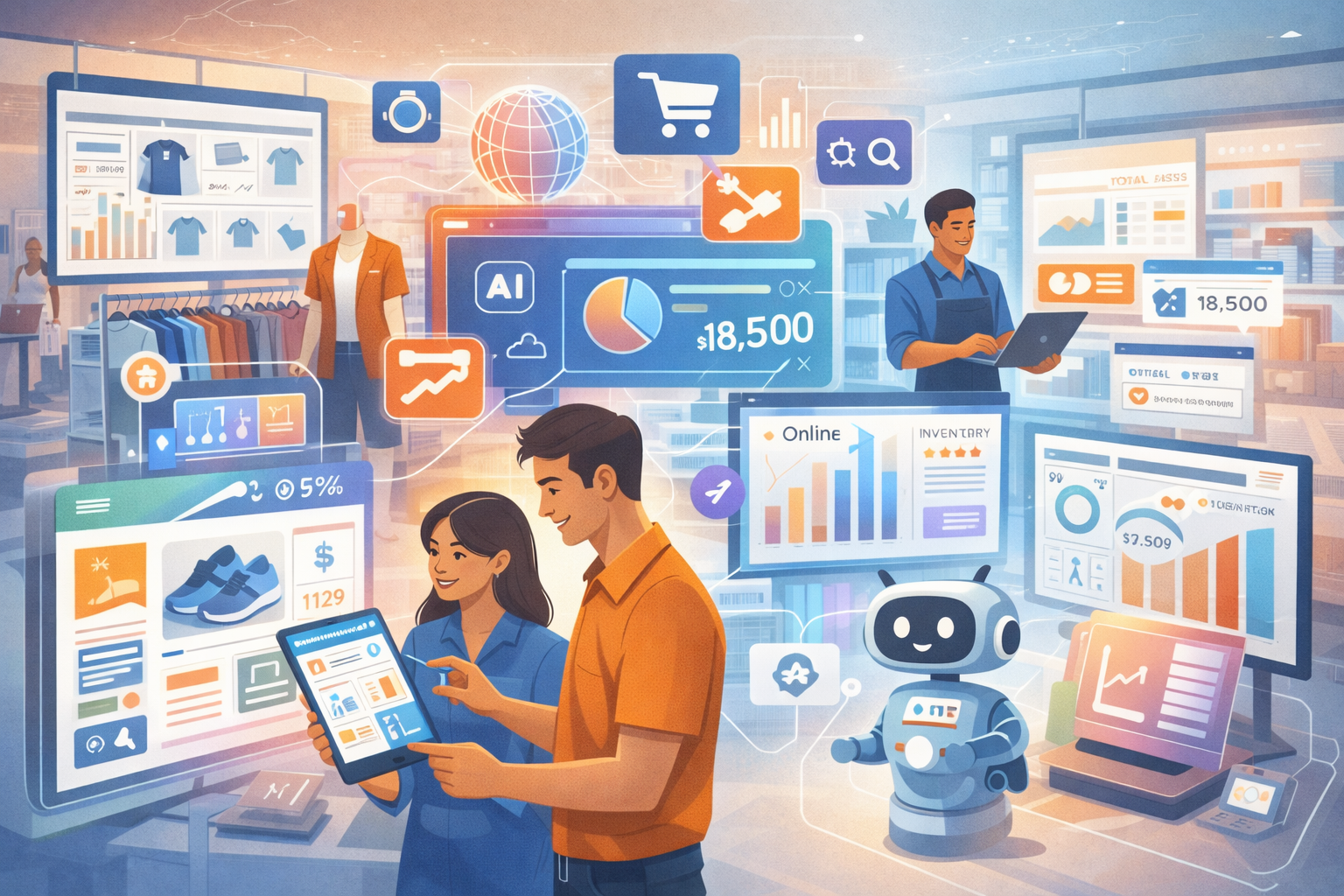
In today’s competitive retail landscape, relying solely on gut feeling or traditional methods is no longer enough. Retailers are turning to data to guide every aspect of their business, from inventory management to personalized marketing. But being “data-driven” isn’t just about having a sleek dashboard with colorful charts. It’s about leveraging actionable insights that drive real decisions and measurable growth.
Understanding Data-Driven Retail
Data-driven retail refers to the practice of using data to inform strategic and operational decisions. Retailers collect vast amounts of information, such as sales figures, customer behavior, inventory levels, and online engagement metrics, but simply collecting data is not enough. The challenge lies in turning that data into insights that can shape better decisions.
Dashboards are a starting point. They offer visibility into metrics like sales trends or foot traffic. However, dashboards are static in nature; they show what happened, but not necessarily why it happened or what actions to take next. True data-driven retail goes beyond visualization, combining analytics, predictive modeling, and actionable strategies.
Key Components Beyond Dashboards
Here’s what sets next-generation data-driven retail apart:
1. Predictive Analytics
Predictive analytics uses historical data to forecast future trends. For example, a retailer can predict which products will be in demand during upcoming seasons and adjust inventory accordingly. This proactive approach minimizes stock-outs, reduces waste, and ensures customers find what they want when they want it.
2. Customer Insights
2. Customer Insights
Understanding customers is at the heart of retail success. Beyond dashboards, retailers use advanced analytics to segment customers, track their behavior, and tailor experiences. Personalized recommendations, targeted promotions, and loyalty programs are all outcomes of deeper customer insights.
3. Real-Time Decision-Making
Retail today moves fast. In-store and online environments generate data continuously. Data-driven retailers leverage real-time analytics to make immediate decisions, adjusting pricing, offering instant promotions, or reallocating inventory based on demand fluctuations.
4. Integrating Multiple Data Sources
True data-driven retail integrates data from multiple touchpoints: POS systems, e-commerce platforms, social media, supply chain logs, and even IoT devices in stores. Combining these sources gives a 360-degree view of operations and customer behavior.
5. Actionable Insights Over Metrics
Metrics and dashboards are informative, but insights are transformative. For instance, noticing that a particular product sells well in urban areas but not in suburban stores is useful. Acting on this insight by adjusting inventory, marketing, or pricing is what drives measurable results.

How Retailers Are Leveraging Data
Leading retailers are already showcasing how going beyond dashboards can transform operations:
- Personalized Marketing: By analyzing purchase history, demographics, and browsing behavior, retailers can send tailored offers that increase engagement and conversion rates.
- Dynamic Pricing: Retailers adjust prices in real-time based on demand, competition, and inventory levels to maximize revenue.
- Optimized Inventory: Predictive analytics help retailers maintain optimal stock levels, preventing both overstocking and stock-outs.
- Enhanced Customer Experience: From AI-powered chatbots to personalized in-store recommendations, data-driven insights enable smoother, more engaging customer journeys.
Challenges in Becoming Truly Data-Driven
While the benefits are clear, the journey isn’t without obstacles:
- Data Quality: Inaccurate or incomplete data can lead to poor decisions. Retailers need robust systems for data cleaning and validation.
- Technology Integration: Combining multiple platforms, from e-commerce systems to in-store sensors, can be complex.
- Skill Gaps: Analytics requires skilled personnel who can interpret data and translate insights into action.
- Overreliance on Tools: Dashboards and tools are helpful, but they can’t replace critical thinking and strategic planning.
Addressing these challenges often involves partnering with specialized Retail Software Development Companies that provide custom solutions tailored to each retailer’s unique ecosystem. From integrating disparate data sources to creating predictive models, these companies help retailers extract real value from their data.
The Future of Data-Driven Retail
The evolution of retail will continue to favor companies that leverage data intelligently. Emerging trends include:
- AI and Machine Learning: Automating decision-making and enhancing personalization at scale.
- IoT-Enabled Stores: Smart shelves and connected devices providing real-time inventory and behavior data.
- Unified Data Platforms: Breaking down silos to create a single source of truth across all retail channels.
- Hyper-Personalization: Moving beyond segment-based marketing to individualized experiences in real-time.
By embracing these innovations, retailers can turn data into a competitive advantage, not just a set of charts on a screen.
Conclusion
Being data-driven in retail is far more than monitoring dashboards and key metrics. It’s about transforming raw data into actionable insights that inform decisions across marketing, inventory, pricing, and customer experience. Retailers who embrace predictive analytics, integrate multiple data sources, and make real-time decisions create more personalized, efficient, and profitable operations.
In addition, data-driven strategies encourage continuous learning and innovation. Retailers can experiment with new approaches, measure results quickly, and refine their processes based on actual outcomes. This iterative approach not only reduces risks but also positions businesses to adapt swiftly to changing consumer trends, emerging technologies, and competitive pressures.
Ultimately, the power of data lies in its ability to guide strategy, foster innovation, and deliver exceptional experiences that keep customers coming back. Those who truly harness this potential will stand out in an increasingly crowded retail landscape.