Why India's Largest Solar Parks Are Built on the Most Difficult Ground
By Hitendra Panchal 08-09-2026 3
Some of India's biggest utility-scale solar installations sit in the salt desert regions of Gujarat and Rajasthan, chosen for exceptional solar irradiance and abundant available land. This same land, much of it saline desert and salt flat terrain, creates foundation and infrastructure engineering challenges considerably more demanding than solar developers face on more conventional sites. The scale of these projects means even small per-panel engineering issues multiply into significant cumulative problems across installations spanning thousands of acres.
Why Salt Desert Terrain Complicates Every Structural Element
Solar panel mounting structures, inverter foundations, and the extensive cabling infrastructure connecting them all need stable, corrosion-resistant foundations to perform reliably across a project's typical twenty-five-year operational life. Saline desert soil threatens this reliability on multiple fronts simultaneously, combining weak, often shifting ground with aggressive salt-driven corrosion conditions that attack buried metal components faster than standard soil would. This combination makes salt desert solar sites meaningfully more engineering-intensive than the flat, stable terrain solar developers might prefer if pure engineering simplicity were the only site selection factor.
Why Panel Foundation Settlement Threatens Energy Output Directly
Solar panel arrays depend on precise foundation alignment to maintain optimal sun-tracking angles across an installation's operational life. Even minor foundation settlement, more likely on loose or saline desert soil than on firmer ground, can throw off panel alignment enough to measurably reduce energy generation across large sections of an array. Given that solar park revenue depends directly on generation output, this alignment sensitivity makes foundation stability a genuine financial consideration, not just a structural one.
Why Salt Exposure Threatens Long-Term Infrastructure Durability
Beyond foundation stability, the extensive underground and near-surface cabling networks connecting panels to inverters and substations face ongoing salt exposure risk throughout a solar park's operational life. Salt-accelerated corrosion of cable protection and grounding infrastructure can create both maintenance headaches and, in worse cases, safety issues if protective systems degrade faster than planned maintenance schedules anticipate. This corrosion risk compounds over the extended operational timeline typical of utility-scale solar investment.
Why Barrier Protection Has Become Part of Modern Solar Site Engineering
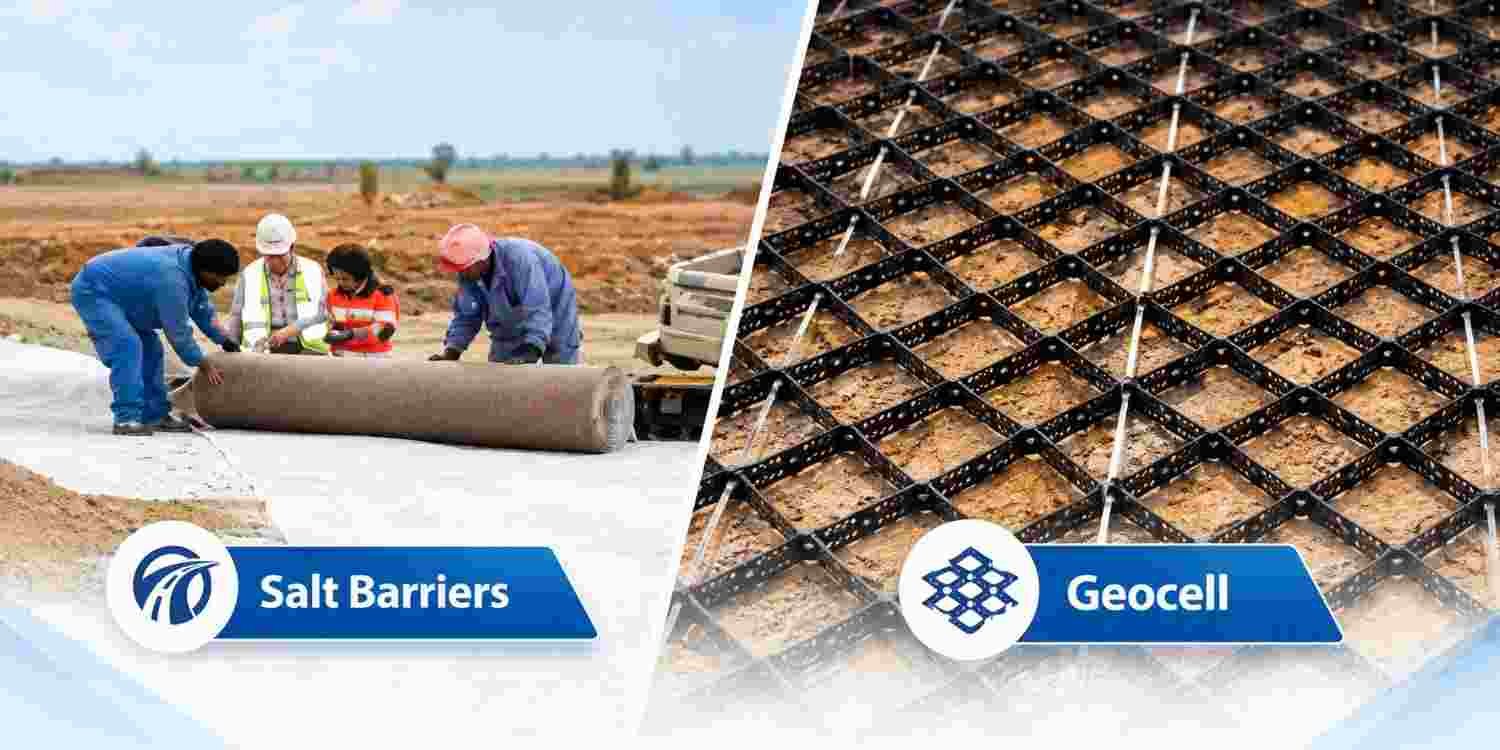
Solar installations in confirmed saline desert regions increasingly incorporate dedicated barrier protection around foundation and underground infrastructure elements, specifically to limit direct saline soil exposure beyond what standard protective measures alone provide. Projects using salt barrier geocomposite protection around foundation and cable corridor infrastructure in these regions report meaningfully reduced corrosion-related maintenance issues compared to standard protection alone. Given the twenty-five-year design life typical of utility-scale solar investment, this upfront protective measure represents a reasonable investment against a very long-term corrosion risk.
How Ground Stabilization Supports Panel Foundation Stability
Weak or loose desert soil beneath solar panel foundations increasingly gets stabilized using confinement structures from established geocell manufacturers in india, distributing foundation loading more evenly across improved subgrade without requiring extensive deep foundation work across every one of potentially hundreds of thousands of individual panel mounting points in a large installation. This approach offers meaningful construction efficiency advantages given the sheer scale of foundation work involved in utility-scale solar projects, where even small per-unit cost or time savings multiply significantly across an entire installation.
Why Access Road Networks Face Similar Ground Challenges
Beyond panel foundations themselves, the extensive internal access road networks required for construction and ongoing maintenance across large solar installations face the same challenging saline desert ground conditions. These roads need to support both heavy construction equipment during the build phase and ongoing maintenance vehicle access throughout the facility's operational life. Addressing ground stability across this road network requires the same engineering attention given to the panel foundations themselves, since access road failure can disrupt maintenance operations across an entire section of a large facility.
Why Getting This Right Matters More at Utility Scale
Utility-scale solar projects represent enormous capital investment, and given how directly generation revenue depends on consistent panel alignment and reliable infrastructure operation, ground engineering quality translates almost directly into project financial performance over its operational life. Developers who treat saline desert ground engineering as seriously as they treat panel technology and inverter selection avoid the kind of gradual performance degradation and rising maintenance costs that can significantly affect a project's long-term returns. This connection between civil engineering quality and financial performance is increasingly well understood among experienced utility-scale solar developers working in these challenging desert regions.
What This Means for India's Continued Solar Expansion
As India's renewable energy targets continue pushing solar development into increasingly marginal and challenging terrain, including saline desert regions offering abundant land and strong solar resource, the ground engineering expertise required for these sites matters increasingly for project success. Developers who invest properly in foundation stabilization and salt corrosion protection from the outset position their projects for reliable, predictable performance across the full multi-decade operational life these investments are designed to deliver. Getting this right protects both individual project returns and India's broader renewable energy capacity expansion goals.