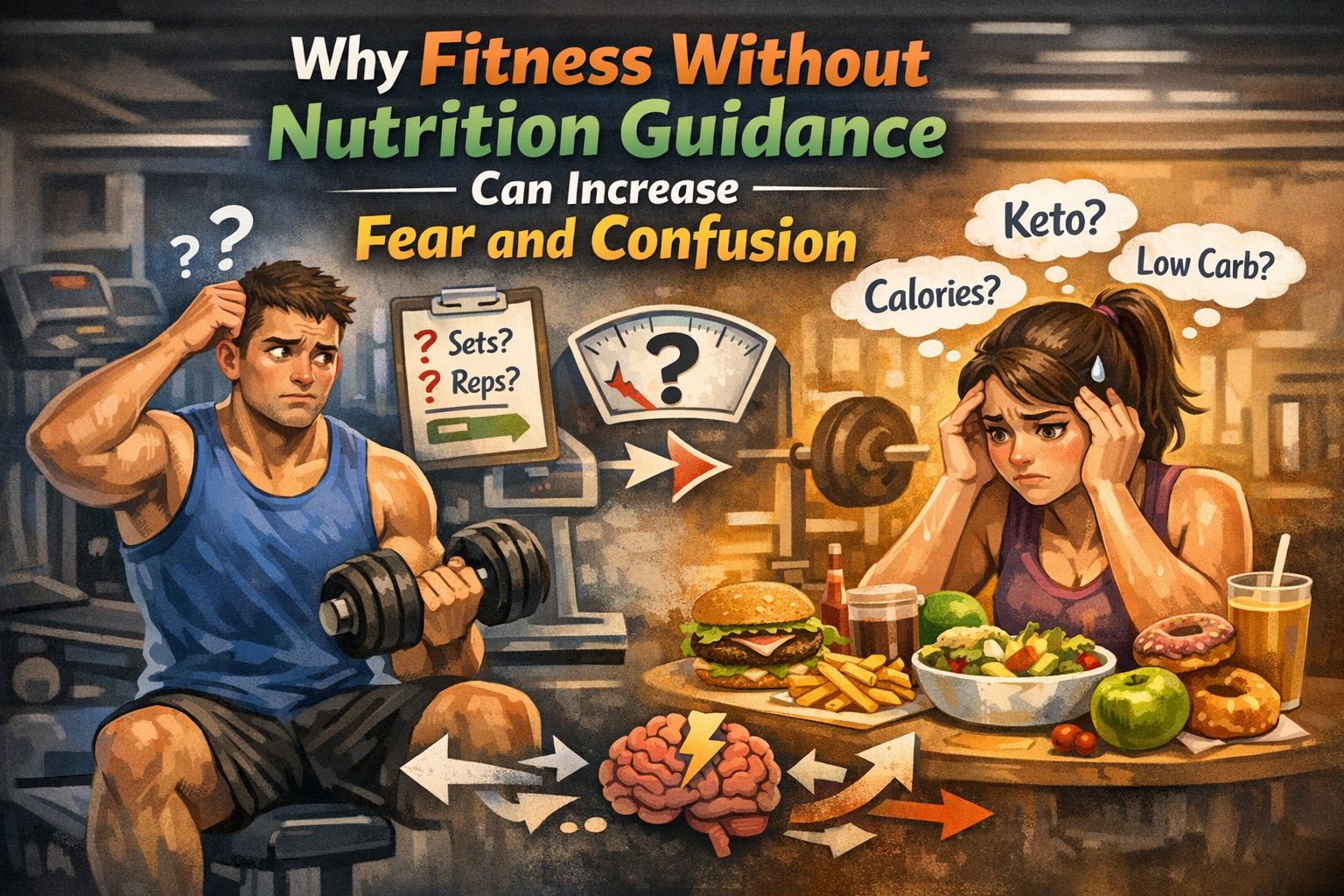
My mate Shireen spent four months going to the gym five days a week. He was consistent. More consistent than most people I know. He tracked his workouts, pushed himself hard, barely missed a session. At the end of those four months, he'd lost about two kilograms. He was exhausted, confused, and honestly — a little broken about it.
He didn't have bad genetics. He didn't have a terrible trainer. What he didn't have was anyone talking to him about food. Not once. Not a single conversation about what he was eating, when he was eating it, or whether any of it was helping or fighting against all that effort he was putting in at the gym.
That gap — between training hard and eating in a way that supports that training — is where so many people quietly fall apart. And it's a bigger problem than the fitness world likes to admit.
Exercise Alone Creates a Lot of Unanswered Questions
When you start working out seriously, something funny happens. You become more aware of your body than you've ever been. You start noticing things — how you feel after certain meals, how much energy you have on certain days, why some sessions feel electric and others feel like you're moving through wet concrete.
And then you start Googling. That's where it goes sideways.
Should I eat before a morning workout or not? Is protein really that important or is it just gym culture? Are carbs fine or should I be cutting them? What about eating after a session — does the timing actually matter? The internet has seventeen different answers to every single one of those questions, and at least four of them are completely contradictory.
Without a proper fitness instructor or health coach who also addresses nutrition, you're left trying to stitch together advice from strangers on YouTube and Reddit threads from 2016. It's exhausting. And more often than not, it leads to either doing nothing differently or swinging wildly between extreme approaches that never stick.
The Confusion Turns Into Fear Pretty Quickly
Here's what I've noticed watching people go through this cycle. The confusion doesn't stay neutral for long. It turns into something worse — a creeping fear that maybe you're doing everything wrong. That all that effort is actually useless. That your body just doesn't respond the way other people's do.
That fear is what makes people quit. Not laziness. Not lack of willpower. The feeling that no matter how hard they work, the results don't come — and they have no idea why.
When you train without any nutrition guidance, you're essentially trying to drive somewhere with half a map. The gym part is there. The food part — the thing that accounts for a massive chunk of how your body actually changes — is just missing. You end up confused, frustrated, and eventually convinced that fitness just isn't for you.
It is for you. You just needed the whole picture.
Fitness Instructors Who Address Both Are a Different Breed
There's a real difference between a trainer who counts your reps and a fitness instructor who actually looks at the full picture. The good ones — the ones who have been doing this long enough to see patterns — know that training and nutrition are not two separate things you handle in two separate conversations. They're the same conversation.
They'll ask about your eating habits in the first session, not as an afterthought, but as a genuine part of understanding where you are. They'll flag when your energy crashes mid-workout might actually be a fuelling issue, not a fitness one. They'll tell you honestly when the plan you found online doesn't match what your body actually needs right now.
That level of joined-up thinking is what separates someone who spins their wheels for months from someone who starts seeing real change. The fitness instructors on Fit Street get this. It's part of what makes the platform worth using — you're not just finding someone to lead a session, you're finding someone who thinks about your results as a whole.
The Emotional Weight of Eating and Exercise Together
Something people don't talk about enough — the relationship between food and exercise isn't just physical. For a lot of people, it's deeply emotional.
There are people who've spent years associating food with guilt, with reward, with comfort when things get hard. Dropping them into a workout routine without addressing any of that doesn't fix it. It can actually make it worse. Suddenly they're burning calories and feeling like they've "earned" food, or restricting more because the scale isn't moving, or eating out of frustration after a brutal session because nobody told them that was going to happen.
A thoughtful fitness instructor — the kind you find when you book fitness and health instructors on a platform like Fit Street — recognizes when the problem in front of them is bigger than exercise. They don't have to be a therapist or a registered dietitian to say "I think we need to also talk about how you're eating and how you feel about food." That conversation alone can change everything.
What Actually Happens When Both Are Addressed Together
James — my mate from the beginning of this — eventually found a trainer on Fit Street who spent the first two sessions not in the gym at all. They sat down, went through his training history, and then talked through a week of his typical eating. Three days later he had a simple nutrition framework to work alongside his training. Nothing extreme. No meal plans that required a spreadsheet. Just clear, practical guidance about what to eat, roughly when, and why.
Within six weeks he'd lost more than he had in the previous four months combined. More importantly, he stopped feeling confused. The fear that he was somehow broken faded almost immediately once he understood what had actually been missing.
That's what happens when someone helps you with the whole thing. Not just half of it.
You Deserve Guidance That Covers Everything
If you've been working out consistently and not seeing the results you expected — don't assume it's you. Before you blame your metabolism or your genetics or your willpower, ask yourself whether anyone has ever actually helped you understand how eating and training work together for your specific body and lifestyle.
Probably not. Because most gym memberships don't come with that. Most standard personal training packages skip it entirely. And most people just quietly assume they're doing something wrong without ever getting a straight answer about what that something actually is.
Fit Street exists to fix that. When you book fitness and health instructors through Fit Street, you get to find coaches who work with the full picture. People who understand that getting results isn't just about how hard you train — it's about making sure everything else supports that training too.
Browse the fitness and health instructors on Fit Street. Find one whose approach covers both sides. Then book fitness and health instructors for a first session and actually have the conversation you've probably needed to have for a while.
The confusion doesn't have to keep going. The right fitness instructor can clear most of it up faster than you'd expect.