Soil degradation affects a significant share of India's agricultural land, driven by decades of intensive cultivation, chemical fertilizer overuse, and inadequate soil management practices in many regions. Farmers and agricultural researchers have increasingly looked toward natural mineral amendments as one tool for restoring soil structure and fertility. This approach sits alongside, rather than replacing, more conventional soil management practices.
Why Soil Structure Matters as Much as Nutrient Content
Farmers and agricultural extension programs have traditionally focused heavily on nutrient content when addressing poor soil, adding fertilizers to compensate for depleted nitrogen, phosphorus, and potassium. Soil structure, the physical arrangement of particles that affects water retention, aeration, and root penetration, gets comparatively less attention despite being equally important to long-term soil health. Poor structure limits how effectively even well-fertilized soil can actually support healthy plant growth.
How Mineral Amendments Improve Structure
Certain natural minerals, when incorporated into degraded soil, can improve water retention capacity and physical structure in ways that purely chemical fertilizers don't address. This matters particularly in sandy or structurally poor soils that struggle to retain moisture and nutrients long enough for crops to use them effectively. Mineral amendment approaches work as a complement to fertility management rather than a replacement for it.
Ball Clay's Role in Water Retention Improvement
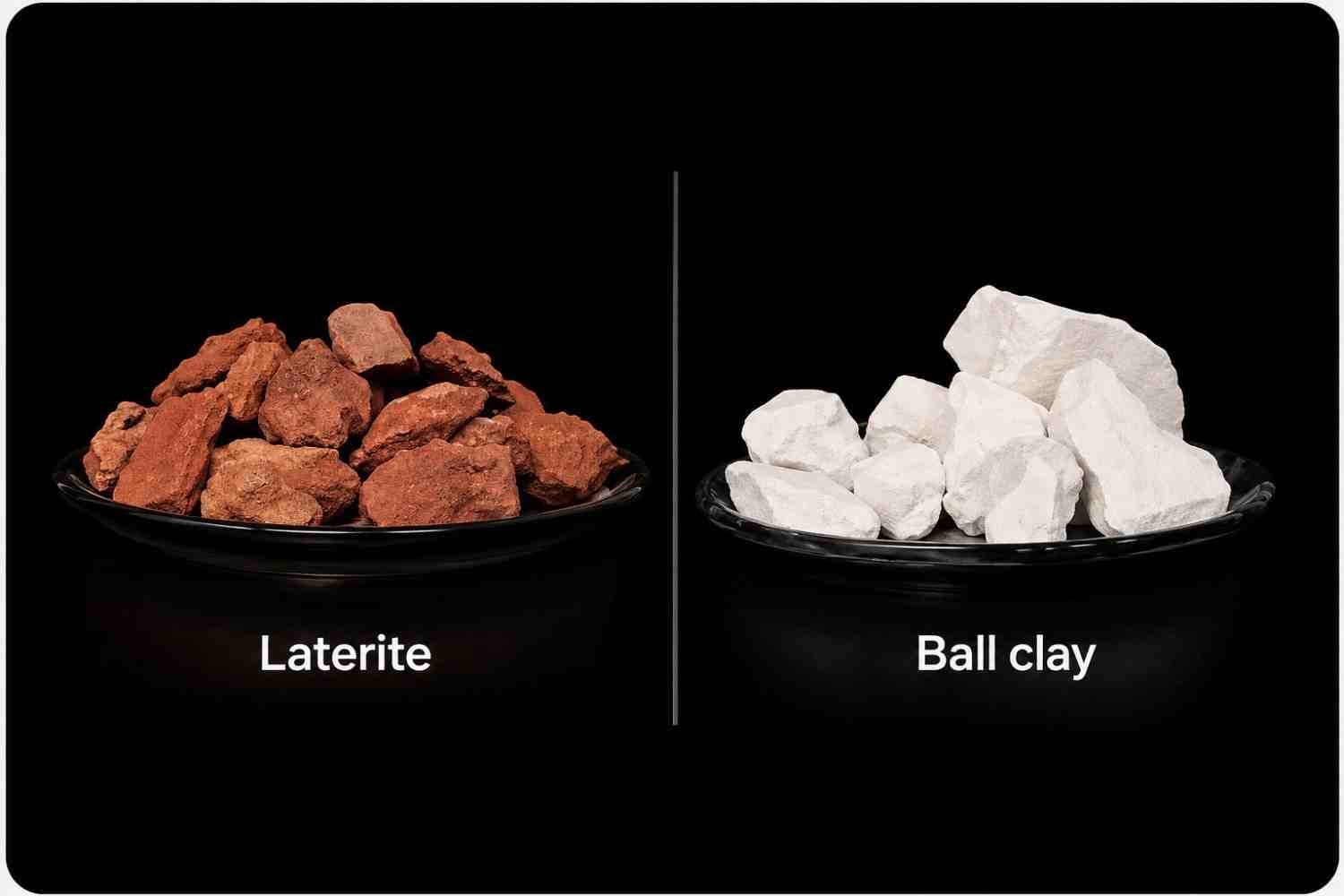
Ball clay's fine particle structure gives it natural water retention properties that make it useful as a soil amendment in specific agricultural contexts, particularly for improving moisture retention in sandy or structurally weak soils. Agricultural researchers and larger farming operations sourcing consistent ball clay for this purpose need material with reliable particle characteristics, since amendment effectiveness depends on the material actually delivering the structural improvement it's intended to provide. This application sits alongside ball clay's more established uses in ceramics and industrial contexts, representing a genuinely different market with different specification priorities.
Why This Application Remains Relatively Niche
Mineral-based soil amendment using materials like ball clay hasn't achieved the same scale of adoption as conventional fertilizer application, partly due to cost considerations and partly because awareness of this approach remains limited outside specialized agricultural research and larger commercial farming operations. Smaller farmers, who represent the majority of Indian agricultural landholders, often lack access to both the information and the supply chains that would make this kind of amendment practical at their scale. This represents a genuine gap between what research suggests could help and what's actually accessible to most farmers.
Laterite's Traditional Role in Regional Agriculture
Laterite-derived soils, common across significant parts of southern and eastern India, present their own distinct agricultural management challenges due to their naturally low fertility and specific mineral characteristics. Understanding laterite material composition has become important for agricultural researchers working to develop effective management practices for farmers cultivating on these naturally challenging soil types. This is somewhat different from other applications discussed here, focused less on laterite as an amendment added to other soils and more on managing agriculture directly on laterite-derived land.
Why Region-Specific Agricultural Knowledge Matters
Generic agricultural advice developed for more fertile soil types doesn't always transfer effectively to laterite-dominated regions, where farmers need practices specifically adapted to these soils' particular characteristics. Agricultural extension programs serving these regions increasingly recognize the value of region-specific guidance built around actual local soil conditions rather than broadly applicable national recommendations. This localized approach requires genuine understanding of laterite material properties at the research and extension program level.
The Research Gap in Mineral-Based Soil Management
Continued research into mineral-based soil amendment and management for challenging soil types depends on consistent, well-characterized material for testing and field trials. Agricultural research institutions working in this space need reliable access to properly documented material, similar to the research supply chain considerations seen in other applications discussed elsewhere in agricultural mineral science. This research infrastructure, while less visible than direct farmer-facing programs, ultimately shapes what recommendations eventually reach farming communities.
Why This Connects to Broader Food Security Questions
Soil degradation directly threatens long-term agricultural productivity in affected regions, connecting soil management research to broader food security considerations that extend well beyond any individual farm. Effective, accessible soil improvement approaches, including mineral-based amendments where appropriate, represent one part of a broader toolkit needed to address this challenge at scale. This makes agricultural mineral research and application a genuinely consequential area, even though it receives less public attention than more visible agricultural technology developments.
What This Means for Indian Agriculture
As soil degradation continues affecting agricultural productivity across various Indian regions, approaches that address soil structure and fertility together, rather than fertility alone, offer a more complete path toward sustainable long-term productivity. Natural mineral amendments represent one component of this broader approach, requiring continued research investment and improved accessibility to reach the scale of Indian farming that could genuinely benefit. Suppliers and researchers working to make properly characterized material more accessible to a wider range of agricultural operations support a genuinely important long-term agricultural resilience goal.
Tags : ball clay laterite material