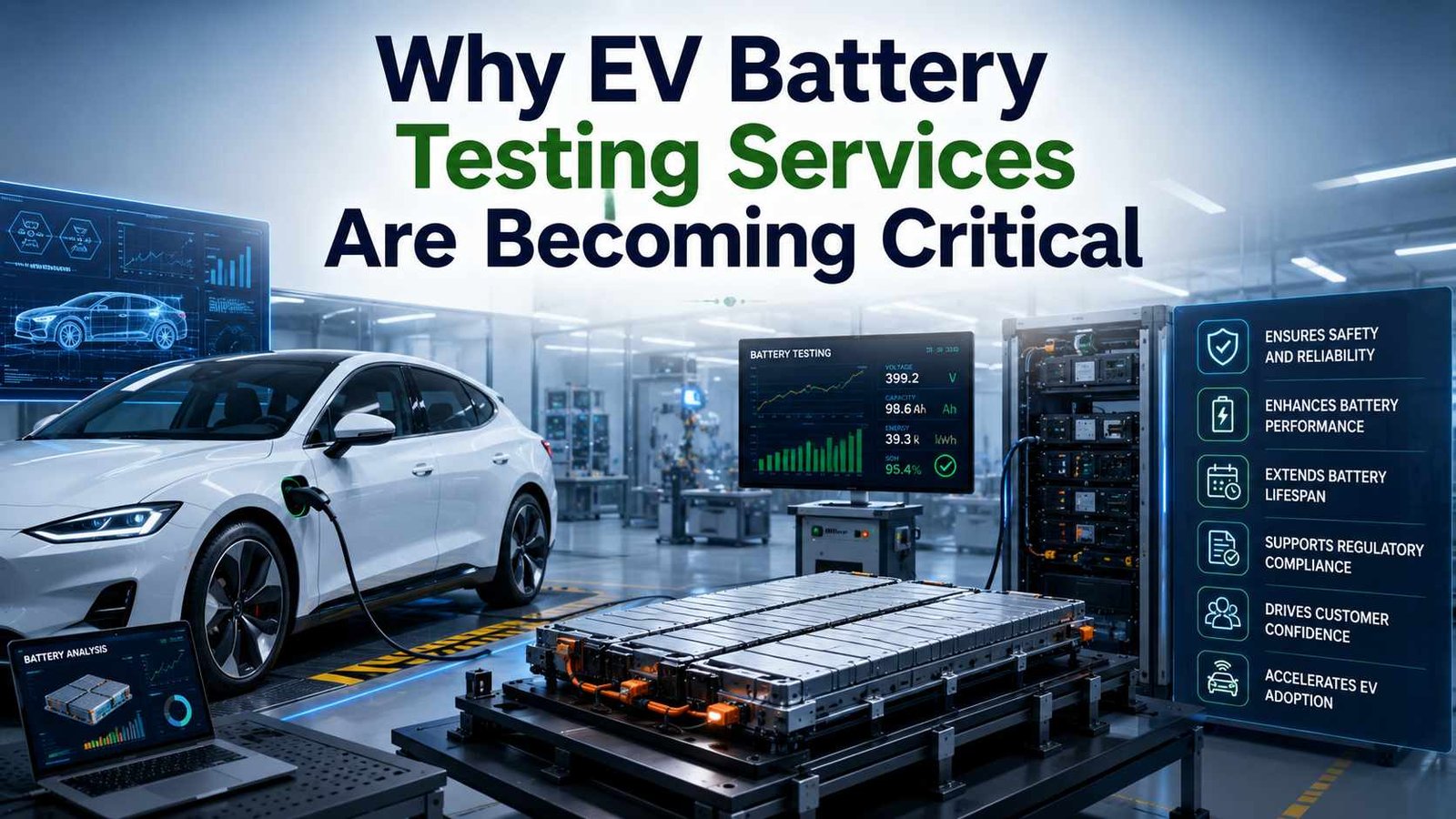
EV battery testing and diagnostic services have become a vital component of the electric mobility ecosystem. As electric vehicle adoption accelerates worldwide, manufacturers, fleet operators, and battery suppliers are placing greater emphasis on battery safety, performance, reliability, and lifecycle management. These services help identify potential issues before they lead to failures, ensuring vehicles operate efficiently throughout their lifespan.
The increasing complexity of battery technologies has created a growing need for advanced diagnostic solutions. Modern electric vehicles rely on sophisticated battery management systems, thermal controls, and software-driven performance optimization. As a result, testing and diagnostics are no longer limited to laboratory environments but are becoming essential throughout battery development, production, deployment, and end-of-life assessment.
According to the EV Battery Testing and Diagnostic Services industry analysis, the sector is witnessing notable growth as automotive manufacturers focus on improving battery durability, safety compliance, and operational efficiency. The expansion of electric mobility programs across multiple regions is creating new opportunities for specialized testing providers and diagnostic technology developers.
Growing EV Adoption Is Driving Demand for Battery Diagnostics
The rapid increase in electric vehicle production is one of the primary factors supporting demand for battery testing services. Every battery pack must undergo extensive validation before deployment to ensure it meets safety and performance requirements. Testing procedures evaluate charging behavior, thermal stability, energy efficiency, durability, and overall battery health.
As vehicle manufacturers introduce new electric models and battery chemistries, testing protocols are becoming increasingly sophisticated. Industry reports indicate that automakers are preparing a significant number of new EV launches to meet rising consumer demand and evolving sustainability goals. This expansion increases the requirement for reliable battery validation and monitoring systems.
Battery Safety and Regulatory Compliance Remain Key Priorities
Battery safety has emerged as one of the most important considerations within the EV industry. Governments and regulatory agencies worldwide continue to strengthen safety standards for electric vehicles, requiring manufacturers to demonstrate battery reliability under various operating conditions.
Diagnostic services play a crucial role in identifying overheating risks, cell degradation, charging irregularities, and structural defects. Advanced testing technologies allow manufacturers to simulate real-world operating environments and detect potential failures before vehicles reach consumers. These capabilities support compliance with evolving industry regulations while helping manufacturers maintain product quality and consumer confidence.
Technological Advances Are Transforming Battery Testing
Artificial intelligence, machine learning, and predictive analytics are reshaping the battery diagnostics landscape. Modern diagnostic platforms can analyze large volumes of operational data to identify performance trends and forecast maintenance requirements. This proactive approach helps reduce downtime and improve battery utilization.
In addition, digital twin technology and cloud-based monitoring systems are enabling real-time battery health assessments. These innovations allow manufacturers and fleet operators to monitor battery performance remotely, improving decision-making and extending battery lifespan. The increasing adoption of connected vehicle technologies further strengthens the value of advanced diagnostic solutions across the EV ecosystem.
The growing diversity of battery electric vehicles continues to expand testing requirements, as manufacturers seek to optimize performance across different vehicle categories and operating environments. Comprehensive testing remains essential for ensuring consistent reliability and efficiency throughout a battery's service life.
Lifecycle Management Creates New Opportunities
Battery testing services are becoming increasingly important beyond the initial manufacturing phase. As the first generation of electric vehicles matures, organizations are focusing on battery lifecycle management, including maintenance, refurbishment, repurposing, and recycling.
Diagnostic assessments help determine remaining battery capacity and identify opportunities for second-life applications. Accurate battery health evaluations support decisions regarding refurbishment and reuse, contributing to sustainability objectives while maximizing asset value. This trend is encouraging investment in specialized testing facilities capable of evaluating batteries at various stages of their lifecycle.
Future Outlook for EV Battery Testing Services
The future of EV battery testing and diagnostic services is closely tied to advancements in battery technology and electric vehicle adoption. As manufacturers pursue higher energy densities, faster charging capabilities, and improved safety features, testing requirements are expected to become more comprehensive.
Industry participants are increasingly investing in automated testing systems, predictive diagnostics, and data-driven battery management solutions. These innovations will help support the growing complexity of electric vehicle batteries while improving reliability and operational efficiency. As the global transition toward electrified transportation continues, battery testing and diagnostics are expected to remain fundamental to ensuring safety, performance, and long-term sustainability across the EV value chain.