A bearing seized on a rolling mill in Jamshedpur last winter because a single grease nipple had been cross-threaded during installation. Nobody noticed for six weeks. The repair cost more than the entire lubrication fitting inventory for that line would have. That's the real story behind lubrication fittings — they're small, they're cheap individually, and they're the single point of failure everyone forgets to inspect. Machines need lubrication fittings because they're the only physical interface between your lubrication system and the moving parts that actually wear out. Get the fitting wrong — wrong thread, wrong material, wrong pressure rating — and the rest of the system doesn't matter.
Specification
Thread Types and Pressure Ratings
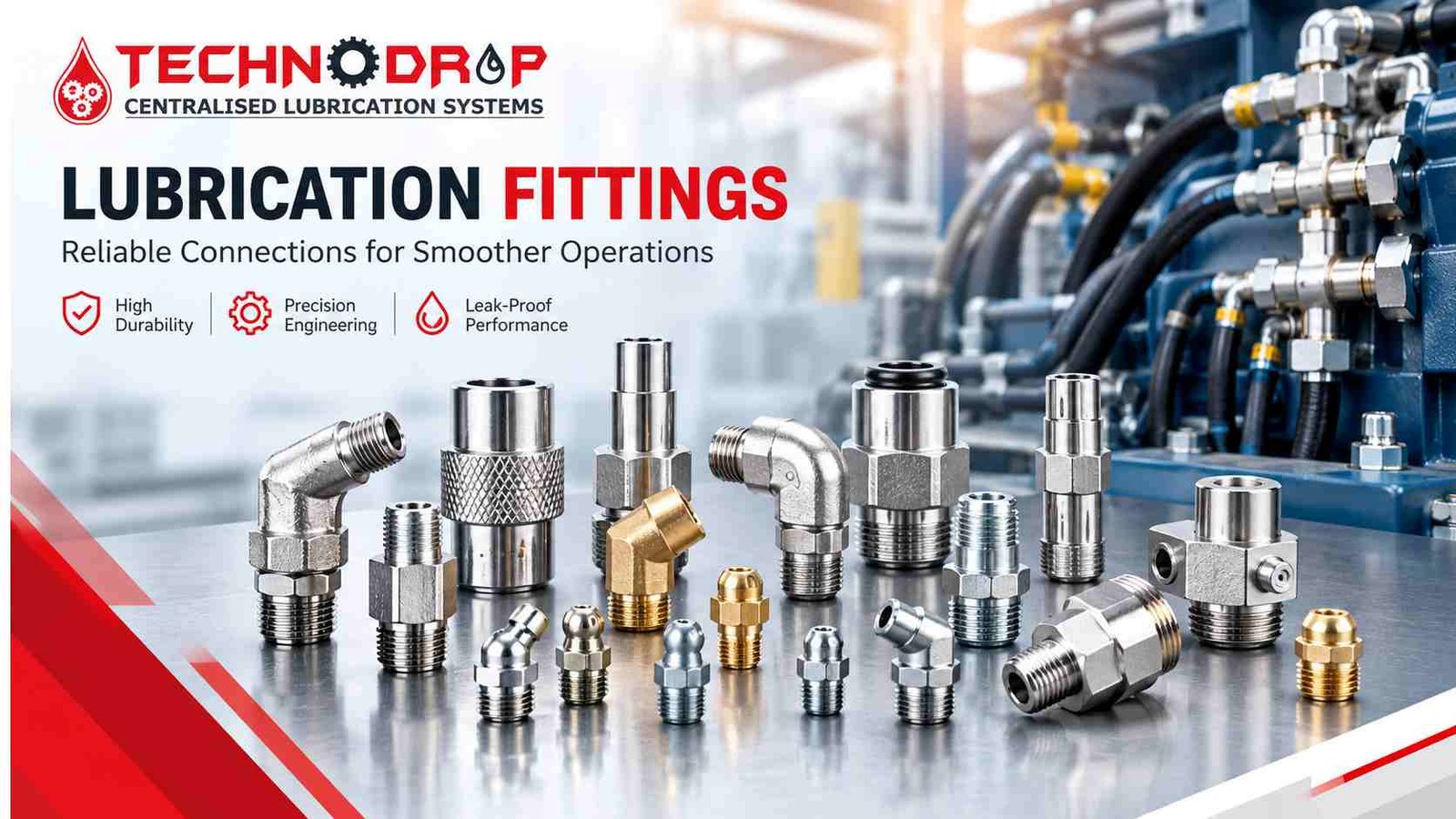
Lubrication fittings come in metric and BSP threads, straight and angled bodies, and pressure ratings that typically range from 3,000 to 10,000 PSI depending on application. Standard button-head, flush-type, and pipe-thread fittings serve different mounting constraints.
Material Grades That Matter
Most buyers specify brass or steel and stop there. That's the detail buyers typically overlook — the difference between electroless nickel-plated steel and standard zinc-plated steel in a high-humidity cement plant is a fitting that lasts 4 years versus one that corrodes shut in 14 months.
Check Valve Function
Every fitting needs a working check valve. Without one, grease pushes back out under system pressure instead of into the bearing — a failure mode that looks like a working system right up until it isn't.
Objective
Five criteria to judge any supplier before you order:
- Thread tolerance documentation. A bad answer sounds like "they generally fit fine." A good supplier hands you a tolerance chart.
- Batch traceability. If they can't trace a fitting back to its production batch, they can't tell you why 200 units failed together.
- Pressure test data. Ask for burst-pressure figures. If they hesitate, they haven't tested recently.
- Plating consistency. Inconsistent plating thickness across a batch means inconsistent corrosion resistance. Ask to see samples from three different production runs.
- Lead time honesty. A supplier who promises 3 days for a custom thread pattern is either lying or hasn't checked their own queue.
Benefits
Buying the right lubrication fittings protects more than machine uptime.
- Fewer unplanned stoppages. A fitting failure on a conveyor system in a mining operation doesn't just stop one machine — it stops the line feeding it.
- Lower warranty exposure. OEMs who spec substandard fittings inherit the field failures.
- Reduced grease waste. A fitting with a reliable check valve stops the slow, constant seep that wastes grease and hides real consumption data.
- Better audit outcomes. Traceable batches matter when a client's quality team asks where a component came from.
- Predictable maintenance scheduling. Consistent fittings mean your PM intervals actually hold.
- Protection against counterfeit substitution. This is the one nobody wants to talk about, but unbranded fittings from unverified sources circulate more than most procurement teams realize.
Availability
We manufacture and supply Lubrication Fittings across India, with dedicated distribution reaching Maharashtra, Gujarat, Tamil Nadu, and the steel belt running through Jharkhand and Odisha. Here's a geographical reality most buyers don't factor in: a fitting failure in a remote mining site in Chhattisgarh costs far more in downtime than the same failure at a plant an hour from a major industrial hub, simply because replacement lead time compounds with distance. That's why working with Lubrication Fittings Manufacturers in India who maintain regional stock — rather than importing on demand — actually changes your risk profile, not just your delivery timeline.
About Us
We've been building centralised and automatic lubrication systems since 2011, and fittings were never an afterthought for us — they're the part of the system installers touch the most and trust the least. We switched our primary plating vendor in 2022 after field reports from two OEM clients showed premature pitting on fittings deployed near coastal cement plants. It cost us a production quarter to requalify the new vendor. We did it anyway. That's what a decade of installation feedback from actual maintenance crews looks like.
Send us your thread specification, application environment, and required pressure rating, and we'll respond within 24 hours with a quote and available stock. Minimum order quantity is 500 units for standard threads; custom threads start at 1,000 units. If you're not sure which fitting your system needs, send us a photo of your existing setup — we can usually identify it faster than a catalog search will.
Conclusion
Lubrication Fittings aren't a line item to rush through. They're the point where your entire lubrication investment either holds or fails, one bearing at a time. Whether you're sourcing from Lubrication Fittings Manufacturers directly or through a distributor, the specification details — thread, material, valve type — decide whether your machines run or your maintenance team spends next quarter chasing preventable failures. Get the fitting right, and everything upstream of it gets easier to trust.
FAQs
1. What is the difference between a lubrication fitting and a grease nipple?
A grease nipple is one of the variety of lubrication fittings, it is the connection used when attaching a grease gun. The other types of lubrication fitting are called check valves, adapters and pipe connectors.
2. How do I know which thread type my machine needs?
Always check the OEM manual first. If you do not have it then order a replacement fitting and when you get it you can measure the outside diameter and thread spacing and then we can usually match it without taking a chance.
3. Are lubrication fittings interchangeable across brands?
Not always: metrics and imperial threads are not compatible, nor are metric pitches. Cross threading occurs between brands, so do not assume you can put one brand of metric against another.
4. What‘s the typical lifespan of a lubrication fitting?
In a clean indoors environment,5-7years is realistic, and in high humidity/high vibration applications that can be 18 months if the plating grade was not specified correctly.
5. Do you supply lubrication fittings for OEM machine builders?
Yes, and we do custom thread patterns for OEM specs, just takes longer than normal catalog items.
Tags : Lubrication fittings