Why DBA Dissertations Fail in UK Business Schools and How to Avoid Mistakes
By Jack Thomas 18-03-2026 213
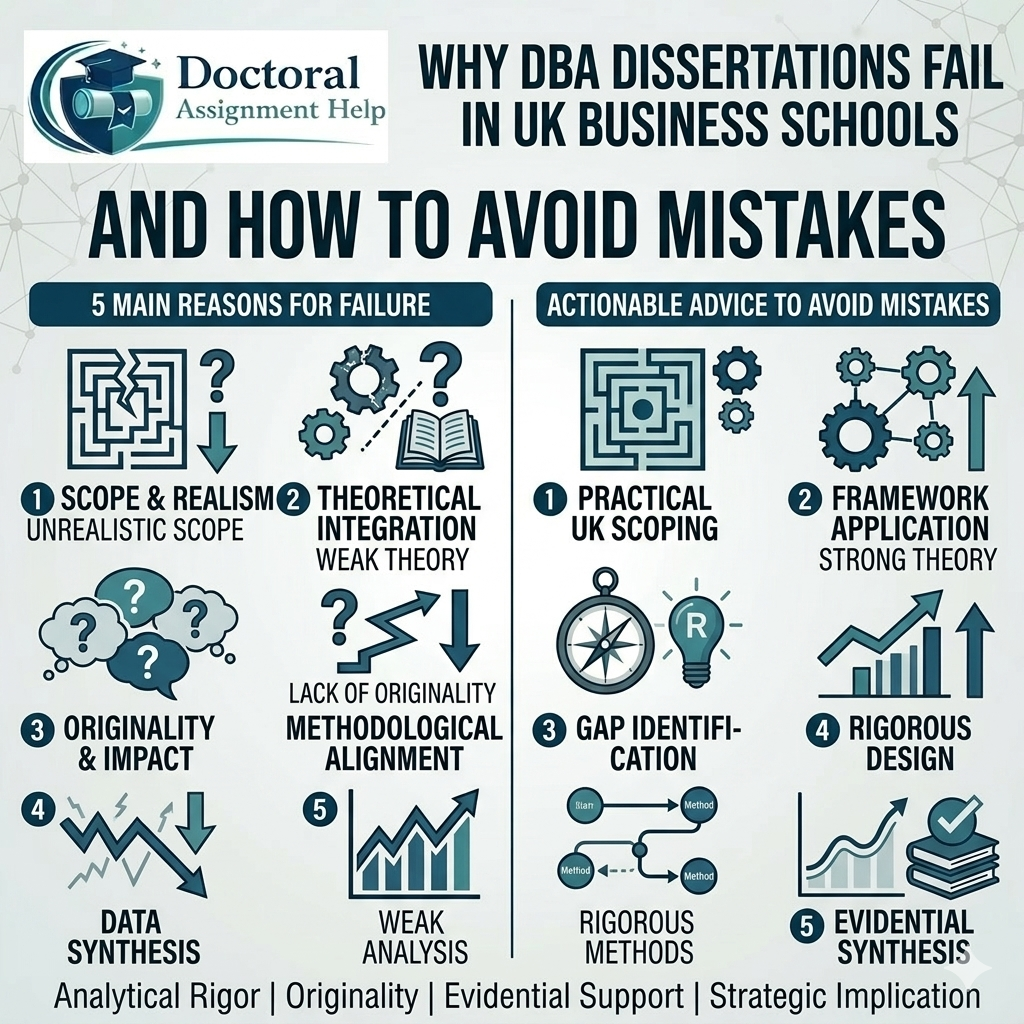
Some DBA courses in British universities aim to shape skilled professionals who also conduct serious research, tackling tough business issues with solid academic work. Yet plenty of doctoral projects fall short - especially within demanding institutions across London. Knowing why these thesis efforts collapse matters deeply for anyone hoping to finish strong. Often candidates overlook how intense the scrutiny must be, how tight the methods need to stay, how deep the thinking ought to run. A few learners turn to outside support - such as DBA dissertation help - but real progress comes only when typical missteps are sidestepped and clear research methods take root. What follows looks at why dissertations often fall apart, then offers straightforward ways to move past those hurdles.
Why DBA Dissertations Often Don’t Succeed
Several recurring issues contribute to DBA dissertation mistakes UK universities frequently identify during assessment. These include:
Lack of Clear Research Objectives
A dissertation often falls apart when its goals stretch too wide or stay unclear. When targets aren’t sharp, the work drifts without a clear path forward.
Weak Research Design
Wrong methods crop up when students pick approaches that miss the mark for their questions - results wobble, trust slips away. A mismatch here taints everything after.
Insufficient Literature Engagement
Just skimming sources without digging deeper leaves the thesis on shaky ground.
Poor Time Management
Most DBA learners juggle full-time jobs while tackling research tasks. That pressure often leaves projects half-finished or hurried near deadlines.
Inadequate Data Analysis
Mistakes in using the right analysis methods might weaken how trustworthy a study seems. Wrong readings of information often lead to shaky conclusions instead. How clearly numbers are understood shapes whether results hold up at all.
Lack of Critical Thinking
Apart from shallow analysis, weak connections between ideas often drag scores down. What hides behind mere description is usually a lack of deeper thought. Without building arguments step by step, work tends to feel flat. Going beyond listing facts helps bring clarity forward. Thoughtful linking of points makes room for stronger insights. Simply reporting events does little to engage critical thinking. Depth grows when reflection replaces repetition.
Referencing and Academic Integrity Issues
Mistakes in citing sources - sometimes even when not meant - might bring tough outcomes at school.
Take a student sitting in a London classroom, eyes on a thick research paper - suddenly, precision isn’t optional. Rigor pulls weight here. Sharp thinking matters more when the standards are set high. Expectations shape effort. A demand for depth turns casual review into careful scrutiny.
Common Issues Found in DBA Dissertations
Looking at what goes wrong starts with seeing patterns. Mistakes show up most when expectations aren’t clear. Focus slips often around planning, argument flow, or research depth
1. Research Design Errors
A mistake in how a study is set up might weaken every part of the thesis. Typical problems involve:
Misalignment between research questions and methodology
Choosing qualitative methods when quantitative data is required (or vice versa)
Choosing methods without clear reasons given
A single interview approach might be chosen by a student in London researching leadership styles - yet poor question structure or haphazard participant selection could still undermine the results.
2. Literature Review Gaps
A fresh look at past work isn’t only about listing what others have done - it digs deeper, questioning how solid those findings really are. One frequent slip? Treating the review like a report card instead of a searchlight. Some miss the point by piling up results without asking where they fall short. Another stumble happens when sources get tossed together with no clear thread pulling them along. Often overlooked is the need to challenge assumptions baked into earlier efforts. The real aim shows up when gaps start speaking louder than answers
Over-reliance on outdated sources
Lack of critical comparison between studies
Failure to identify gaps in existing research
A solid academic foundation helps learners grow - support like DBA literature review help shapes key skills, yet personal insight matters just as much. Though guidance refines technique, original thinking takes root only through individual effort.
3. Analysis And Interpretation Errors
Though gathering info goes fine, some papers still fall apart later because of problems with how they examine it
Incorrect use of statistical tools
Focusing only on surface details when looking at non-numeric information
Failure to link findings back to research objectives
Starting off, UK business school assessors look for more than just skill in methods. What stands out is how learners link results to concepts, using theory to ground real-world outcomes. Instead of focusing solely on accuracy, they value insight shaped by academic models alongside tangible effects. Thinking matters as much as doing, showing depth through connections between ideas and practice.
How to Keep From Failing Your Dissertation
Facing such hurdles, doctoral candidates in business administration might find it helpful to follow organized approaches like these:
Define Clear and Focused Research Objectives
A clear question sets the stage. When goals match the reason for looking, progress follows. Specific aims show direction. Measurable steps make results visible. Each target ties back to why the work matters.
Select an Appropriate Research Methodology
Start by picking approaches that match the study's main questions. Because past work supports them, these picks make sense when checked against published sources. Staying steady in how you apply each step keeps everything holding together through the analysis.
Develop a Strong Literature Review
Start by questioning recent findings, then move through contrasting views while spotting where knowledge runs thin - this is what your work will fill. What matters comes next: laying out missing pieces others have overlooked. Watch how one idea follows another, not tied together but standing apart like markers on a path. See each gap not as a flaw but as a direction forward. Your role shows up here, quiet yet firm, tracing lines between what exists and what does not.
Plan and Manage Time Effectively
A single day might hold just one task; research could begin after clearing space on Tuesday morning. Writing often follows once notes settle into some kind of order by week three. Revisions tend to appear when early drafts start showing cracks under quiet reading at night. Each phase moves at its own pace - some faster if momentum builds around lunchtime progress.
Enhance Data Analysis Skills
Start by spending time on methods that help analyze data well. When unsure, reach out to someone who knows for direction. Focus shapes how clear the results become.
Focus on Critical Thinking
What lies beneath the surface often holds more weight than first appears. Digging deeper means questioning evidence instead of just listing it. Strength builds when ideas connect through careful thought, not mere repetition. A solid point emerges only after testing each part against others. Reflection shapes raw details into something convincing. Real clarity comes from reshaping knowledge, not repeating it.
Follow Academic Writing Standards
Following UK university rules means matching their layout, references, footnotes. One way it shows: sticking to a single format like Harvard throughout. Style stays fixed from first page to last.
Seek Regular Feedback
Start by sharing your work with supervisors so they can offer useful insights along the way. Talking openly with colleagues brings fresh perspectives into view. Feedback shared early shapes better outcomes later on. Exchange ideas regularly, not just at deadlines. Seeing different viewpoints helps refine thinking steadily.
Revise and Proofread Thoroughly
Starting again a few times makes mistakes easier to spot. Clearer meaning often shows up after the second or third try. Quality grows when you revisit what was written before.
Maintain Academic Integrity
Start by giving credit where it is due - every source must show its origin. Skipping attribution? That path leads nowhere good.
When students follow these approaches, they often avoid common pitfalls while making their work stronger. A steady effort along this path tends to lift the standard of each project. Mistakes become less likely once habits shift in this direction. The result? Fewer setbacks, sharper outcomes.
Final Thoughts
A steep bar of scholarly depth marks most DBA theses across Britain's management faculties. When flawed frameworks sneak in, problems grow fast. Weak structure often leads to shaky conclusions, something examiners spot quickly. Instead of clear logic, some entries offer muddled ideas strung together. Clarity fades when methods lack detail, leaving reviewers puzzled. One step off track risks undermining entire sections. Rather than skip ahead, building each part with care helps prevent collapse later. Sloppy data handling drags down otherwise strong arguments. Fixing frequent errors seen in past submissions lifts present work above the crowd. Attention to small flaws makes room for stronger insights to emerge.
A fresh start often helps when polishing tough projects, so paying close attention to feedback can guide better results in long-term study efforts. What matters most shows up through careful revisions, shaping solid arguments while building real-world know-how alongside scholarly depth.