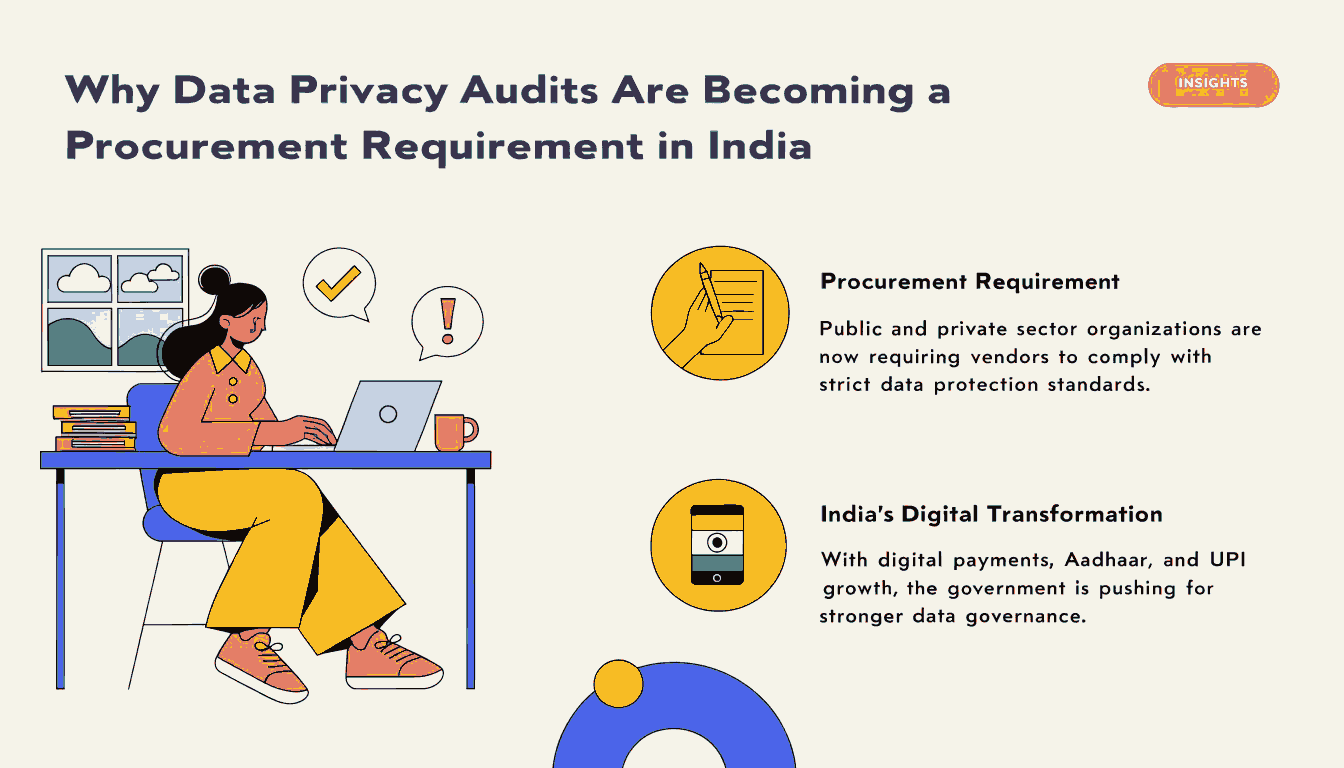
In today’s digital-first economy, data is no longer just an operational asset—it has become a business liability if not handled responsibly. Across India, organizations are facing increasing pressure to protect customer information, maintain compliance, and prove accountability. As a result, data privacy audits are rapidly evolving from an internal compliance exercise into a mandatory procurement requirement.
Whether it is a SaaS provider, fintech startup, healthcare platform, IT services company, or e-commerce brand, vendors are now being asked an important question before contracts are signed: Can you prove your data privacy practices are compliant and secure?
This shift is being driven largely by India’s Digital Personal Data Protection (DPDP) Act, growing cybersecurity risks, and rising concerns around third-party data exposure. Companies are no longer willing to rely on promises alone. They want documented evidence, audit reports, compliance frameworks, and vendor accountability before sharing sensitive customer or employee data.
In this article, we explore why data privacy audits are becoming a procurement necessity in India and how businesses can prepare for this new compliance-driven business environment.
The Growing Importance of Data Privacy in India
India is experiencing an unprecedented surge in digital adoption. Businesses across industries now collect vast amounts of personal information including names, contact details, financial records, healthcare data, location information, and behavioral insights.
With this rapid digitization comes increased risk:
- Data breaches
- Unauthorized access
- Misuse of customer information
- Third-party vulnerabilities
- Non-compliance penalties
The introduction of the Digital Personal Data Protection Act, 2023 has further accelerated the need for organizations to establish structured privacy governance.
Under the DPDP framework, organizations handling personal data are expected to implement reasonable safeguards, ensure transparency, obtain valid consent, and maintain accountability throughout the data lifecycle. This responsibility extends not only to internal operations but also to vendors, contractors, and technology partners.
As a result, procurement teams are becoming active participants in privacy compliance decisions.
Why Procurement Teams Are Now Involved in Privacy Compliance
Traditionally, procurement decisions focused on pricing, technical capability, scalability, and delivery timelines. Today, privacy and security have become equally critical evaluation factors.
Organizations now recognize that third-party vendors can become major sources of data breaches. A single weak vendor can expose sensitive information and damage the reputation of the primary organization.
Because of this, procurement teams increasingly require vendors to provide:
- Data privacy audit reports
- Security certifications
- Consent management processes
- Data retention policies
- Incident response frameworks
- Vendor risk assessments
- Compliance documentation
Before onboarding a vendor, enterprises want assurance that the organization can responsibly process personal data.
In sectors like fintech, healthcare, edtech, HR tech, and cloud services, this requirement is becoming standard practice.
The DPDP Act Has Changed Vendor Expectations
The DPDP Act has fundamentally reshaped how businesses evaluate data handling practices.
Under the law, organizations can remain accountable even when third-party vendors process data on their behalf. This means businesses cannot simply outsource responsibility—they must ensure their vendors also follow privacy standards.
For procurement departments, this creates a need for stronger due diligence processes.
Companies are now asking vendors questions such as:
- How is customer data stored?
- Is data encrypted?
- How is consent managed?
- Who has access to personal information?
- What happens in case of a breach?
- Are privacy audits conducted regularly?
- Is there documentation proving compliance?
This shift has transformed privacy audits into a commercial requirement rather than just a legal one.
Data Privacy Audits Build Business Trust
One of the biggest reasons privacy audits matter in procurement is trust.
When organizations share customer or operational data with external vendors, they need confidence that the information will remain secure and compliant.
A privacy audit demonstrates that a company has:
- Defined privacy policies
- Security controls
- Compliance procedures
- Access management systems
- Data handling protocols
- Employee awareness programs
- Incident management mechanisms
This creates assurance for clients, investors, partners, and procurement teams.
In many enterprise deals today, vendors without proper compliance documentation are automatically disqualified during the evaluation stage.
Enterprises Want Vendor Risk Reduction
Vendor risk management has become a major corporate priority in India.
Large organizations are increasingly mapping risks associated with every third-party provider in their ecosystem. This includes:
- Cloud vendors
- Marketing agencies
- CRM providers
- Payroll companies
- SaaS tools
- Analytics platforms
- Outsourcing partners
Since these vendors often process sensitive personal data, enterprises need evidence that risks are controlled.
Privacy audits help procurement teams assess whether vendors follow best practices for:
- Data minimization
- Consent collection
- Data storage
- Access restrictions
- Breach reporting
- Data deletion
- Cross-border data handling
Without audit visibility, organizations face significant operational and legal uncertainty.
Privacy Audits Are Becoming Competitive Advantages
Businesses that proactively invest in privacy audits are gaining an edge in enterprise sales.
Organizations with strong privacy governance are more likely to:
- Win enterprise contracts
- Pass vendor onboarding reviews
- Reduce procurement delays
- Build long-term client relationships
- Improve brand credibility
In competitive industries, compliance maturity is now influencing buying decisions.
A vendor that can provide structured documentation and privacy assurance often appears more reliable than competitors lacking formal compliance frameworks.
For startups and growing businesses, demonstrating privacy readiness can significantly improve trust during B2B negotiations.
Global Clients Expect Indian Vendors to Meet Higher Standards
Indian businesses increasingly work with international clients and global enterprises. Many of these organizations already follow strict privacy regulations such as:
- GDPR in Europe
- CCPA in California
- HIPAA in healthcare
- ISO privacy standards
As global companies expand partnerships in India, they expect vendors to maintain comparable data protection standards.
This is particularly important for:
- IT outsourcing firms
- SaaS providers
- Customer support companies
- Marketing technology firms
- HR and payroll service providers
Privacy audits provide documented proof that vendors understand and implement responsible data handling practices.
Without such evidence, companies may struggle to qualify for global contracts.
Procurement Checklists Are Becoming More Detailed
Modern procurement workflows now include privacy and compliance questionnaires as part of vendor evaluation.
Many organizations use structured assessment frameworks covering areas like:
- Data collection practices
- Privacy policies
- User consent mechanisms
- Third-party data sharing
- Security monitoring
- Employee training
- Audit readiness
- Data retention timelines
- Breach notification processes
Businesses unable to answer these questions clearly may face onboarding delays or contract rejection.
This is why organizations are increasingly preparing for compliance reviews using frameworks such as The 2026 DPDP Audit Checklist to strengthen audit readiness and vendor qualification processes.
Data Breaches Have Increased Procurement Pressure
High-profile data breaches in India and globally have made organizations more cautious about vendor relationships.
A breach involving a vendor can lead to:
- Financial losses
- Regulatory scrutiny
- Customer distrust
- Operational disruption
- Brand damage
Procurement teams now understand that privacy compliance is directly connected to business continuity.
Instead of reacting after incidents occur, organizations are trying to prevent risks during vendor selection itself.
This proactive approach is one of the main reasons privacy audits are becoming mandatory during procurement evaluations.
Small Businesses Are Also Being Affected
Earlier, privacy compliance was mostly associated with large enterprises. That is no longer the case.
Today, even small and mid-sized businesses are being asked to demonstrate privacy readiness when working with enterprise clients.
A startup offering SaaS solutions, CRM tools, marketing automation, or analytics services may now need to complete privacy questionnaires before signing contracts.
This means privacy governance is no longer optional for smaller companies seeking business growth.
Organizations that ignore compliance expectations may lose opportunities despite offering strong products or competitive pricing.
How Businesses Can Prepare for Procurement Privacy Reviews
To remain competitive, organizations should begin strengthening their privacy posture immediately.
Key steps include:
Conduct Internal Privacy Audits
Identify how personal data is collected, processed, stored, and shared across systems.
Create Clear Privacy Policies
Document data handling practices and ensure policies align with DPDP requirements.
Implement Access Controls
Restrict data access based on employee roles and responsibilities.
Maintain Consent Records
Ensure valid user consent is properly collected and documented.
Train Employees
Employees should understand privacy responsibilities and incident reporting procedures.
Review Vendor Agreements
Ensure contracts include data protection clauses and compliance responsibilities.
Prepare Audit Documentation
Maintain organized records that can be shared during procurement reviews.
The Future of Procurement in India Will Be Privacy-Driven
The Indian business landscape is entering a new era where privacy compliance is becoming deeply integrated into procurement decisions.
Organizations are no longer evaluating vendors solely on pricing or technical expertise. They are assessing whether vendors can responsibly manage personal data, reduce regulatory risks, and support long-term compliance objectives.
As the DPDP Act continues to shape India’s privacy ecosystem, businesses that invest in privacy audits and compliance readiness will be better positioned to win contracts, build trust, and scale sustainably.
In the coming years, data privacy audits are likely to become as essential as financial audits or cybersecurity assessments in procurement processes across India.
Companies that prepare early will gain a strong competitive advantage in an increasingly compliance-focused market.