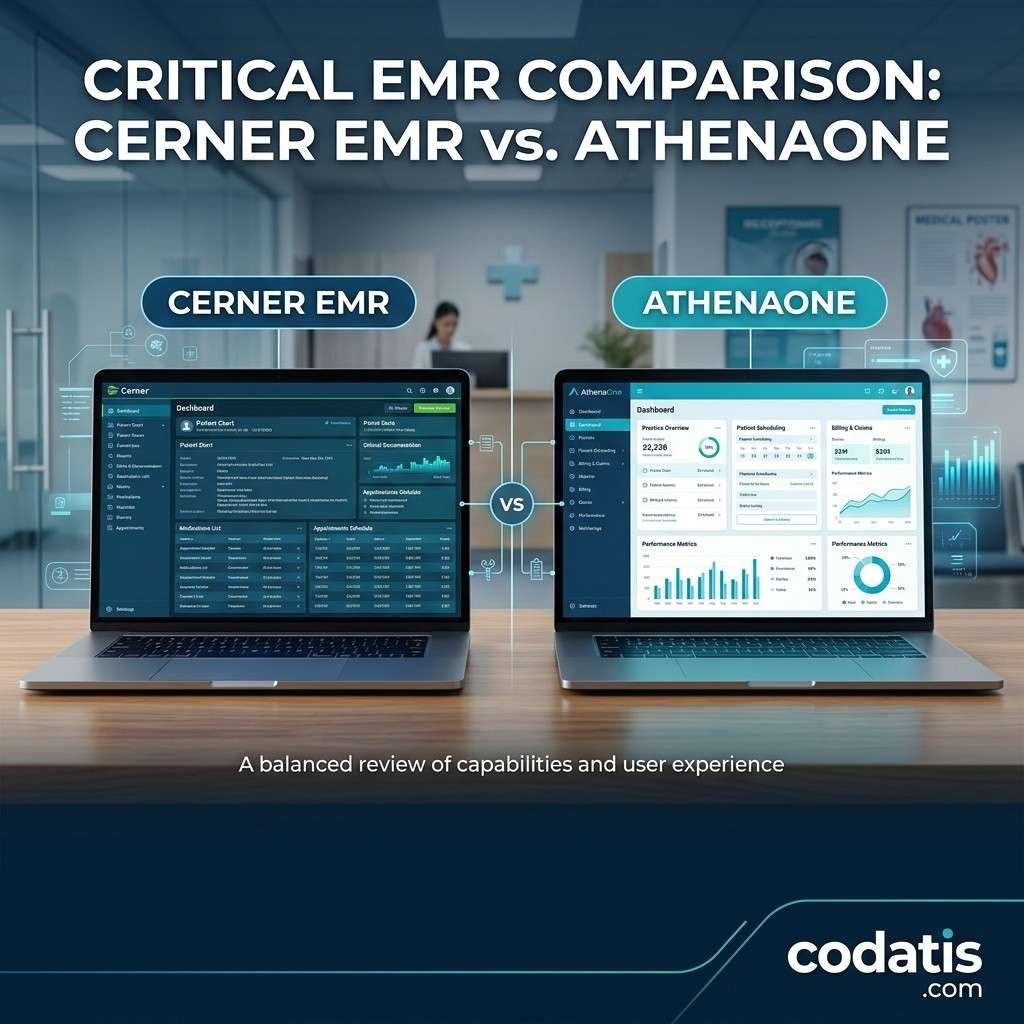
Healthcare technology plays a critical role in how providers deliver care, manage operations, and maintain financial performance. As organizations continue investing in digital transformation, two solutions consistently appear on comparison lists: Cerner EMR and athenaone. Both platforms offer electronic health records and practice management capabilities, but they are designed to address different healthcare challenges.
Whether you're managing a large hospital network or a growing medical practice, understanding the strengths of these platforms can help determine which solution supports your long-term objectives.
The Importance of Choosing the Right EHR Platform
Electronic health records have become the foundation of modern healthcare operations. Beyond storing patient information, today's systems support scheduling, billing, reporting, patient engagement, and clinical decision-making.
Organizations researching what is cerner or what is athena one often seek solutions that can simplify daily workflows while improving the quality of patient care. A well-implemented EHR platform can reduce administrative burdens, improve communication, and increase operational efficiency.
As healthcare becomes increasingly data-driven, selecting the right technology partner is more important than ever.
Cerner EMR: Supporting Large Healthcare Environments
Cerner EMR has earned a reputation as one of the most comprehensive healthcare technology platforms available. Commonly referred to as emr cerner, the solution is widely used by hospitals, health systems, and enterprise healthcare organizations.
The cerner electronic medical records software platform enables providers to manage patient information, document clinical encounters, coordinate treatment plans, and access medical histories through a centralized environment. The cerner electronic health record ecosystem supports collaboration between departments, helping healthcare teams make informed decisions more quickly.
Organizations evaluating cerner healthcare software frequently choose it because of its scalability and ability to support complex healthcare workflows.
Essential Cerner EMR Features
Many healthcare professionals researching Cerner EMR Features focus on capabilities such as:
- Advanced clinical documentation
- Integrated scheduling tools
- Population health management
- Revenue cycle management
- Clinical decision support
- Reporting and analytics
- Interoperability solutions
These functions help make the cerner electronic medical record system a preferred choice for large healthcare organizations.
AthenaOne: A Modern Cloud-Based Healthcare Platform
athenaone is a cloud-native solution designed to help healthcare providers manage clinical and administrative processes through a unified platform. Providers often refer to the system as athena one, athenaone emr, or athena one emr.
Unlike traditional on-premise systems, athenahealth software allows organizations to access healthcare data through the cloud. This approach reduces infrastructure requirements while improving accessibility and flexibility.
For providers asking what is athena software, the platform combines EHR functionality, billing management, patient engagement, and practice administration tools within a single environment.
Leading AthenaOne Capabilities
The most frequently discussed athena health ehr platform features include:
- Cloud-based accessibility
- Electronic charting tools
- Appointment scheduling
- Revenue cycle management
- Automated claims processing
- Patient communication tools
- Business reporting and analytics
These features have helped athenahealth emr become a popular solution among physician groups and outpatient practices.
Comparing Documentation and Clinical Workflows
Efficient documentation is essential for maintaining productivity and delivering quality care.
The cerner electronic medical record platform provides extensive workflow customization options, making it suitable for healthcare organizations with specialized requirements. Providers using the cerner ehr system can tailor documentation processes to support diverse clinical environments.
By contrast, the athena charting system emphasizes streamlined workflows and ease of use. Many users of athena electronic medical record solutions appreciate the platform's intuitive interface and straightforward navigation.
Organizations seeking flexibility may gravitate toward cerner emr software, while practices prioritizing simplicity may prefer athena practice emr.
Practice Management and Billing Performance
Administrative efficiency has a direct impact on healthcare profitability.
The cerner practice management software suite includes scheduling, registration, billing, and reporting capabilities that help healthcare organizations manage day-to-day operations. Through integrated workflows, providers can coordinate clinical and financial activities more effectively.
Similarly, athena billing software focuses on automating claims processing and improving reimbursement rates. Organizations evaluating athena medical billing software often highlight its ability to streamline revenue cycle management.
Both platforms support financial performance, but the ideal choice depends on organizational needs and workflow preferences.
Interoperability and Data Sharing
Connected healthcare environments require systems capable of exchanging information efficiently.
The cerner ehr to edc solution supports secure data transfer between healthcare and research systems. Organizations using cerner corporation ehr technology often rely on interoperability features to connect multiple facilities and departments.
Meanwhile, athena health ehr solutions facilitate communication with laboratories, pharmacies, specialists, and other healthcare partners. The cloud-based structure of the athenahealth ehr system helps simplify information sharing while maintaining accessibility.
When comparing cerner software and athenahealth emr system, interoperability should remain a major consideration.
User Experience and Accessibility
The effectiveness of any healthcare platform depends on user adoption.
Healthcare teams using cerner central can access patient information, reports, and organizational resources from a centralized environment. The broader cerner hospital software ecosystem is designed to support multidisciplinary teams working across large healthcare networks.
On the other hand, athenaone health focuses on usability and efficiency. Many organizations choose athena medical software because it offers a straightforward user experience and shorter training periods.
Practices evaluating ehr athena solutions frequently prioritize ease of use when selecting an EHR platform.
Pricing and Budget Planning
Cost remains one of the most important factors in healthcare software selection.
Organizations researching Cerner EMR Pricing and Cerner EMR Cost should understand that implementation scope, facility size, and feature requirements all influence total expenses.
Likewise, athenaone pricing, athenahealth ehr pricing, athena ehr pricing, athena emr cost, athenahealth emr cost, athena software price, and athena ehr cost vary according to practice size, specialty, and service requirements.
Requesting customized pricing information is typically the most effective way to evaluate software investments.
Reviews and Product Innovation
Healthcare technology continues evolving to meet industry demands.
Many Cerner EMR Reviews highlight the platform's enterprise-level functionality, customization options, and scalability. Interest in cerner emr product updates 2026 and cerner emr product updates 2026 reflects the importance of ongoing innovation and system improvements.
Likewise, athenahealth ehr review discussions frequently emphasize cloud accessibility, integrated billing tools, and workflow efficiency.
Organizations comparing electronic medical records cerner and emr athena solutions should review both current features and future development plans.
Login, Sign-In, and Access Management
Healthcare professionals regularly search for Cerner EMR Login, Cerner EMR Sign in, and Cerner EMR Sign up information when accessing system resources or onboarding team members.
Similarly, users of athenahealth ehr, athenaone software, and athenahealth emr system benefit from cloud-based access that supports remote work, mobile devices, and flexible healthcare operations.
Reliable system access remains a key component of modern patient care delivery.
Final Thoughts
Both Cerner EMR and athenaone provide robust healthcare technology solutions capable of improving efficiency, patient care, and operational performance.
Large hospitals and healthcare networks often prefer cerner electronic medical records software, electronic medical records cerner, and electronic medical record cerner solutions because of their advanced customization and enterprise-level capabilities. Meanwhile, physician groups and outpatient clinics frequently choose athena electronic health record, athena emr system, and athenaone health because of their cloud-based design and user-friendly experience.
The right choice ultimately depends on your organization's workflow requirements, growth plans, and budget considerations.
FAQs
What is Cerner EMR?
Cerner EMR is a healthcare software platform that helps providers manage patient records, clinical documentation, scheduling, reporting, and operational workflows.
Is Cerner an EHR platform?
Yes. Organizations asking is cerner an ehr should know that Cerner functions as a comprehensive EHR solution with additional healthcare management capabilities.
What is AthenaOne software?
athenaone software is a cloud-based healthcare platform that combines EHR functionality, billing management, scheduling, and patient engagement tools.
What are the main Athena health EHR platform features?
Popular athena health ehr platform features include electronic charting, cloud access, scheduling, claims management, patient communication, and analytics.
How much does Cerner EMR cost?
Cerner EMR Cost varies depending on organization size, implementation complexity, and selected software modules.
Tags : Cerner EMR vs AthenaOne