Gymnastics has evolved significantly over the years, with athletes constantly seeking safer and more effective ways to improve their performance. As training methods continue to advance, equipment innovation has become a major part of the sport. Among the many developments transforming gymnastics training today, the air track has emerged as one of the most valuable tools for athletes, coaches, and gymnastics clubs alike.
From beginners learning their first cartwheel to advanced gymnasts perfecting complex tumbling routines, inflatable training surfaces are now widely recognized for their ability to enhance safety, build confidence, and improve skill development. Modern gymnastics requires repetitive practice, precision, and controlled landings, making training surfaces more important than ever before.
The Growing Importance of Safe Training Environments
One of the biggest challenges in gymnastics is minimizing the risk of injuries while allowing athletes to push their limits. Traditional training surfaces often place significant stress on joints, wrists, ankles, and knees due to repeated impact during practice sessions.
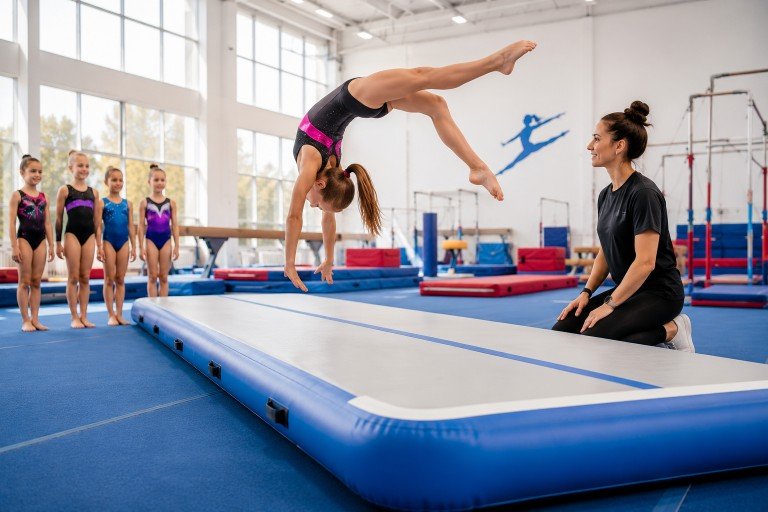
Inflatable training mats help absorb much of that impact, creating a softer landing surface while still maintaining the firmness necessary for skill progression. This balance between support and cushioning allows athletes to train more comfortably without sacrificing performance.
As gymnastics continues to attract younger athletes and recreational participants, safety-focused equipment has become a priority for families, schools, and sports organizations. Training environments that reduce injury risks while encouraging skill development are now considered essential rather than optional.
Enhanced Confidence for Skill Development
Confidence plays a major role in gymnastics progression. Learning new skills often involves overcoming fear, particularly when practicing flips, back handsprings, aerials, or advanced tumbling combinations.
A softer and more forgiving training surface gives athletes greater confidence when attempting new techniques. Instead of worrying about hard landings, gymnasts can focus on proper body positioning, balance, and execution.
This psychological advantage is especially important for beginners who are still developing foundational skills. Coaches frequently report that athletes become more willing to practice challenging movements when they feel safer during training.
Supporting Progressive Training Methods
Modern gymnastics emphasizes gradual skill progression. Athletes are encouraged to master basic techniques before moving on to more advanced skills. Specialized training equipment plays an important role in this structured development process.
An inflatable training surface provides adjustable support that can accommodate athletes at different skill levels. Beginners can focus on balance and coordination, while advanced gymnasts can use the same surface for high-level tumbling sequences.
The versatility of an air track allows training programs to adapt to various goals, making it suitable for individual athletes, competitive teams, and recreational gymnastics classes.
Reducing Physical Strain During Repetitive Practice
Gymnastics requires thousands of repetitions to perfect routines and techniques. While repetition is essential for improvement, it can also contribute to fatigue and overuse injuries.
Training on hard surfaces often places additional stress on the body, particularly during high-impact movements. Inflatable mats help reduce this strain by providing shock absorption during takeoffs and landings.
Athletes can often complete longer training sessions while experiencing less discomfort, which contributes to more consistent practice schedules. This ability to train effectively without excessive physical stress is one reason why many gymnastics facilities are incorporating inflatable training equipment into their programs.
Versatility Beyond Gymnastics
Although originally associated with gymnastics, inflatable training surfaces are now used across a variety of athletic disciplines. Cheerleading, dance, martial arts, acrobatics, and parkour training programs frequently utilize similar equipment.
This versatility increases the overall value of the investment for sports centers and training facilities. Multiple groups can benefit from the same equipment, maximizing its usefulness throughout the year.
Organizations seeking flexible training solutions often find that inflatable mats support a wide range of activities while maintaining the safety and performance standards athletes require.
Portability and Convenience
Unlike traditional gymnastics flooring systems, inflatable mats offer exceptional portability. They can be inflated when needed and stored away when not in use, making them ideal for both home users and professional training facilities.
Portable equipment allows athletes to practice in various environments, including gyms, sports halls, gardens, and outdoor recreational spaces. This flexibility has become increasingly important as more families look for ways to support athletic development outside of structured training sessions.
Brands such as AirTumble have contributed to the growing popularity of inflatable gymnastics equipment by providing portable solutions designed for both home and club use.
Improved Performance Through Better Rebound
A major advantage of inflatable gymnastics surfaces is their ability to provide controlled rebound. The slight bounce generated by the air-filled structure helps athletes achieve greater height and smoother transitions during tumbling exercises.
This enhanced responsiveness supports the development of technique while helping athletes refine timing, coordination, and body control. The ability to practice skills with consistent rebound can accelerate learning and improve overall performance.
For competitive gymnasts, even small improvements in technique can make a significant difference during competition routines. As a result, many coaches view inflatable training surfaces as an important tool for long-term athletic development.
Suitable for All Skill Levels
One of the reasons inflatable training equipment has gained widespread acceptance is its accessibility. Athletes of virtually all ages and experience levels can benefit from its use.
Young children can safely practice basic movements, while advanced athletes can perform complex tumbling sequences. The adaptability of these training surfaces allows coaches to customize sessions according to individual needs and skill levels.
This inclusive approach makes them a practical addition to schools, gymnastics clubs, recreational centers, and private training spaces.
The Future of Gymnastics Training
As sports science continues to influence athletic development, training equipment will play an increasingly important role in performance and injury prevention. Modern athletes require tools that support skill progression while protecting long-term physical health.
The demand for innovative solutions has led many gymnastics professionals to embrace inflatable training technology as a core part of their programs. Companies such as AirTumble have helped make these solutions more accessible to athletes at every level.
With growing awareness of safety, performance optimization, and athlete well-being, it is clear that the air track is no longer viewed as a supplementary training tool. Instead, it is becoming a standard piece of equipment in modern gymnastics environments around the world.
Conclusion
The evolution of gymnastics training has created a greater need for equipment that balances safety, convenience, and performance. Inflatable training surfaces address many of the challenges athletes face during skill development, offering reduced impact, improved confidence, better rebound, and greater versatility.
As more coaches, clubs, and athletes recognize these benefits, the popularity of the air track continues to rise. Whether used for beginner instruction or elite-level training, it has become an essential component of modern gymnastics and is likely to remain a key part of the sport’s future.
FAQs
1. What is an air track used for in gymnastics?
An air track is used for practicing tumbling, flips, jumps, balance exercises, and skill development while providing a cushioned landing surface.
2. Is an air track suitable for beginners?
Yes. It offers a softer surface that helps beginners build confidence and practice skills more safely.
3. Can inflatable gymnastics mats be used outdoors?
Most inflatable gymnastics mats can be used outdoors on clean, flat surfaces, although proper care is recommended to protect the material.
4. How does an air track improve gymnastics performance?
It provides controlled rebound, shock absorption, and a stable training surface that supports skill progression and technique refinement.
5. Why are gymnastics clubs investing in inflatable training equipment?
Many clubs use inflatable equipment because it enhances safety, reduces impact-related strain, supports multiple training styles, and offers convenient portability.