Why AI Agent Governance Is Becoming the Biggest Enterprise Challenge of 2026
By wevac48365 14-07-2026 111
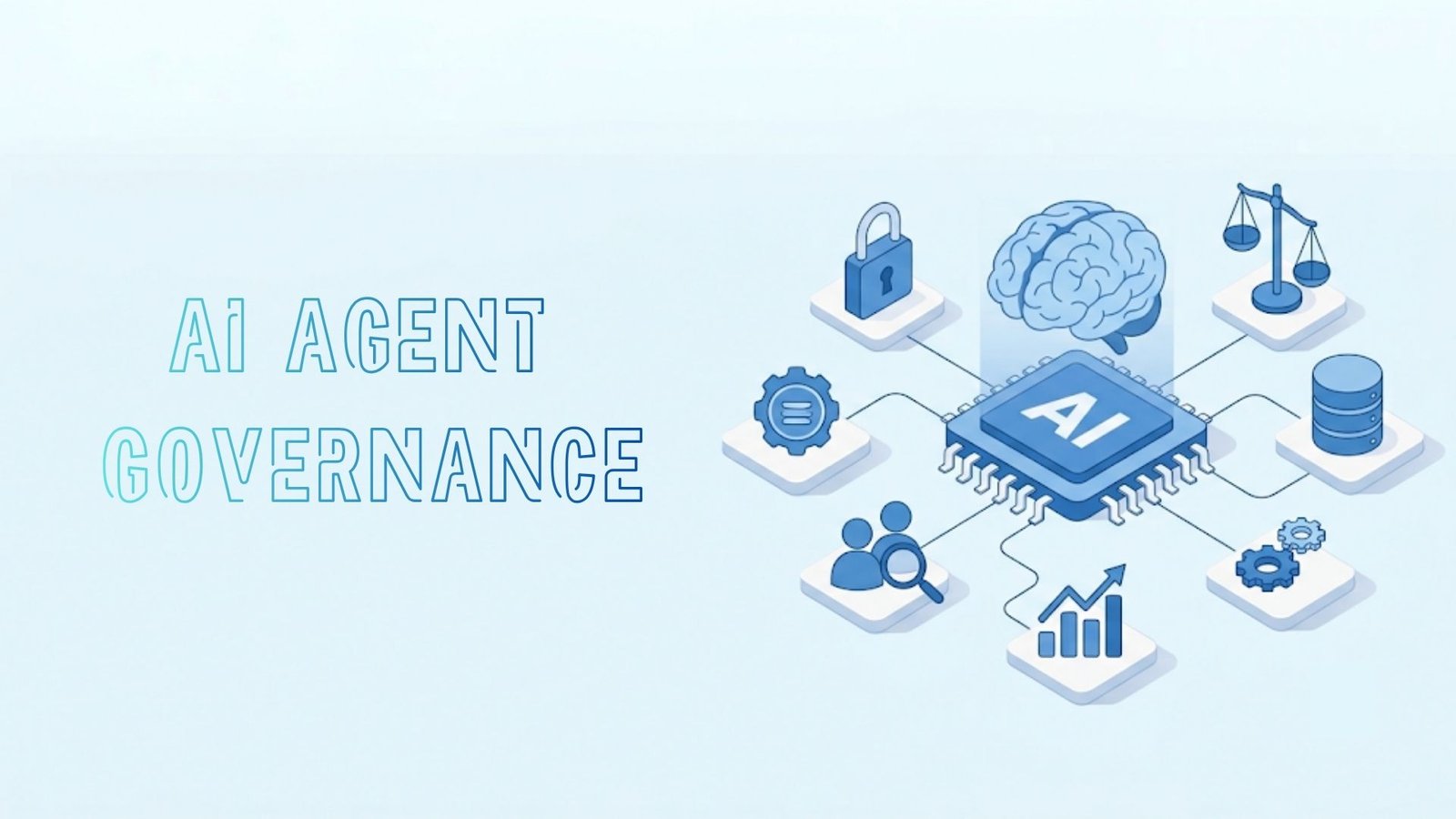
Walk into almost any enterprise strategy meeting right now and you will hear some version of the same worry. Software used to sit there and wait for someone to tell it what to do. Now it plans, it decides, it acts, and sometimes it touches parts of the business nobody thought to warn it about. So leadership teams keep circling back to one blunt question. If an autonomous system makes the wrong call, who actually owns that. This is really the whole reason AI Agent Governance has climbed to the top of so many agendas lately.
And honestly, the concern is not overblown. A single bad decision from an autonomous agent can ripple through an organization in minutes, not weeks. That kind of risk barely showed up on anyone's radar a short while ago. Boards want to know, in plain terms, how AI Agent Governance is being handled, and they want to know before something goes wrong, not after the cleanup begins.
The Old Rulebook Does Not Fit Anymore
Not too long ago, artificial intelligence mostly played a supporting role. It suggested things, it summarized things, while a person made the final call. That setup is quickly becoming the exception rather than the norm. Agents now handle multi step tasks on their own, dip into sensitive systems, and talk to customers directly, often with nobody watching the whole sequence unfold.
There is a real upside here, no question. Things move faster, and people get freed up for work that genuinely needs human judgment. But here is the part that does not get talked about enough. The approval chains that procurement, security, and compliance teams built up over years were designed around software that behaved predictably. Autonomous agents just do not fit that mold.
Which means the old checklists start creaking under weight they were never built for. Rebuilding those processes while the technology itself keeps moving is genuinely hard, and a lot of teams are figuring that out the slow way.
Enterprise AI Governance Is Not Something You Handle Quietly Anymore
Here is a truth that stings a little. Enterprise AI Governance used to be the kind of thing a legal team dealt with behind closed doors, rarely discussed elsewhere. That approach has run its course. Governance now touches nearly every corner of the business, from how operations run day to day to how customers actually experience the brand.
Skip real oversight and things start to drift. Decisions stop being consistent. The system wanders from whatever it was originally meant to do. Give that enough time and you are looking at a reputational headache, or in worse cases, a regulatory one.
A lot of leaders only realize how weak their Enterprise AI Governance actually is once something has already broken. By that point, the fix costs far more than doing it right from the start would have.
There is also a people angle that tends to get skipped. Sending out a memo announcing a new autonomous system is not the same as helping people understand it. When trust exists, people speak up early instead of quietly building workarounds. Trust like that does not appear on its own. Somebody has to build it, deliberately, over time.
What Agentic AI Governance Actually Looks Like in Practice
Agentic AI Governance is not just traditional oversight with a new label slapped on it. These systems make decisions in the moment, frequently with no one watching that exact instant, and that changes what governance needs to look like. It calls for a mix of hard technical guardrails and softer organizational policy working together.
A handful of things tend to show up wherever Agentic AI Governance is being done properly.
- Clear limits on what an autonomous system is even allowed to touch
- Monitoring that runs continuously, not just when someone remembers to check
- A real path for kicking uncertain decisions up to a human
- Audits that happen on a schedule, not only after something has already gone sideways
None of that erases risk completely. What it does is give autonomous systems enough room to be useful while keeping something underneath them to catch what falls through.
Building an AI Governance Framework People Will Actually Follow
A solid AI Governance Framework does not have to read like a two hundred page manual nobody opens after the first week. The frameworks that hold up over time tend to be short enough that a brand new employee could get through the whole thing in one sitting. The real goal is shared expectations, stated plainly, about how a system is supposed to behave, what data it can reach, and how results get measured.
Start simple. What is this system actually here to accomplish, and what would count as failure. From there, an AI Governance Framework can spell out permissions, set thresholds for monitoring, and build in review points so it keeps making sense as the underlying technology keeps changing shape.
Quite a few organizations end up bringing in an outside AI development company at this stage, mainly because writing policy and actually engineering the technical controls behind it call for pretty different kinds of expertise.
Not All Enterprise AI Agents Carry the Same Risk
Every autonomous system does not deserve the same level of scrutiny, and treating them that way is a mistake plenty of organizations make early on. Enterprise AI Agents now show up everywhere, in finance, customer service, supply chain work, internal operations, and each of those spaces comes with its own version of risk.
Think about the difference between an agent that reorganizes internal meeting schedules and one that can actually move money or speak directly to a paying customer. Organizations that get this right tend to sort their Enterprise AI Agents into tiers, matching the level of oversight to what is actually at stake rather than applying one policy across the board.
That kind of tiered setup also scales better over time. Lower stakes agents can run with a lighter hand, while the ones carrying real consequences get tighter controls and faster paths for escalation the moment something looks off.
One more thing worth remembering here. Risk is not fixed the day a system launches. An agent that seemed harmless at first can quietly pick up more responsibility as teams discover clever new ways to use it. Skip the periodic checkins and permissions start creeping without anyone noticing.
AI Agent Governance and the Parts Only a Human Can Handle
Even with the most sophisticated guardrails in place, human judgment never becomes optional. People are still the ones reading ambiguous situations correctly, questioning outcomes that just feel wrong, and updating the rules as circumstances shift underneath them. The point was never to strip humans out of the loop entirely, it is about putting their attention exactly where it matters most.
That is really where AI Agent Governance proves its worth. It lays out precisely when and how a person should step in, so oversight feels like a natural part of the process instead of a burden bolted on afterward.
What Comes Next for Organizations Paying Attention
Enterprises that want to stay ahead need to stop treating governance like a document written once and then filed away somewhere nobody looks. Autonomous systems keep evolving, so the rules guiding them have to evolve right alongside them.
Here is something that sounds backwards but is not. Investing in oversight early on tends to speed things up down the line, not slow them down. Clear rules and steady monitoring cut down on constant firefighting, which frees up teams to actually build things instead of endlessly cleaning up after surprises.
It also helps enormously to create a feedback loop between the people using these systems every day and whoever is actually responsible for governing them. Frontline staff usually notice small issues long before any formal audit would catch them. Give people an easy way to raise a flag, and problems get handled while they are still small, well before they turn into something bigger and harder to fix.
Conclusion
Autonomous technology shows no sign of slowing down, and neither does the need to keep it accountable. AI Agent Governance has moved far past being some niche technical concern buried in a compliance manual. It is now a leadership responsibility, one that shapes how confidently an organization can actually move forward. The enterprises that build clear policy, classify risk honestly, and keep real people involved at the right moments are the ones that will benefit from autonomous systems instead of getting blindsided by them later.
If your organization is still working out its approach to oversight, there is no better moment to start that conversation than now. Take a real look at what you are already doing, figure out where the gaps might be hiding, and start shaping something that lets your teams move forward with actual confidence.