Why Achieving Plate Forming Accuracy Is More Challenging Than Expected
By HimalayaMachinery 22-04-2026 94
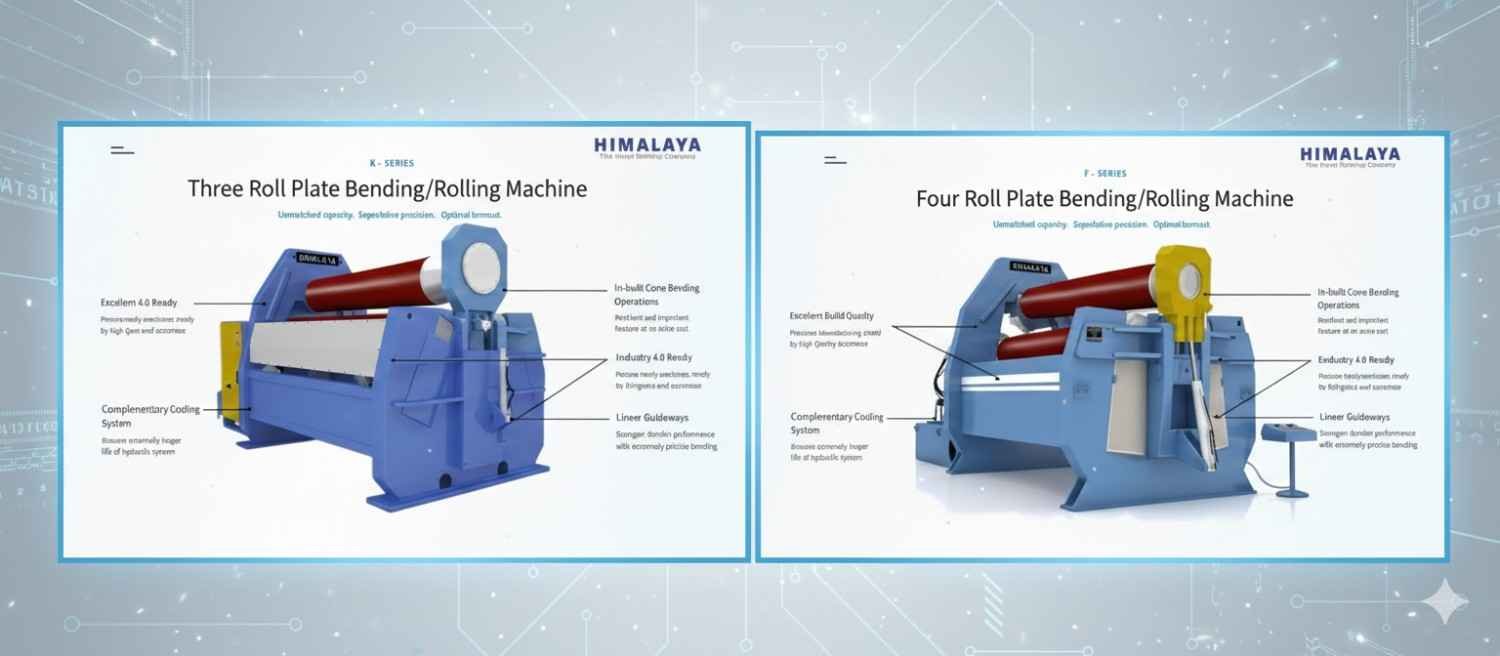
Plate forming is often considered a well-understood industrial activity. The equipment appears dependable, calculations are standardized, and many workshops rely on years of experience. Still, accuracy concerns continue to surface. Uneven edges, varying curve quality, and inconsistent material recovery remain common issues.
These concerns rarely stem from one obvious error. Instead, they develop gradually due to material variation, setup routines, and small working assumptions that seem acceptable until tighter limits are required. Many facilities upgrade equipment expecting immediate improvement, only to realize that precision depends on how well each stage of the forming activity is managed.
This article explains why plate forming accuracy is more complex than it appears and highlights the practical elements that influence consistent results.
Material Response Plays a Larger Role Than Expected
Similar Plates Do Not Always Behave the Same
Material documentation can suggest predictability, yet plates of identical grade and thickness often respond differently during shaping. Minor differences can significantly affect outcomes.
Key influences include:
- Orientation of the plate relative to the bend line
- Residual tension from earlier handling
- Slight thickness variation across the surface
- Heat exposure during cutting or storage
Material recovery after shaping is especially sensitive to these factors. When fixed settings are used without adjustment, accuracy issues tend to appear later in the workflow.
Trial Shaping Helps Establish Stability
Short test shaping steps are sometimes viewed as unnecessary. In reality, they help confirm how a specific plate reacts and allow early adjustment. This step often prevents larger corrections at later stages, where changes are more difficult and costly.
Equipment Condition Affects Final Results
Alignment Requires Regular Review
Even minor roll misalignment can result in uneven curvature or poor edge matching. Alignment can shift over time due to wear, temperature variation, and heavy use.
Workshops that review alignment only after visible defects appear often discover the issue too late. Periodic checks support stable and repeatable outcomes.
Roll Size and Arrangement Influence Control
Roll dimensions and positioning directly affect how force travels through the plate. These factors influence:
- Internal stress distribution
- Required forming effort
- Degree of material recovery
Understanding these relationships becomes essential when shaping thicker plates or working with tighter curves.
Planning Steps Shape Accuracy
Edge Preparation Sets the Foundation
Uneven edges are a frequent cause of part rejection. This issue often traces back to how the plate is prepared at the start.
Inconsistent force during early shaping can lead to:
- Gaps at the joint
- Extra joining material
- Additional correction work
Careful attention during this stage reduces downstream issues.
Gradual Shaping Improves Consistency
Attempting to reach the final curve too quickly often reduces control. Slower, step-by-step shaping allows:
- Smoother material movement
- Reduced internal tension
- More predictable recovery
This approach is especially useful for longer or thicker plates.
Consistency Depends on Documentation
Experience Benefits From Written Reference
Skilled operators develop valuable judgment over time. However, relying only on memory can create variation between shifts. Simple records help maintain consistency:
- Roll positions for specific materials
- Entry and exit settings
- Order of shaping steps
Written references support repeatable accuracy across teams.
Reliable Equipment Supports Repeat Results
When forming similar parts repeatedly, using dependable equipment with controlled movement helps maintain accuracy. Many workshops rely on a hydraulic plate bending machine to achieve steady results across multiple jobs, especially where shape consistency is critical.
Complex Shapes Increase Difficulty
Non-Uniform Curves Require Extra Care
Straight cylindrical shapes are the simplest to form. Cones and varying curves introduce uneven force, making small setup differences more noticeable. These shapes demand careful coordination between plate positioning and roll movement.
Added Control Improves Stability
Additional control during shaping helps manage uneven force and material response. This improves accuracy, particularly during early shaping stages where errors are harder to correct later.
Surrounding Conditions Also Matter
Temperature Can Influence Results
Heat generated during shaping can subtly change material behavior over time. Even differences between early and late shifts may affect recovery, especially with thicker plates.
Floor Stability Supports Accuracy
Uneven floors or weak foundations allow slight movement under load. This movement can affect alignment during operation and reduce consistency. Stable installation supports reliable forming results.
Measurement and Review Strengthen Accuracy
Inspect More Than Final Size
Checking diameter alone does not reveal all issues. Useful inspection points include:
- Edge straightness
- Overall roundness
- Joint alignment before joining
Consistent inspection helps link outcomes to earlier steps.
Feedback Improves Future Work
When inspection results are recorded and reviewed, each job becomes a reference for the next one. Over time, this builds practical knowledge based on real results rather than assumptions.
Accuracy Is the Result of Many Small Factors
Plate forming accuracy does not come from a single adjustment or upgrade. It develops through careful material awareness, stable equipment condition, thoughtful planning, controlled surroundings, and continuous review. Workshops that manage these elements together achieve the most reliable outcomes.