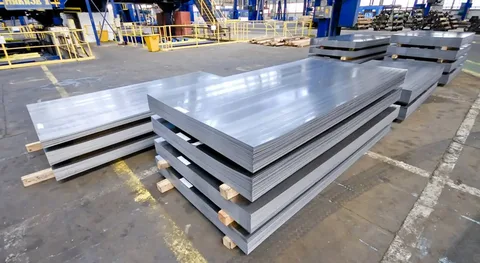
Marine environments destroy standard metals. Constant exposure to seawater, heavy moisture, and airborne chlorides breaks down most commercial alloys rapidly, sometimes within months of installation. Corrosion Resistant SS 316 Sheets addresses this problem through precise chemical composition. The alloy combines chromium, nickel, and molybdenum to form a highly stable passive surface layer. That microscopic film protects the underlying steel. Engineers frequently specify grade 316 over 304 specifically for these chloride-rich environments.
What Makes 316 Stainless Steel Sheets Suitable for Marine Applications?
Grade 316 features an austenitic crystalline structure. This specific metallurgical arrangement delivers exceptional toughness across extreme temperature ranges, maintaining structural integrity even in freezing offshore conditions. Stainless Steel 316 Sheets contain between 2% and 3% molybdenum. It prevents saltwater molecules from absorbing the protective surface film. Fabricators appreciate the material because it bends, forms, and welds without requiring specialised atmospheric controls. Mechanical strength remains high. Maintenance crews spend less time removing surface rust and applying protective coatings. The material outlasts standard alternatives in wet coastal conditions.
Key Properties of SS 316 Sheets for Marine Industry
Excellent General Resistance
The alloy handles atmospheric moisture and direct marine conditions effectively. Constant exposure to coastal fog doesn’t degrades the surface. Even when industrial pollutants mix with heavy sea spray, the chemical composition prevents the passive layer from breaking down.
Better Chloride Resistance
Grade 304 fails in saltwater. Chlorides aggressively strip away its basic chromium oxide layer. Grade 316 fix this through the addition of molybdenum. This specific element physically reinforces the microscopic oxide film, creating a robust chemical barrier that handles harsh ocean spray without developing widespread surface rust.
Resistance to Pitting and Crevice Corrosion
Seawater naturally collects in joints, under fasteners, and in enclosed corners. This stagnant saltwater causes severe localized pitting in standard metals. Type 316 specifically resists this destructive damage. Fasteners and welded seams stay intact longer. The metal survives in overlapping structural joints where oxygen levels drop, acidity rises rapidly, and crevice corrosion typically destroys lesser alloys.
Good Mechanical Strength
Fabricated marine components must survive heavy physical impacts and constant vibration. The alloy combines high tensile strength with excellent ductility. Structural parts absorb extreme mechanical stress from rough seas without experiencing sudden brittle failure.
Good Weldability and Formability
Fabricators shape the metal into complex marine components using standard industrial equipment. Bending and cutting procedures remain straightforward. Proper post-weld cleaning restores the corrosion resistance immediately. Welders match the filler material to the base metal chemistry to maintain structural integrity across the entire fabricated assembly.
Marine Applications of 316 Stainless Steel Sheets
Shipbuilders rely heavily on this specific grade. Offshore oil platforms use the material for heavy structural supports and exposed decking. Marine equipment enclosures protect sensitive navigation electronics from constant salt spray. Desalination systems handle highly concentrated brine using these specific alloys. Coastal infrastructure projects incorporate the metal for handrails, architectural panels, and seawall reinforcements. SS 316 Sheets for Marine Industry fabrication appear frequently in seafood processing facilities where aggressive cleaning chemicals meet daily saltwater washdowns. Fluid handling systems utilise the material extensively. Commercial fishing fleets specify the alloy for winches, cables, and sorting tables.
Why Choose 316 Instead of 304 Stainless Steel for Marine Applications?
Chemical composition defines the primary difference. Grade 304 lacks molybdenum entirely, while the 316 alloy includes up to 3% of this critical element. Grade 316 survives direct saltwater contact indefinitely under the right maintenance conditions. Grade 304 develops rapid, destructive pitting under the same saltwater exposure. Cost plays a major factor during material selection. This material costs more initially due to the higher nickel and molybdenum content required during the smelting process. Engineers specify 304 for decorative interior cabin trim or inland architectural applications. They mandate 316 for submerged components, heavy offshore rigging, and any critical equipment exposed directly to ocean spray. The higher upfront material cost prevents expensive premature marine failures. Replacing failed steel components miles offshore costs exponentially more than buying the correct alloy initially.
ASTM A240 TP316 Sheets: Standards and Specifications
ASTM A240 TP316 Sheets outline the strict requirements for chromium, nickel and molybdenum percentages. The specification determines acceptable tensile strength, yield strength, and essential elongation properties. Dimensional tolerances and mandatory thickness parameters ensure uniform fabrication across massive structural marine projects where precision matters. Reputable metal suppliers provide detailed material test reports matching this specific standard. Procurement teams must verify these documents before authorizing any structural work.
Factors to Consider When Selecting SS 316 Sheets for Marine Applications
Material selection requires analysing the exact operating environment. Direct seawater immersion requires different engineering considerations than occasional airborne salt spray. High operating temperatures accelerate chemical reactions and localised corrosion rates significantly. Engineers specify the correct sheet thickness to handle anticipated physical loads. A smoother finish gives aggressive chlorides fewer microscopic crevices to initiate localised corrosion. Fabricators select appropriate filler metals during welding to prevent intergranular weld decay across the structural joints. Every project complies with applicable ASME codes. Material traceability ensures the final installed component matches the initial engineering calculations exactly. Quality control inspectors trace every heat number back to the original steel mill.
Limitations of 316 Stainless Steel in Marine Environments
Type 316 resists corrosion aggressively. The alloy still remains vulnerable under certain extreme conditions. Prolonged immersion in stagnant, warm seawater eventually causes crevice corrosion. Marine organisms attach to submerged metal surfaces and create localised oxygen-deprived zones. Connecting this grade to aluminum or standard carbon steel underwater creates immediate galvanic corrosion. The less noble metal dissolves rapidly. Deep-water offshore operations often exceed the limits of standard austenitic grades entirely. Extreme pressure and high-chloride conditions force engineers to specify duplex alloys instead.
Conclusion
Marine engineering demands highly reliable materials. Grade 316 delivers consistent performance through precise molybdenum and chromium content. It actively resists focused chemical degradation. Fabricators build complex, durable structures because the metal forms and welds predictably, even during extensive fabrication sequences. Final material selection requires analysing specific exposure levels, ambient temperatures, and structural loads. Proper specification determines long-term success. Verifying exact material certifications avoids catastrophic failures in harsh coastal environments.
Tags : 316 Stainless Steel Sheets