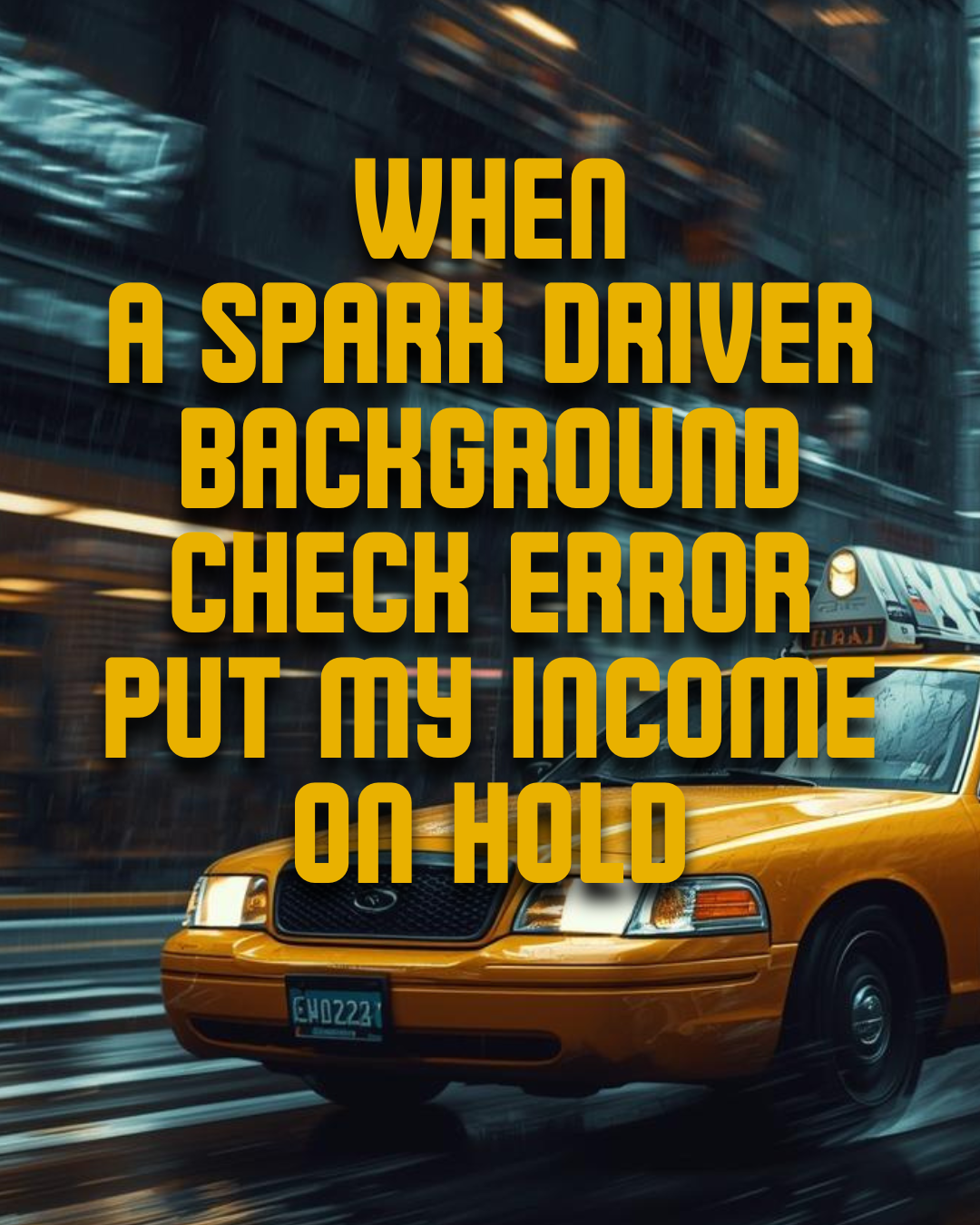
There are moments when work disappears without warning. No conversation. No explanation that makes sense. Just a status change on a screen that used to mean access and now means nothing. That is how a background check error can quietly interrupt someone’s ability to earn.
This is what happened when a spark driver background check came back wrong.
How the problem started
Driving for delivery platforms depends entirely on automated systems. Approval, continued access, and deactivation all flow through background checks that are rarely seen and never explained in detail. The assumption is that these checks are accurate, current, and fair.
The problem began when my Spark driver account was flagged based on information that did not reflect my actual record. The background check included data that was either outdated, incomplete, or incorrectly matched. There was no context. No explanation of what triggered the issue. Just a notice that access was restricted.
At that point, the work stopped.
Why background checks carry so much weight
Gig economy platforms rely on third-party consumer reporting agencies to run background checks. These agencies collect court data, criminal records, and identity information, then package it into reports that platforms treat as definitive.
A spark driver background check is not just a formality. It determines whether someone can work at all. When an error appears in that report, it does not sit in isolation. It becomes the basis for automated decisions that affect income, stability, and daily life.
What often goes unnoticed is that these background check companies are regulated under the Fair Credit Reporting Act. They are required to follow reasonable procedures to ensure maximum possible accuracy. That requirement exists because errors are not theoretical. They have consequences.
The real impact of an inaccurate report
Once the background check result changed, the effects were immediate. Deliveries stopped. Income paused. There was no timeline for review and no clear path forward. The system treated the report as final, even though the information itself was flawed.
This kind of disruption does not come with a dramatic announcement. It shows up as uncertainty. Plans get postponed. Bills still arrive. Work that was available one day disappears the next.
The most frustrating part is not knowing what part of the report caused the problem or whether the data should have been there at all.
Understanding where the responsibility lies
Background check errors are often framed as misunderstandings or technical glitches. In reality, they are compliance issues. When a consumer reporting agency furnishes inaccurate or outdated information that affects employment, the law requires accountability.
The Fair Credit Reporting Act exists to address exactly this situation. It places responsibility on reporting agencies to verify information, investigate inaccuracies, and correct errors that cause harm. A platform relying on a spark driver background check does not remove those obligations.
The role of consumer protection law
The solution is not patience or repeated requests for reconsideration. It is enforcement of existing law.
Consumer protection law firms focus on how background check reports are assembled, whether proper procedures were followed, and how errors impacted real opportunities. When violations are identified, the law allows for correction and compensation. Legal fees are paid by the reporting agency when the law is broken, not by the individual whose work was interrupted.
That structure exists because people should not bear the cost of system failures alone.
Why this experience matters
A background check should not have the power to quietly erase someone’s ability to work based on incorrect information. When it does, the problem is not the person being screened. It is the system that failed to ensure accuracy before making a decision that mattered.
A spark driver background check error may look small on paper. In real life, it can stop everything. The law recognizes that difference. Making it count is what restores balance when automated systems get it wrong.