Best IVF Centre consultations frequently begin with the same question from patients: what is actually going to happen? The medical terminology surrounding IVF, the range of procedures involved, and the emotional weight of the process can make the treatment feel opaque even for couples who have done considerable research beforehand. Understanding each stage of an IVF cycle, what it involves, why it is done, and what the experience is like, goes a long way toward reducing anxiety and improving how prepared patients feel as they begin.
An IVF cycle typically runs across four to six weeks. The stages are sequential, and each one builds on the last. Skipping ahead or rushing any phase is not possible, and the timeline is governed largely by the patient's own biological response to treatment rather than by a fixed calendar.
Dr. Mohit Saraogi leads the clinical team at Saraogi Hospital and IRIS IVF Centre, bringing over 20 years of experience in reproductive medicine. Highly rated across trusted platforms like Practo and Clinicspots, his approach places considerable emphasis on patient education. Before any cycle begins, he ensures that couples understand each decision point and what the clinical team is looking for at every stage of the process.
Stage One: Ovarian Stimulation
A natural menstrual cycle produces one egg. IVF requires more than one, which is why the first stage of treatment involves stimulating the ovaries to produce multiple follicles simultaneously. This is achieved through daily hormone injections, typically a combination of follicle-stimulating hormone and luteinising hormone, administered for eight to fourteen days depending on the patient's response.
During stimulation, the patient attends regular monitoring appointments involving ultrasound scans and blood tests to track how the follicles are developing. The clinical team uses these results to adjust medication doses in real time. The goal is to produce an adequate number of mature follicles without over-stimulating the ovaries, a condition called ovarian hyperstimulation syndrome that requires careful management.
Stage Two: Egg Retrieval
Once follicles reach the appropriate size, a trigger injection is given to complete the final maturation of the eggs. Egg retrieval takes place approximately 36 hours later. The procedure is performed under sedation and takes around 20 to 30 minutes. A fine needle is guided through the vaginal wall under ultrasound, and fluid is aspirated from each follicle. The embryology team examines the fluid immediately to identify and count the retrieved eggs.
Most patients experience mild cramping and spotting following retrieval. Rest is recommended for the remainder of that day, with most patients returning to normal activity the following morning.
Stage Three: Fertilisation and Embryo Development
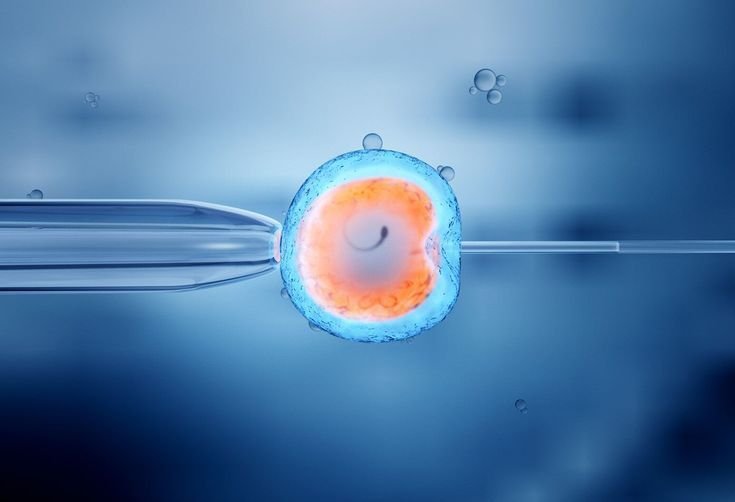
Retrieved eggs are taken to the embryology laboratory and assessed for maturity. Mature eggs are then fertilised, either by placing them with prepared sperm in a culture dish through conventional IVF, or by injecting a single selected sperm directly into each egg through a procedure called ICSI, which is used in cases of male factor infertility or previous fertilisation failure.
Fertilised eggs are monitored daily over the following three to five days as they develop from a two-cell zygote into a multi-cell blastocyst. Not every egg will fertilise and not every fertilised egg will develop to blastocyst stage, which is why the retrieval of multiple eggs at the outset is clinically important. The embryology team assesses each embryo and grades it based on development and morphology.
Stage Four: Embryo Transfer
Embryo transfer is the procedure during which one or more embryos are placed into the uterine cavity. It is carried out using a fine catheter passed through the cervix and typically requires no sedation. Most patients describe it as similar to a smear test in terms of discomfort.
The number of embryos transferred is determined by the patient's age, embryo quality, and clinical history. The period following transfer, sometimes called the two-week wait, involves continued progesterone support and culminates in a blood pregnancy test.
Stage Five: The Luteal Phase and Pregnancy Test
During the two weeks between transfer and the pregnancy test, patients continue with progesterone support to help prepare and maintain the uterine lining. A blood test measuring beta-hCG levels confirms whether implantation has occurred. A positive result is the beginning of early pregnancy monitoring rather than the end of clinical involvement.
Frequently Asked Questions
How many eggs are needed for a successful IVF cycle?
There is no fixed number, but retrieving eight to fifteen mature eggs is generally considered a good response. More eggs increase the chances of having viable embryos to transfer and freeze.
Is the egg retrieval procedure painful?
Egg retrieval is performed under sedation, so patients do not feel pain during the procedure. Mild cramping and discomfort following retrieval are normal and typically resolve within a day.
What is the difference between IVF and ICSI?
In standard IVF, eggs and sperm are placed together and fertilisation occurs naturally. In ICSI, a single sperm is injected directly into each egg. ICSI is used when sperm quality is a factor or when previous IVF cycles produced poor fertilisation.
Can embryos be frozen after a cycle?
Yes. Embryos that develop well but are not transferred in the fresh cycle can be cryopreserved and used in a future frozen embryo transfer, avoiding the need for another full stimulation cycle.
How many cycles of IVF might be needed?
This varies by individual and is influenced by age, diagnosis, and embryo quality. Many patients achieve a successful pregnancy within two to three cycles, though this cannot be predicted in advance.
Tags : .....