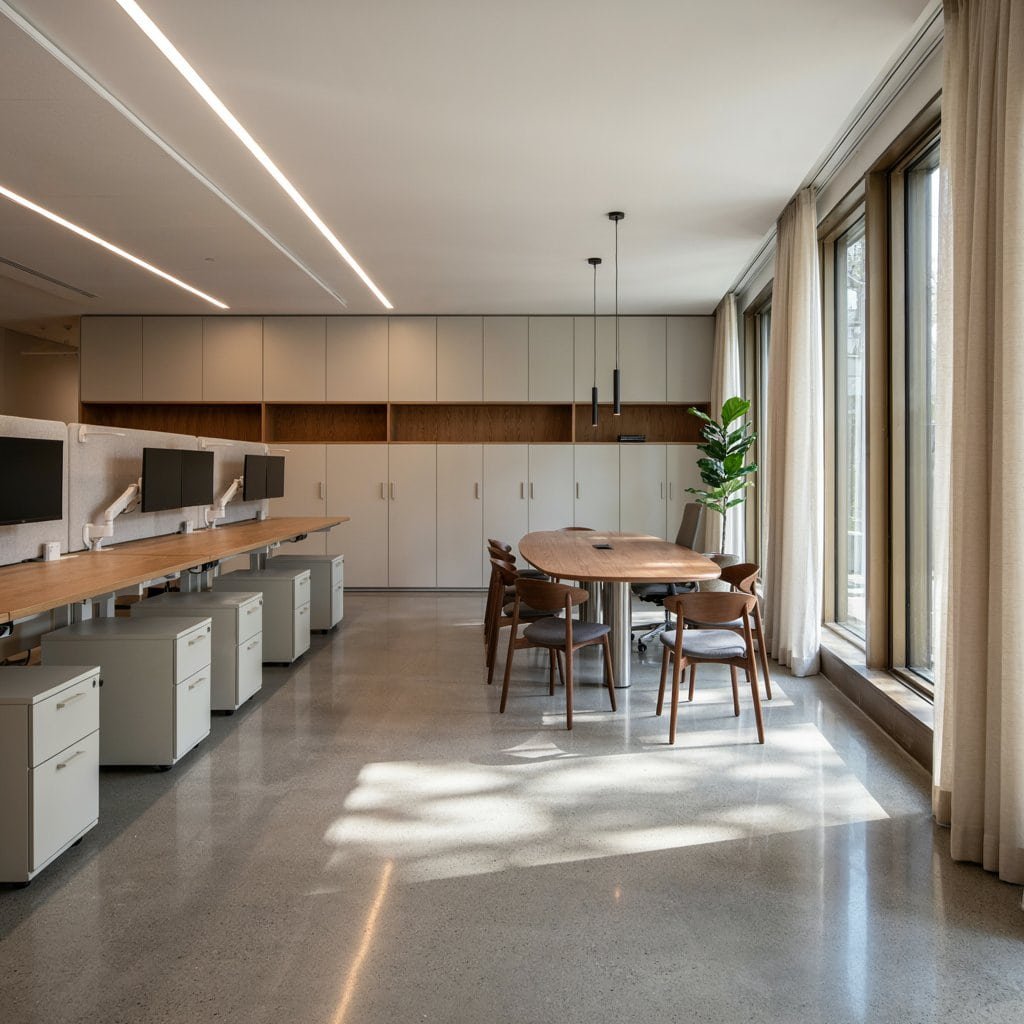
Ready-made office furniture works well when your space is standard and your needs are simple. But many offices are neither. Awkward corners, a team that works in a specific way, or a brand look you want to keep consistent can all make catalogue pieces feel like a compromise. Custom furniture solves that, but only if the order is planned well. Once production starts, changes are slow and expensive.
Here are the points worth settling before you place a custom order.
1. Start with how your team actually works
Before thinking about style, list what people do at their desks every day. A finance team handling paperwork needs different storage from a design team that spends hours on large monitors. A call centre needs compact, uniform workstations, while a management floor may need meeting tables and lounge seating.
Talk to the people who will use the furniture. A short survey or a few conversations will tell you more than a floor plan does. Ask about storage, screen size, how often they meet in groups, and what annoys them about the current setup.
2. Measure the space carefully
Custom furniture is built to exact dimensions, so a small measuring error can turn into a costly mistake. Measure walls, ceiling height, window positions, columns, and the location of power points and vents. Also measure the route the furniture will take on delivery day, including lift sizes, door widths, and staircase turns.
- Leave enough walking space between workstations and behind chairs.
- Check that doors and drawers can open fully without hitting anything.
- Ask the manufacturer to visit the site and take their own measurements.
3. Set a realistic budget
Custom pieces usually cost more per item than standard ones, so decide your budget early and share it with the manufacturer. A good supplier will suggest where to spend and where to save. For example, you might invest in the desks and chairs people use all day, and keep the finish simpler on storage units or reception fittings.
Also ask what is included in the quote. Design work, delivery, installation, and hardware such as handles and locks are sometimes priced separately.
4. Choose materials for daily wear
An office desk takes far more abuse than a piece of home furniture. Think about scratches, spills, heavy equipment, and constant use. Laminates and melamine boards are affordable and easy to clean. Solid wood and veneer look richer but need more care. Metal frames add strength to desks and shelving.
Ask for physical samples of every material and finish. Colours on a screen or in a brochure often look different under your office lighting. If the project is large, request a single prototype workstation before approving the full run.
5. Put ergonomics ahead of looks
A desk that looks great but causes back or neck strain will cost you in lost productivity. Standard desk height is around 720 to 750 mm, but people vary. Consider height-adjustable desks or adjustable monitor arms where budgets allow. Make sure the chair, desk, and screen work together, since a good chair at a badly sized desk still causes problems.
Leave enough knee and leg room, keep the keyboard tray at a comfortable depth, and avoid sharp desk edges where forearms rest.
6. Plan for cables and power
Messy wiring is one of the most common complaints in offices. Custom furniture gives you the chance to build in cable trays, grommet holes, and power modules from the start. Count how many devices each person uses, including laptops, monitors, phones, and chargers, and make sure the design has enough outlets and a clean route for cables. Retrofitting this later is much harder.
7. Think about growth and flexibility
Your team may be a different size in two years. Modular designs let you add, remove, or rearrange desks and storage without replacing everything. If you expect to move offices or reconfigure the layout, ask whether the pieces can be dismantled and reassembled without damage.
8. Check timelines and delivery
Custom orders can take several weeks or more, depending on the size of the order and the manufacturer. Ask for a written schedule that covers design approval, production, delivery, and installation. Build in extra time before your move-in date, because delays in approvals or materials are common. If possible, stagger delivery so that you are not storing large items in an unfinished space.
9. Vet the manufacturer
The maker matters as much as the design. Ask to see previous projects, and speak to at least one past client about their experience. Visit the workshop if you can, to check build quality and finishing. Confirm who handles design drawings, who manages the project, and who is responsible if something arrives damaged or incorrectly sized.
10. Get warranty and after-sales terms in writing
Find out how long the warranty lasts and what it covers. Hinges, drawer runners, locks, and chair mechanisms are the parts most likely to wear out. Ask whether spare parts and repairs will be available later, and whether the supplier offers an installation and inspection visit once everything is in place.
A quick checklist before you order
- Team needs and daily tasks are listed
- Room and delivery route measurements are confirmed
- Budget is fixed, and the quote shows everything included
- Material and finish samples have been approved
- Ergonomic requirements are built into the design
- Cable management and power points are planned
- Delivery schedule and installation are agreed in writing
- Warranty and after-sales support are clearly stated
Final thoughts
Custom office furniture is an investment in how your team works every day. The best results come from a clear brief, accurate measurements, and an honest conversation with the manufacturer about budget and timing. Take the time to get these details right before the order is placed, and you will end up with furniture that fits your space, suits your people, and lasts.
Tags : Custom Office Furniture