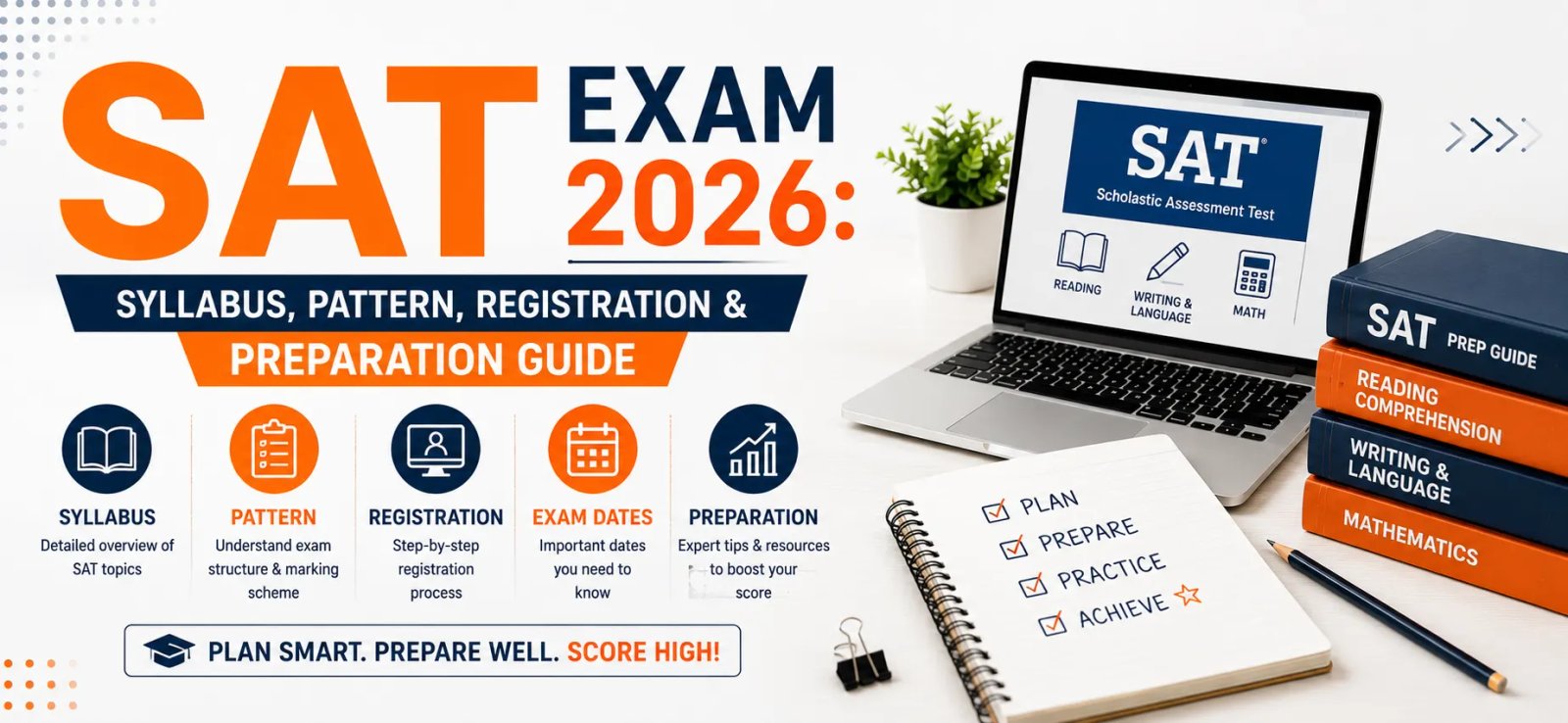
The SAT Exam is an important part of the application process for many students planning to apply to colleges and universities, particularly in the United States. Students preparing for the test should understand what they are expected to study, how questions are presented, how much practice they need, and how their preparation fits into their college plans. The test should not be approached by simply memorise answers. Students need to understand questions, practice regularly, manage their time, and review their mistakes. Knowing the basic details of the examination before starting preparation can help students make a sensible study plan.
Students should first understand:
- What the SAT measures
- Which sections are included
- How questions are answered
- How preparation should be planned
- What practice resources are available
- How the score may be used by colleges
Understand the Purpose of the SAT
The SAT is a standardized test that colleges may consider as part of their admissions process. Each college can have its own testing policy, so students should check the requirements of the institutions they plan to apply to.
Check college requirements early
Students should make a list of their preferred colleges and check whether SAT scores are required, optional, or considered as part of the application. Requirements can change, so it is better to check the latest information from each college before making decisions about testing.
Know the Main Areas Tested
Students should know what they will be tested on before creating a preparation plan. The SAT assesses skills in Reading and Writing and Mathematics.
Reading and Writing
This part tests skills related to reading, understanding information, grammar, language use, and editing. Students need to read passages carefully and choose answers based on the information provided.
Mathematics
The Mathematics section covers areas such as algebra and other mathematical concepts included in the current SAT. Students should understand the concepts first and then practice applying them to different questions.
Start With Your Current Level
Before spending months preparing, students can take a practice test to understand their current level. This gives them a starting point for planning.
Look at your practice results
Do not focus only on the total score. Check which types of questions were answered incorrectly and which areas caused difficulty.
Students can make separate notes for:
- Questions they did not understand
- Questions answered incorrectly
- Questions that took too much time
- Topics that need revision
- Careless mistakes
This gives students a clearer idea of where to begin.
Build a Practical Study Plan
A study plan does not need to be complicated. Students should decide how much time they can realistically give to SAT preparation each week.
Divide preparation into simple tasks
Students can set aside different days for learning concepts, solving practice questions, reviewing mistakes, and taking timed tests.
A useful plan should leave enough time for schoolwork and other responsibilities. Studying for several hours on one day and then doing nothing for the rest of the week may not be as useful as regular practice.
Improve Reading Carefully
Reading questions require students to understand the information given in a passage. Rushing through the text can lead to mistakes.
During practice, students should:
- Read the question carefully
- Understand what is being asked
- Look for relevant information
- Avoid making assumptions
- Check the answer against the passage
Regular reading practice can also help students become more comfortable with different types of written information.
Work on Grammar and Writing Skills
The Reading and Writing section includes questions that require students to identify appropriate grammar and language choices.
Review common areas
Students can revise sentence structure, punctuation, transitions, word choice, and other language rules that appear in their preparation material.
Instead of memorise isolated rules, students should practice using them in sentences. Reviewing wrong answers can show which rules need more attention.
Strengthen Mathematics Basics
Students should not ignore basic mathematical concepts while preparing for the SAT. A student who struggles with a basic topic may find more advanced questions difficult as well.
Focus on understanding
Start with topics that are causing repeated mistakes. Review the method, solve simple questions first, and then move towards questions that require more steps.
Students should also practice reading mathematical questions carefully because some errors happen when the question is misunderstood rather than when the calculation is difficult.
Practice Without Guessing Every Answer
Practice should be used to understand the question-solving process. When students immediately look at the answer after getting stuck, they may miss the opportunity to understand their mistake.
Try this approach
First, attempt the question independently. If the answer is incorrect, review the explanation and identify the step where the mistake happened. Then solve a similar question without looking at the solution.
This method can make practice more useful.
Learn From Wrong Answers
Wrong answers are not simply marks lost in a practice test. They can show students what needs to be improved.
Keep an error record
Students can maintain a notebook or digital list containing:
- The question type
- Their selected answer
- The correct answer
- Reason for the mistake
- Topic requiring revision
Reviewing this list regularly can help students notice repeated errors.
Practice With Timed Questions
Students should gradually introduce time limits into their preparation. At first, they can focus on understanding questions. Later, they can solve sets of questions within a fixed period.
Timed practice can help students understand:
- How quickly they read
- How long they spend on difficult questions
- Whether they leave enough time for other questions
- Where they lose time unnecessarily
The purpose is to become comfortable working within the available time.
Take Full Practice Tests
Full practice tests can give students a better idea of what it feels like to complete a complete examination session.
After each test, review more than the score
Students should check incorrect answers, unanswered questions, timing problems, and topics that need more work.
A practice test becomes more useful when students spend time understanding their performance afterwards.
Use Reliable Study Resources
Students have access to many SAT preparation materials, but not every online resource is equally useful. Students should prefer reliable and current resources when studying.
Check resources before using them
Look for material that matches the current SAT and provides clear explanations. Official SAT preparation resources should also be considered when creating a study plan.
Students should avoid depending on old material without checking whether it matches the current examination.
Decide When to Take the Test
Students should consider their school schedule, preparation level, college application plans, and available test dates when deciding when to take the SAT.
Do not choose a date only because others are taking it
A suitable test date depends on the individual student. Students should leave enough preparation time and understand the application deadlines of the colleges they are considering.
Planning early can reduce pressure later.
Understand That Preparation Takes Practice
There is no single study method that works for every student. Some students may need more time for Mathematics, while others may need more Reading and Writing practice.
Adjust the plan when necessary
If practice results show that one area is weaker, students can give more time to that area. If a topic improves, they can move their attention to another topic.
Preparation should change according to actual progress rather than following the same routine throughout.
Balance SAT Preparation With School
Students should not allow test preparation to interfere unnecessarily with regular school studies. A balanced schedule can make preparation easier to maintain.
Plan the week carefully
Students can decide when they will:
- Attend school
- Complete homework
- Study SAT topics
- Take practice tests
- Review mistakes
- Take breaks
Keeping realistic study hours can help students continue preparing without creating an unmanageable routine.
Check College Policies Before Applying
SAT policies can differ between colleges and may change over time. Students should therefore check the latest requirements for every college on their application list.
Keep these details together
Students can maintain a simple list showing each college's testing policy, application deadline, and other relevant requirements. This can help them avoid relying on old information.
Conclusion
Students preparing for the SAT Exam should begin by understanding the test, checking college requirements, assessing their current level, and creating a practical study plan. Regular question practice, timed work, full practice tests, and careful review of mistakes can make preparation more organised. Students should also use reliable study resources and balance test preparation with school responsibilities. There is no need to follow someone else's study routine exactly. The most useful approach is to identify personal weaknesses, practice those areas, and adjust the plan when needed. By understanding the SAT Exam and preparing consistently, students can approach their test preparation with a clearer idea of what they need to work on.
Get in touch:-
Company Name: Ooshas Prep
Phone no: +91- 9166146538
Email: info@ooshasprep.com
Website: https://www.ooshasprep.com/
Address: Delhi, India
Tags : SAT Exam