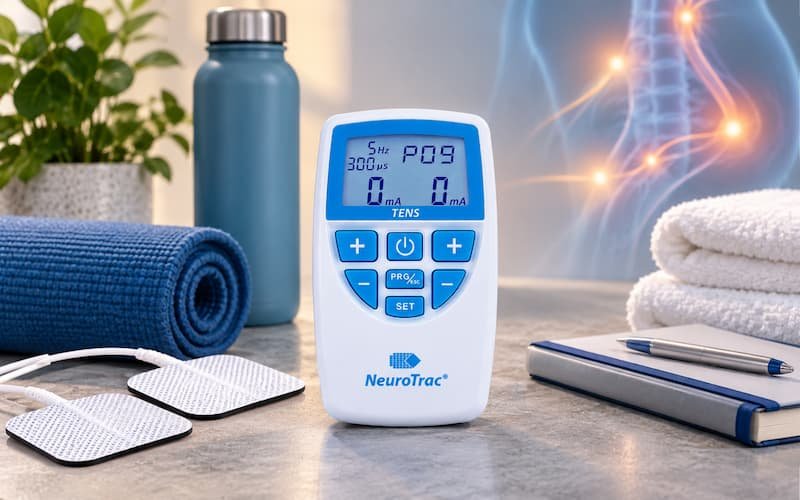
Transcutaneous electrical nerve stimulation (TENS) can be incorporated into rehabilitation programmes as part of a broader approach to managing pain and supporting functional recovery. For professionals considering a tens machine neurotrac, the important factors extend beyond the device itself and include treatment goals, stimulation settings, electrode placement, patient comfort, and appropriate clinical guidance.
NeuroTrac TENS in Rehabilitation is particularly relevant when electrical stimulation is being considered alongside physiotherapy, exercise, mobility work, or other rehabilitation strategies. TENS does not replace assessment or active rehabilitation, but it can form part of a structured therapy programme when selected and applied appropriately.
Understanding how the technology works and what to consider during use can help healthcare professionals make informed decisions and provide patients with a more consistent and appropriately supervised rehabilitation experience.
Understanding NeuroTrac TENS in Rehabilitation
TENS uses controlled electrical stimulation delivered through electrodes placed on the skin. The stimulation is intended to influence sensory nerve activity and may be incorporated into pain-management strategies used within rehabilitation.
The purpose of TENS can vary according to the individual and their rehabilitation plan. A physiotherapist or other qualified healthcare professional may consider it alongside movement training, therapeutic exercise, manual techniques, education, or other interventions.
The term NeuroTrac TENS in Rehabilitation describes the use of TENS technology as part of this broader rehabilitation context rather than as an isolated treatment. The emphasis should remain on appropriate patient assessment, treatment objectives, correct application, and monitoring.
How Does NeuroTrac TENS Work?
TENS works by delivering electrical pulses through surface electrodes positioned on the skin. These pulses interact with sensory nerves and can produce different stimulation sensations depending on the selected programme and intensity.
A typical clinical process may include:
Patient assessment: The clinician considers the individual's symptoms, functional needs, treatment goals, and suitability for TENS.
Treatment planning: Appropriate stimulation parameters and electrode placement are selected according to the intended application.
Electrode application: Compatible electrodes are positioned on suitable areas of the body according to professional guidance.
Parameter adjustment: Intensity and programme settings are adjusted gradually to an appropriate and comfortable level.
Monitoring: The patient's response, comfort, and functional progress are reviewed as part of the wider rehabilitation programme.
Unlike NMES or muscle stimulation approaches designed to produce muscular contraction, conventional TENS is generally focused on sensory stimulation. This distinction is important when selecting an electrotherapy approach.
Key Benefits and Clinical Applications
Supporting Pain-Management Strategies
Pain can sometimes make movement and participation in rehabilitation more difficult. TENS may be incorporated into a wider pain-management strategy to help patients engage more comfortably with prescribed rehabilitation activities.
Its role should be considered within the overall treatment plan rather than as a guaranteed method of controlling pain.
Complementing Active Rehabilitation
Rehabilitation often involves exercise, strengthening, mobility training, or functional activities. When clinically appropriate, TENS may be used alongside these approaches rather than replacing them.
This allows the clinician to consider electrical stimulation as one component of a broader programme.
Adjustable Stimulation
A professional TENS device should provide suitable control over stimulation parameters. This allows the clinician to adapt treatment according to the individual's requirements and the intended therapeutic application.
Adjustability can also help support patient comfort during a treatment session.
Supporting Different Rehabilitation Settings
TENS can potentially be used across physiotherapy clinics, rehabilitation centres, hospitals, and appropriately supervised home programmes. The setting does not remove the need for proper assessment and instruction.
For home-supported rehabilitation, patients should understand how to use the device, position electrodes correctly, and follow the treatment plan provided by their healthcare professional.
Patient Comfort and Participation
Comfort is an important practical consideration. Electrical stimulation should be introduced appropriately, with intensity adjusted according to the treatment plan and individual tolerance.
Clear communication can help patients understand what sensations to expect and when they should discuss concerns with their healthcare professional.
Important Features and Factors to Consider
When evaluating NeuroTrac TENS in Rehabilitation, professionals should consider several practical and clinical factors.
Treatment Requirements
The device should provide stimulation options that correspond with the intended rehabilitation application. Different patients may require different approaches, so flexibility can be valuable.
Programmability
Control over stimulation parameters allows professionals to establish settings appropriate to the planned intervention. The exact parameters should be selected according to clinical judgement and the manufacturer's instructions.
Number of Channels
Channel configuration can influence how a device is used. Depending on the rehabilitation application, clinicians may need to consider whether single-channel or multi-channel operation is appropriate.
Electrode Compatibility
Good electrode contact is important for consistent stimulation. Compatible electrodes should be used according to manufacturer guidance, while skin condition and electrode placement should also be considered.
Portability
For supervised home programmes or patients who need flexibility between clinical appointments, device size and portability may be practical considerations.
Ease of Use
Controls should be understandable for both professionals and appropriately trained patients. Clear operation can help reduce unnecessary complexity during treatment.
How Can Healthcare Professionals Use NeuroTrac TENS in Practice?
Physiotherapists may incorporate TENS into rehabilitation plans where electrical stimulation is considered appropriate for the patient's treatment goals. The device can be used alongside exercise, mobility training, functional rehabilitation, and patient education.
In rehabilitation centres and hospitals, clinicians may use TENS as part of structured electrotherapy protocols while monitoring patient responses.
Pelvic health specialists may also use electrical stimulation technologies within specific rehabilitation programmes, although TENS should not automatically be considered interchangeable with pelvic floor NMES, EMG biofeedback, or ETS. Each technology has a different purpose and should be selected according to the treatment objective.
For home rehabilitation, professional instruction is particularly important. Patients should receive guidance on device operation, electrode placement, stimulation settings, treatment duration, and situations in which they should stop and seek professional advice.
Choosing the Right Solution
Selecting a TENS device should begin with the treatment objective rather than with individual features alone.
Healthcare professionals may consider:
The patient's rehabilitation goals
The intended application of TENS
Required stimulation programmes and controls
Channel requirements
Electrode compatibility
Device portability
Ease of operation
Whether supervised home use is anticipated
The clinician's ability to monitor and review treatment
A device that offers appropriate functionality can be incorporated more effectively when it fits the clinical workflow and the patient's ability to use it correctly.
The most suitable solution will depend on the individual assessment and intended application. Device selection should therefore be based on professional judgement and manufacturer guidance rather than assuming that one configuration is suitable for every patient.
Why Professional Rehabilitation Devices Matter
Professional rehabilitation devices are designed to provide clinicians with greater control over structured electrotherapy applications. Within the NeuroTrac range, different technologies address different rehabilitation requirements, including TENS, NMES/STIM, EMG biofeedback, and EMG-triggered stimulation.
For TENS-focused applications, NeuroTrac devices can form part of a structured rehabilitation approach where pain management is relevant to the patient's programme. Other NeuroTrac technologies, such as MyoPlus devices, can support applications involving EMG biofeedback and muscle re-education where clinically appropriate.
This distinction is important because rehabilitation technology should match the therapeutic objective. A clinician assessing muscle activation, for example, may require EMG biofeedback rather than relying on TENS alone.
Professional equipment can therefore support structured treatment, consistent application, clinical observation, and communication between healthcare professionals and patients.
Practical Considerations for Effective Therapy
Effective use involves more than switching on the device. Several practical details can influence the treatment experience.
Follow Appropriate Protocols
Stimulation settings should be selected according to the treatment plan, professional guidance, and device instructions. Patients should not independently change settings without appropriate advice.
Check Electrode Placement
Electrodes should be positioned as instructed for the intended application. Skin should also be checked before and after treatment, particularly when electrotherapy is being used repeatedly.
Prioritise Comfort
Stimulation intensity should be introduced gradually and adjusted appropriately. Patients should communicate unusual discomfort or concerns to their healthcare professional.
Maintain Treatment Consistency
Where TENS is incorporated into a rehabilitation programme, following the agreed treatment schedule can make it easier for clinicians to review the patient's response over time.
Monitor the Overall Programme
TENS should be considered alongside functional outcomes, exercise participation, mobility, pain reports, and other relevant measures rather than assessed in isolation.
FAQs
What is NeuroTrac TENS used for?
NeuroTrac TENS devices can be used as part of structured electrotherapy programmes where TENS is considered appropriate. TENS is commonly incorporated into pain-management strategies within broader rehabilitation plans. Its use should be based on individual assessment, treatment objectives, appropriate settings, and professional guidance.
Can TENS be used alongside physiotherapy?
Yes, TENS may be incorporated alongside physiotherapy approaches such as therapeutic exercise, mobility training, and functional rehabilitation when considered appropriate. It should complement rather than automatically replace active rehabilitation. A healthcare professional can determine how electrical stimulation fits into the individual's wider treatment programme.
What should professionals consider before using TENS?
Professionals should consider the patient's treatment goals, clinical circumstances, electrode placement, stimulation parameters, device functionality, comfort, and ability to follow instructions. They should also review relevant safety considerations and manufacturer guidance before incorporating TENS into a rehabilitation programme.
Can NeuroTrac TENS be used at home?
TENS may be appropriate for supervised home rehabilitation in some circumstances. Patients should first receive suitable instruction from a healthcare professional covering device operation, electrode placement, stimulation settings, treatment routines, and relevant precautions. Home use should form part of an appropriate rehabilitation plan rather than being undertaken without guidance.
Is TENS the same as NMES?
No. TENS and NMES use electrical stimulation but have different primary applications. TENS generally provides sensory stimulation, while NMES is designed to stimulate motor nerves and produce muscle contractions. Choosing between them depends on the rehabilitation objective and should be guided by an appropriately qualified professional.
Are electrode placement and skin condition important?
Yes. Appropriate electrode placement helps ensure that stimulation is delivered as intended, while checking the skin can help identify irritation or other concerns. Electrodes should be compatible with the device and applied according to professional and manufacturer guidance.
Conclusion
Using TENS effectively in rehabilitation requires more than selecting a device with suitable controls. Treatment goals, stimulation parameters, electrode application, patient comfort, professional supervision, and ongoing monitoring all contribute to an appropriate electrotherapy programme.
NeuroTrac TENS in Rehabilitation can be considered as one component of a structured approach that may also include exercise, functional training, education, and other rehabilitation technologies. For professionals, the key is to select equipment that matches the clinical objective and to ensure that its use remains appropriately guided.
With a suitable professional device and a clearly defined rehabilitation plan, TENS can be integrated into clinical or supervised home settings in a practical and consistent way while keeping the wider rehabilitation goals at the centre of care.
Tags : medical devices medical equipment