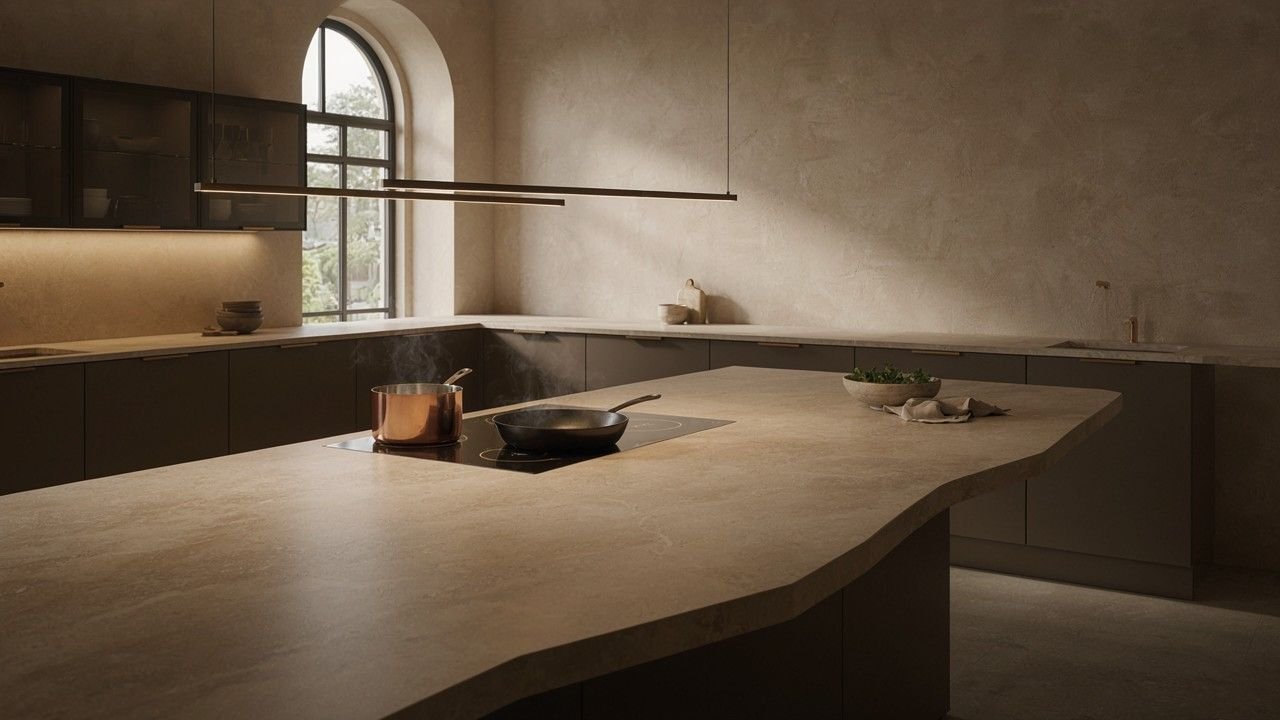
Invisible cooking systems are changing the way homeowners, designers, and architects think about the modern kitchen. Instead of placing a traditional cooktop on top of the counter, these systems integrate induction technology beneath a compatible countertop surface, creating a clean and almost uninterrupted workspace.
But one of the first questions buyers naturally ask is: How much should you budget for an invisible cooking system?
The answer depends on several factors, including the cooking technology, countertop material, installation requirements, number of cooking zones, controls, and project complexity. Understanding these costs before starting a renovation can help you plan a realistic countertop cooking investment without unexpected expenses.
Understanding Invisible Induction System Cost
The total invisible induction system cost is influenced by more than the cooking unit itself. Unlike a conventional induction cooktop that can often be installed as a standalone appliance, an invisible system is designed to become part of the countertop.
The system may include induction generators, cooking zones, sensors, controls, connecting components, and other installation hardware. Depending on the model and configuration, pricing can vary significantly.
For this reason, it is better to think about an invisible cooking system as an integrated kitchen solution rather than simply another appliance.
A basic installation may have a relatively straightforward cost structure, while a premium project with multiple cooking zones, customized controls, specialist installation, and a high-end countertop can require a substantially larger budget.
What Determines Concealed Cooktop Pricing?
Several elements contribute to overall concealed cooktop pricing. The first is the cooking system itself. Different manufacturers offer different technologies, capacities, control systems, and zone configurations.
The number of cooking zones is another important consideration. A compact setup designed for occasional cooking may require fewer zones than a large family kitchen intended for frequent meal preparation.
Countertop compatibility also matters. Invisible induction technology generally requires a suitable surface that allows induction energy to transfer efficiently while maintaining the required structural and safety characteristics.
Installation requirements can also affect the final price. Depending on the kitchen layout, electrical supply, ventilation strategy, countertop construction, and cabinetry, professional installation may involve additional work.
Therefore, comparing only the appliance price can give an incomplete picture of the project.
Planning Your Countertop Cooking Investment
An invisible cooking system should be considered as part of the overall kitchen design budget. Your countertop cooking investment may include several components:
- The invisible induction equipment
- Compatible countertop material
- Electrical preparation
- Professional installation
- Controls and accessories
- Countertop fabrication
- Cabinet or drawer modifications
- Additional safety or ventilation requirements
Some homeowners may already be replacing their countertops as part of a renovation. In that situation, integrating the cooking system during the countertop project can make the overall installation process more efficient.
For new kitchens, architects and designers can plan the cooking zones, electrical connections, cabinetry, and countertop specifications from the beginning. This can reduce the need for expensive modifications later.
The key is to create the budget around the complete installation, rather than treating the cooking technology as an isolated purchase.
Is an Invisible Cooktop More Expensive Than a Traditional One?
In many cases, invisible induction technology can require a higher initial investment than a conventional cooktop. This is largely because the technology is integrated into the countertop rather than simply installed on or within it.
However, purchase price is only one way to evaluate a kitchen system.
Invisible cooking can provide design advantages that may be particularly valuable in premium kitchens. When the cooking surface is visually integrated into the countertop, the kitchen can maintain a cleaner appearance and offer more usable counter space when cooking zones are not active.
For homeowners focused on minimalist interiors, luxury kitchens, open-plan living spaces, or multifunctional countertops, these design benefits can be an important part of the overall value.
The right comparison is therefore not always “Which appliance costs less?” It can also be “Which cooking solution fits the way I want my kitchen to look and function?”
How to Create a Realistic Budget
Before purchasing an invisible induction system, start by defining your kitchen requirements.
First, consider how often you cook and how many zones you actually need. A larger system is not necessarily better if your cooking habits only require a small setup.
Next, determine the countertop material and thickness that will be used. Compatibility should be confirmed with the system manufacturer and countertop professional before fabrication begins.
You should also request an installation quote that separates the major components. Ask about the equipment, electrical work, countertop preparation, installation, controls, and any additional accessories.
It is also sensible to include a contingency amount in the renovation budget. Kitchen projects can uncover unexpected electrical, cabinetry, or countertop requirements, particularly when integrating new technology into an existing space.
Getting detailed quotes early allows you to compare the complete project cost rather than comparing appliance prices alone.
Investing in the Future of Kitchen Design
An invisible cooking system represents more than a different way to heat cookware. It is part of a broader movement toward integrated kitchen technology, where appliances are designed around the architecture of the space instead of being visually dominant.
For homeowners planning a high-end renovation, the initial invisible induction system cost should be evaluated alongside the long-term design and functional goals of the kitchen.
The most important consideration is whether the system delivers the combination of cooking performance, countertop integration, aesthetics, and functionality you expect.
If you're planning a new kitchen, discuss the project with both the cooking-system supplier and countertop fabricator before finalizing your design. Proper coordination can help ensure that the technology, countertop, electrical infrastructure, and cabinetry work together from the beginning.
Ultimately, concealed cooktop pricing varies from project to project, but careful planning makes the investment much easier to understand. By budgeting for the complete installation rather than just the equipment, homeowners can make informed decisions and create a kitchen that combines modern cooking technology with a clean, seamless design.