What Should Vessel Operators Check Before Buying Navigation Equipment in Jubail?
By ayman basheer 28-09-2026 8
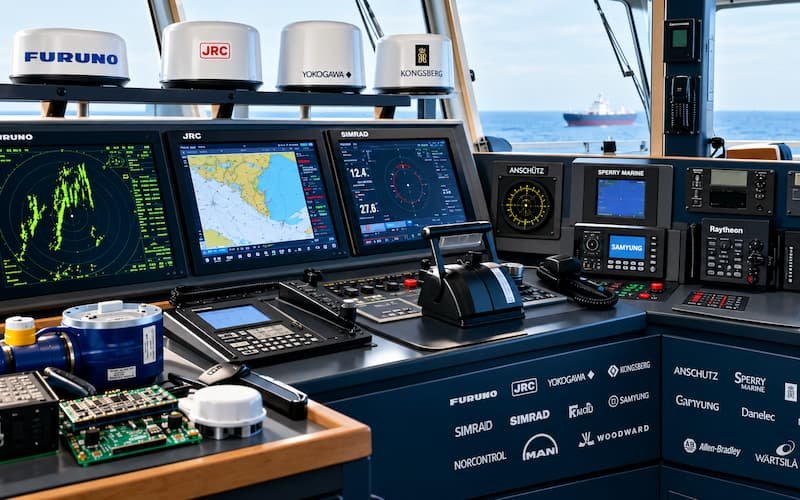
For vessel operators, choosing the right navigation system is an important decision that directly supports safe and efficient marine operations. The operating environment could present challenging locations of operation, fluctuating weather, traffic, and tight schedules in a busy maritime place like Jubail. Thus, to choose the quality navigation equipment Jubail, it is not enough to compare the prices. Before purchasing equipment, operators should take into account the accuracy of equipment, its compatibility, durability, certifications, installation needs, maintenance, and after-sales support.
Situational awareness could be enhanced by the right navigation equipment as it will enable the crews to navigate routes and the surrounding traffic of other vessels more efficiently. Whether a vessel needs radar, GPS, GNSS, AIS, echo sounders, gyro compasses, autopilot systems, electronic chart systems, or marine communication equipment, it should suit the needs of the vessel. Cooperation with a solid marine navigation equipment supplier Jubail can also assist operators to choose the appropriate products, get familiar with technical requirements, and get installation and maintenance services.
1. Understand the Vessel's Requirements
Operators are advised to determine the requirements of the vessel, before acquiring any equipment. Depending on vessel type, size, area of operation, frequency of voyages, crew needs, and available onboard systems may all impact the equipment required.
The navigation system of a commercial vessel might need a more sophisticated system than a smaller workboat. The operators should also decide whether they are in need of a fully operating system, a replacement of the old equipment or an addition to an already existing system.
This is best understood by initially grasping these requirements to prevent unwarranted purchases and to make sure that the equipment that is chosen is practical.
2. Check Accuracy and Reliability
One of the most significant aspects when choosing marine navigation systems is their accuracy. Positioning, heading, speed, depth and vessel identification equipment must be able to give reliable information.
Jubail navigation equipment, operators must review the features of the equipment including positioning accuracy, radar detection range, display resolution, update rates and operating temperature. It should also be fitted with equipment that is marine friendly in terms of the humidity, vibration, salt and temperature changes.
Proven equipment will minimize downtimes in the operation and offer a stable operation over extended routes.
3. Verify Certifications and Compliance
The marine equipment of the navigation ought to be in compliance with the relevant industry and regulatory demands of the vessel. Operators are supposed to demand pertinent certifications, approvals, manuals, and technical documentation before buying.
The various international, classification or flag-state requirements vary depending on the vessel and its operation. The operators are therefore advised to ensure that the equipment they choose matches with their vessel instead of thinking that any commercially offered product in the field of navigation will suit their vessel.
An informed supplier will be able to assist in determining the documentation and compliance needs.
4. Confirm Compatibility With Existing Systems
New ships usually have various systems of navigation which must be able to communicate with one another. Important data may be exchanged among radar, GPS, AIS, autopilot, electronic charts, gyrocompass and so on.
Prior to the purchase of the navigation equipment Jubail, the operators must consider whether the new system will be compatible with the vessels current network, interfaces and communication protocols. Incompatibility may result in the need to incur extra installation expenses as well as decreased performance of the system.
A supplier must be in a position to analyze the current configuration and suggest the equipment, which will work together.
5. Evaluate Radar and Positioning Systems
Radar is still a valuable means of navigation in tracking the surrounding objects, traffic and ships especially in case of low visibility. Some factors that the operators should consider include radar range, antenna demands, tracking of targets, display, power consumption and installation restrictions.
GPS and GNSS gadgets are also to be taken into consideration. All these should include positioning accuracy, signal reliability, antenna placement, update rates and compatibility with other navigation systems.
The selection of equipment according to real needs of the vessel, instead of unwanted features can be more valuable in the long-run.
6. Consider AIS and Communication Equipment
AIS gives valuable details regarding the involved vessels such as identification, position, course and speed. The operators are supposed to make sure that the AIS equipment chosen suits requirements of their vessel.
Communication apparatus is also vital. The communication systems of marine VHF radios and other communication systems should be reliable in providing communication between the vessel, port authorities, other vessels and the related services (marine).
The operators must take into consideration range, user-friendliness, installation needs and interface with other onboard systems.
7. Check Display Quality and Ease of Use
The information on navigation should be readily comprehensible to the crew members especially when decisions are to be made swiftly. Operators are advised to check on the visibility of the screens, display size, night-mode features, controls, alarms, and menu arrangements.
A complex interface may complicate a system in terms of routine operations. Ideally, crew members should be given a chance to preview or test the equipment before making a purchase so as to know whether such a piece of equipment is viable in daily usage.
8. Review Installation and Maintenance Requirements
Before making an order, one should know how it should be installed. Certain equipment might demand a particular place of mounting such as antennas, electrical connections, network integration or structural changes.
The installation of the equipment can be carried out by professionals to make sure that it functions as specified by the manufacturer. The operators are also advised to enquire about routine maintenance, calibration, software updates and services needed.
This process can be facilitated by selecting a marine navigation equipment supplier Jubail that will be able to install and offer technical support and minimize possible downtime.
9. Compare Warranty and After-Sales Support
The only consideration should not be the purchase price. Some of the issues that operators should compare include warranty coverage, availability of spare-parts, repair services, technical support, and the expected costs of maintenance.
A supplier that has reliable after sales services can be of great essence especially when there is need to troubleshoot or change parts of equipment. Before buying operators should be aware of warranty conditions and make sure of the speed with which technical support can be offered.
Whether key spare parts are easily available locally or via a well-established supply line is also important to establish.
10. Consider Total Cost and Future Needs
Navigation equipment is not just expensive but also involves more than the price of the purchase. You can include installation, commissioning, training, maintenance, spare parts, software updates, and repairs to the total cost of ownership.
Operators are to think about upgrades in the future too. Software update-supporting equipment, extra sensors, and state-of-the-art communication interfaces can offer more flexibility to meet the changing needs of the vessel.
A supplier like bestincontracting can help the operators assess equipment based on the requirements of the moment taking into account the long-term operational requirements.
Final Checklist
Vessel operators need to ensure that before they buy marine navigation equipment, they:
The equipment corresponds with operational needs of the vessel.
Technical specifications are up to the necessary performance.
There are pertinent certifications and approvals.
New equipment can be used with the old systems.
The requirements of installation have been evaluated.
Crew members can operate the system comfortably.
Warranty and after-sales support are clearly defined.
Spare parts are reasonably accessible.
Maintenance requirements are comprehended.
The total ownership costs have been taken into consideration.
Upgrade possibilities in the future can be upgraded wherever necessary.
Conclusion
The choice of the navigation equipment Jubail depends on the critical consideration of the performance, reliability, compatibility, compliance, installation and long-term support. Vessel operators ought not to make decisions based on the initial price and rather factor in the effectiveness of the equipment in terms of its service life. Ranging through radar and GNSS, AIS, electronic charts, communication systems, and depth-monitoring equipment, each of them must be chosen based on the specifics of the vessel operations.
The collaboration with a renowned supplier of marine navigation equipment Jubail may make the process of selection and installation easier and avail technical advice and after-sales services. Vessel operators can make equipped decisions that can help them operate efficiently and reliably by ensuring that the equipment they buy is suitable by checking specifications, certification, compatibility, maintenance requirements and overall ownership costs.