What Should Food Manufacturers Consider When Choosing Certification Support?
By sahana sana 25-09-2026 13
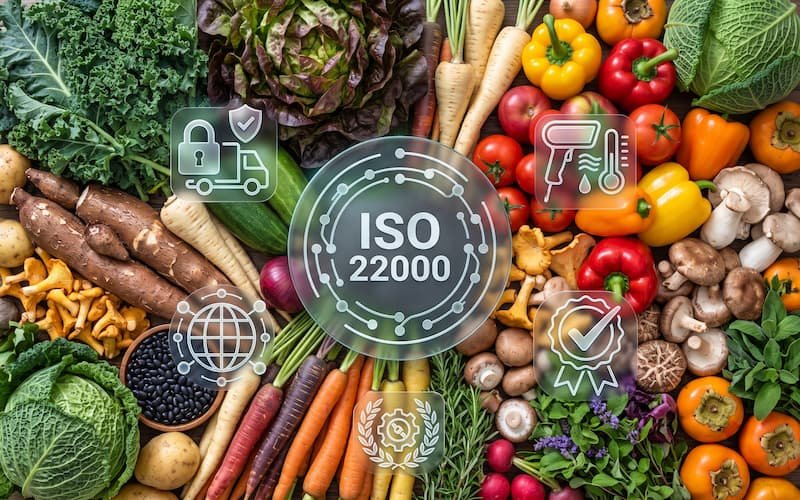
Food manufacturers need dependable systems to keep safety risks under control throughout their operations. Receipt of ingredients to packaging storage and delivery may have an impact on the end product. By identifying the weaknesses and enhancing their current food safety practices, the appropriate food certification support can ease the certification preparation process as manufacturers know what is required of them.
In the case of businesses intending the iso 22000 certification process in Saudi arabia, the decision that is made regarding the professional guidance may directly affect the ease with which the implementation process will run. Scube.ltd can assist organizations in a systematic manner that takes into account their operational needs. Effective certification guidance must be aimed at developing a good food safety management system as opposed to merely getting documents ready to be audited.
Key Factors to Consider When Choosing Food Certification Support
1. Understand the Certification Standard
The first thing manufacturers should do is to find the standard that suits their business needs. The ISO 22000 gives specifications of a food safety management system that can be used throughout the food chain. Knowledge of the chosen standard assists businesses in determining their scope of certification and the systems processes and controls that require focus.
2. Check Food Industry Experience
There are some challenges present in food production that are not similar to those encountered in other industries. Allergens in ingredients and processing conditions and contamination and supplier control should be paid special attention. Someone who has experience in the food industry can be more aware of these real challenges and assist manufacturers in creating controls that are effective in their real production setting.
3. Review Knowledge of Current Requirements
One thing that manufacturers need to do is to ensure that their potential consultant is operating under existing certification requirements. Guide lines and certification plans are capable of being updated and using outdated guidance can cause unwarranted issues in the implementation process. FSSC 22000 Version 7 was published in May 2026 with updated scheme documents and transition information.
4. Assess the Gap Analysis Process
An effective gap assessment must be done on the current food safety arrangements of the manufacturer with regard to what is required. This may involve records of hazard controls training supplier Management monitoring and internal audits. Detailed evaluation assists the management in knowing what has been already working and areas that require improvement prior to formal certification activities taking place.
5. Look Beyond Documentation
A food safety system must be an element of daily production and not be contained within manuals. The consultants are supposed to make employees realize how procedures are relevant to their duties. This pragmatic methodology simplifies the management system and makes sure that the documented controls are representative of what actually occurs throughout the facility.
6. Examine HACCP Knowledge
The manufacturers ought to look at whether the consultant is well knowledgeable in HACCP principles and food safety controls based on hazards. Monitoring of corrective actions and verification of hazards identification is a significant aspect of proper food safety management. Relevant experience enables a consultant to relate these ideals to the particular production processes as opposed to viewing them as documentation requirements in isolation.
7. Consider Internal Audit Support
Internal audits will give manufacturers a good idea of the effectiveness of their food safety system. Guidance on how to plan audits and record findings that measure evidence and corrective actions should ideally be provided in certification support. An internal audit program that is well managed can enable organizations to know areas that need to be addressed prior to the external certification assessment.
8. Verify Audit Preparation Capabilities
Manufacturers ought to enquire of a provider on how they prepare businesses to external assessment. Some of the useful support can involve the preparation of readiness reviews, mock audit evidence checks, preparation of employees and guidance on corrective action. The objective must be to build up the management system per se in order that employees might be able to explain their roles and how food safety controls work in reality.
9. Check Whether the Support Matches Company Size
A small food producer might require other resources and operation needs than a large manufacturing facility. The support provided in certification should be based on the size of the workforce production systems and resources available in the organization. A customized solution can assist manufacturers to comply with relevant requirements without implementing complex processes that the employees find hard to sustain.
10. Clarify the Scope of Services
Prior to hiring a consultant manufacturers must know exactly what the service entails. Other providers can give a more narrow scope of documentation but can wider assistance in the implementation training of internal audits and corrective measures. Deliverables timelines define responsibilities and follow-up plans to ensure the business knows what they are getting and prevent confusion in the project.
11. Separate Consulting From Certification
Manufacturers are advised to draw the line between certification consulting and the formal certification audit. The consultant can be involved in the development and implementation of the food safety management system, but does not award the ISO 22000 certificate. According to ISO, organizations that wish to obtain certification must employ a suitable third-party certification body since ISO does not actually carry out the process of certification.
12. Evaluate Continual Improvement Support
Certification is to be considered as a continuous food safety program rather than a one-time accomplishment. Manufacturers should oversee the performance review procedures to deal with the corrective measures and update their systems as need be. Businesses can ensure that they have an effective system by selecting a support that has built-in continual improvement after the initial certification process has been achieved.
Conclusion
Choosing suitable food certification support requires manufacturers to look beyond cost and document preparation. Industry knowledge current standards practical implementation HACCP expertise internal auditing and audit readiness should all form part of the evaluation. A provider needs to be knowledgeable of the operations of the manufacturer and develop guidance that is pertinent to its products processes and certification goals.
A properly designed strategy may assist manufacturers to establish a food safety management system to facilitate seamless operations and continuous improvement. An example such as FSSC 22000 integrates and complements ISO 22000 with other applicable prerequisite schemes and requirements that render familiarization with the entire certification system particularly crucial to organizations seeking such a scheme.