Forming and fabrication are two terms that are often mixed up in the metalworking world to mean the same thing whereas they actually refer different processes. If you are making parts for the car or consumer product industries, knowing what separates the two is the most important factor in choosing the right manufacturing method.
The question of whether to use one over the other comes down to the advantages, the equipment, and the production stage. You should also focus on choosing the best metal champing manufacturers to get the best quality products. Continue reading the blog to know the major difference between forming and fabrication.
What is Forming?
Forming is the primary method for converting metal into exact, functional parts without material removal. It is done by applying a limited force to a metal sheet to bend, stretch, or compress it until a particular shape is obtained.
The significance of this technique extends to and is used basically in all types of machine-building, automotive, aerospace, and industrial sectors, because it guarantees long-lasting, uniformly manufactured metal parts and high production speeds. Apart from being a step in the overall metal stamping manufacturing process, forming is the way to achieve consistent results while reducing waste. Thus, producers can make complex parts accurately and at a low cost.
What is Fabrication?
Fabrication is the process which involves the changes of raw metal materials into usable metal parts, through operations such as cutting, bending, welding, and assembling. It is the use of skilled workers, exact measures, and modern machines to make anything, from a simple bracket to a complicated framework used by the construction, automotive, or any industry.
The term fabrication is used for various metalworking techniques. Still, the sheet metal stamping manufacturing process can also be utilised to produce metal parts quickly and efficiently.
Key Difference Between Forming and Fabrication
There are major differences between forming and fabrication. Here are a few.
- Material Manipulation
Forming changes the shape of metal by a controlled deformation where the metal is either bent, stretched, or compressed but no volume is removed. The metal can still be considered structurally the same. Fabrication changes the material by cutting or drilling.
Such processes not only change the size and shape but also the internal structure of the metal. In some cases, these processes make fabrication better suited for complex assemblies.
- Tools and Techniques
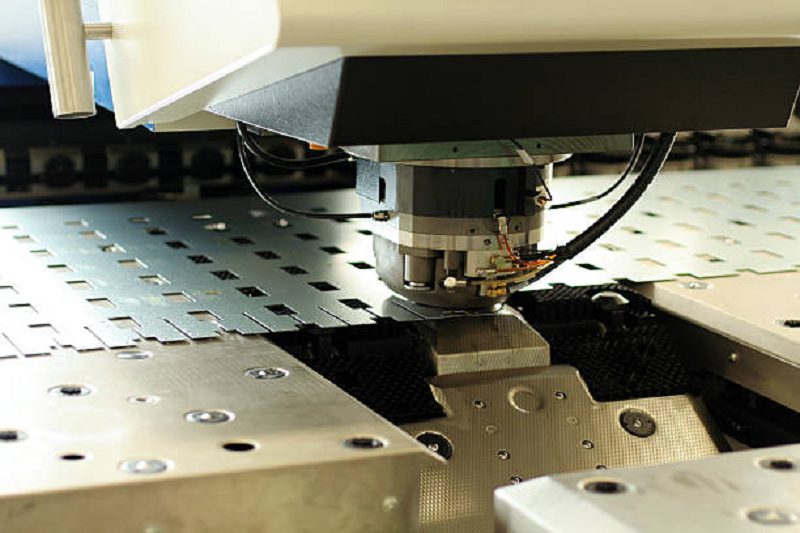
Forming is a process where the use of mechanical force is predominant and dies, hydraulic presses, rollers, stamping tools, and automated forming machines are the main tools used. All these tools are meant to reshape metal sheets with high precision.
On the contrary, fabrication is done with a more comprehensive set of tools such as welding machines, laser or plasma cutting machines, CNC machining centres, grinding tools, and assembly fixtures. As fabrication involves multiple subprocesses, its tooling requirements are more diverse and must be adaptable to different tasks.
- Production Scale
Forming is generally more appropriate for large-scale production, particularly when manufacturing identical parts with standard dimensions is involved. After the dies and tools are prepared, forming becomes very economical.
On the other hand, fabrication is good for the creation of custom, complex, and/or small-volume products. It is most likely chosen when developing unique product designs, prototypes, or structural components is necessary.
- Strength and Durability
Formed parts are less likely to lose their material integrity as the metal is reshaped rather than cut. Fewer stress points are created, improving the product's durability.
Fabricated parts may have welds, joints, or machined areas that, depending on the application, may require additional reinforcement.
- Application
Forming and fabrication serve different functions across industries, and their use reveals these differences clearly. Forming is a major process in the automotive, electronics, and home appliance industries, in which materials are shaped without reducing mass. As a result, it is perfect for the manufacture of panels, casings, and precision components.
Fabrication is the lifeblood of the construction industry, the heavy industrial machinery sector, and the custom-made machine solutions sector. It is the process of metal parts cutting, welding, and assembling, hence, a process capable of producing large-scale structures, frames, and specially engineered products.
Whichever you decide to go for, metal pressing companies with expertise in the field will be the right partners to guarantee you quality, production at the right pace, and value for your money over time.
Bottom Line
If you know the difference between forming and fabrication, you will be able to select the correct process in terms of strength, precision, and saving money. Forming alters the shape of the metal without cutting, hence it is great for a large number of identical pieces, whereas fabrication is a process that involves cutting, welding, and assembling for more complicated or customised projects.
For projects involving complex workflows, incorporating industrial engineering services can further enhance accuracy, productivity, and overall manufacturing efficiency.