What Is Suture? An In-Depth Guide to Sutures in Medical and Surgical Care
By triage meditech 06-02-2026 160
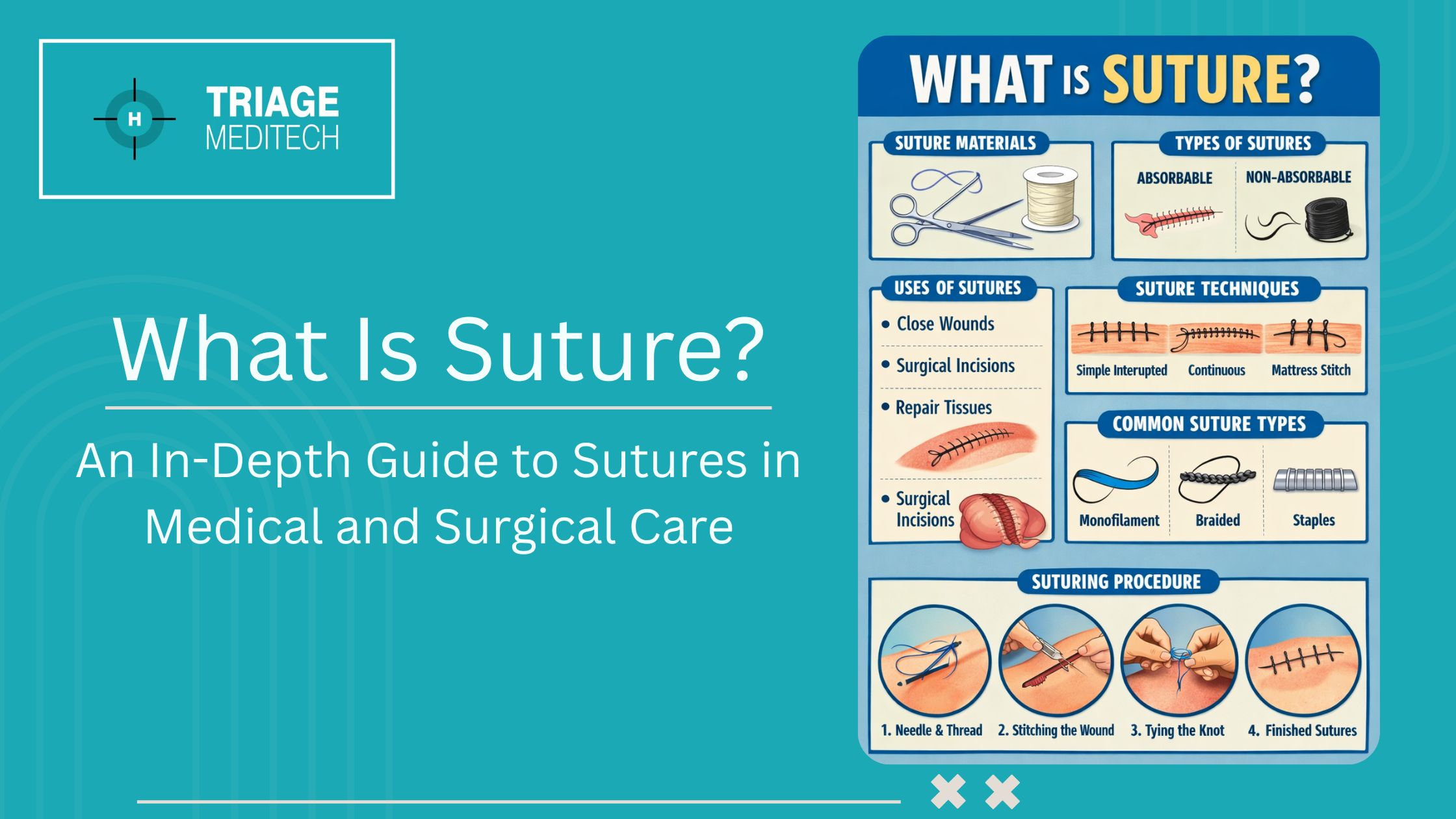
Wound closure is a critical step in medical treatment, directly affecting healing time, infection risk, and cosmetic outcomes. Among all wound-closure methods, suturing remains the most trusted and widely used technique. Yet many people still ask a basic but important question: what is suture?
A suture is not just a thread—it is a carefully engineered medical tool designed to support tissue healing after injury or surgery. This comprehensive guide explains what sutures are, how they work, their types, materials, and their essential role in modern healthcare.
What Is Suture?
A suture is a sterile medical material used to stitch together tissues that have been cut, torn, or separated due to trauma or surgical procedures. Sutures hold tissue edges in proper alignment, allowing the body to heal naturally and efficiently.
In medical terminology, “suture” refers to:
The thread or filament
The technique of stitching tissues
Sutures can be applied externally on the skin or internally on muscles, organs, blood vessels, and connective tissues.
Why Are Sutures Essential in Medicine?
Sutures provide mechanical support to healing tissues. Without proper wound closure, tissues may separate, bleed excessively, or become infected.
Key Purposes of Sutures
Maintain wound closure
Control bleeding
Reduce infection risk
Support tissue regeneration
Improve cosmetic healing
By stabilizing the wound, sutures create the ideal environment for tissue repair.
Types of Sutures Used in Medical Practice
Understanding suture types helps clarify what is suture used for in different medical situations.
Absorbable Sutures
Absorbable sutures are designed to break down naturally inside the body over time.
Common uses:
Internal surgical wounds
Muscle layers
Organ repair
Common options:
Vicryl
Polyglycolic acid (PGA)
Polydioxanone (PDS)
Advantages:
No removal required
Ideal for internal healing
Reduced follow-up procedures
Non-Absorbable Sutures
Non-absorbable sutures do not dissolve and may be removed after healing or left permanently.
Common uses:
Skin closure
Tendon repair
Cardiovascular and orthopedic surgeries
Common options:
Nylon
Polypropylene
Silk
Advantages:
Long-lasting tensile strength
Reliable wound support
Suture Materials: Natural and Synthetic
Natural Suture Materials
Derived from biological sources.
Common options:
Silk
Catgut
Pros:
Excellent handling
Strong knot security
Cons:
Higher tissue reaction
Less predictable absorption
Synthetic Suture Materials
Manufactured materials used in most modern procedures.
Common options:
Nylon
Polyester
Polyglycolic acid
Pros:
Minimal tissue irritation
Consistent performance
Lower infection risk
Cons:
Slightly reduced flexibility compared to silk
Understanding Suture Sizes
Suture size refers to the thickness of the material. The sizing system is standardized worldwide.
More zeros = thinner suture
Fewer zeros = thicker suture
Common suture sizes:
9-0 / 10-0: Microsurgery and eye procedures
5-0 / 6-0: Facial and cosmetic wounds
3-0 / 4-0: General skin closure
0 / 1: Muscle and fascia
Correct sizing prevents tissue damage and ensures optimal healing strength.
Types of Suture Needles
Sutures are attached to needles designed for different tissues.
Common needle designs:
Cutting needles: For skin and dense tissue
Taper needles: For soft tissues and organs
Blunt needles: For delicate or friable tissues
Proper needle selection minimizes trauma and improves surgical precision.
How Doctors Choose the Right Suture
Selecting the appropriate suture depends on several clinical factors:
Tissue type and thickness
Location of the wound
Expected healing time
Risk of infection
Cosmetic importance
For example, facial wounds require fine sutures to minimize scarring, while abdominal surgeries require strong sutures for deep tissue support.
Sutures vs Other Wound Closure Options
Although sutures are widely used, other methods may be suitable in certain cases.
| Closure Method | Ideal Use |
|---|---|
| Sutures | Deep and precise wound closure |
| Surgical staples | Large incisions, quick closure |
| Skin adhesives | Small, superficial wounds |
Despite alternatives, sutures remain the gold standard for complex wound management.
Risks and Aftercare of Sutures
Sutures are generally safe, but potential complications include:
Infection
Inflammation
Scarring
Suture marks
Proper wound care, hygiene, and timely suture removal help reduce these risks.
Conclusion
So, what is suture? It is a fundamental medical tool that enables safe wound closure, supports tissue healing, and improves patient outcomes. With various types, materials, sizes, and needles available, sutures are carefully chosen to match each clinical situation.
Even with advances in wound-closure technology, sutures remain an essential pillar of surgical and medical care worldwide.