What is Electrical Cabinet Manufacturing: Processes and Best Practices
By Fabtro Technologies 21-09-2026 1
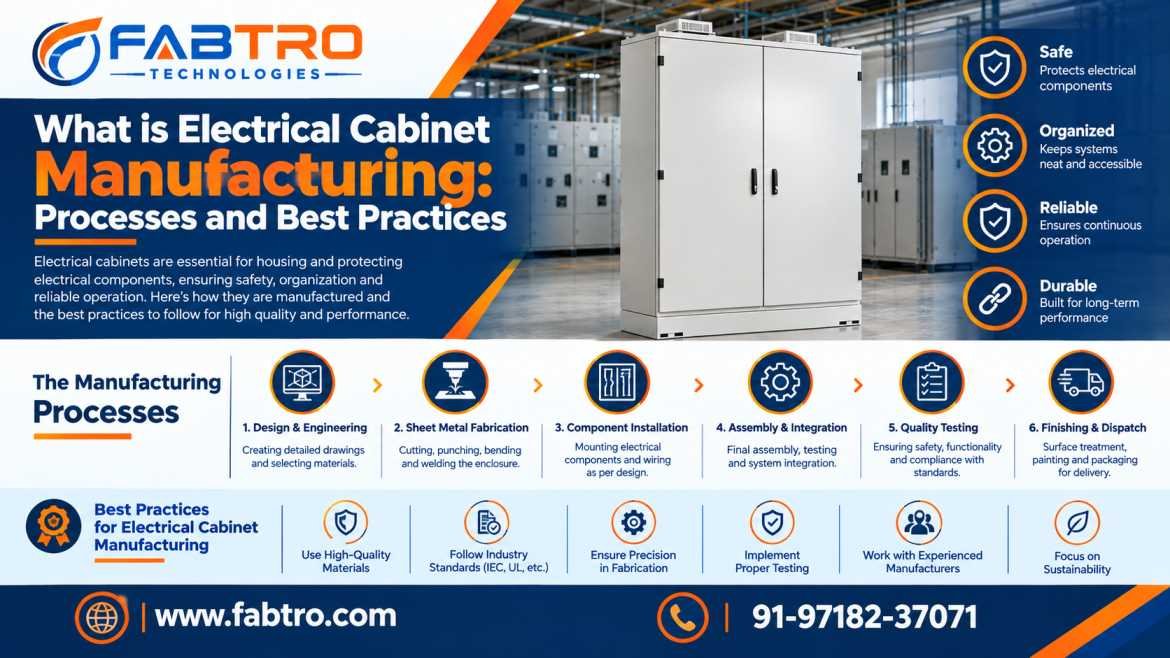
Electrical Cabinet Manufacturing: Processes and Best Practices
An Electrical Cabinet starts with much more than a metal enclosure. For a B2B buyer, the manufacturing process begins with drawings, dimensions, internal layout requirements, quantities, openings, mounting details, finishing expectations, and delivery instructions that production teams can clearly understand.
A properly manufactured Electrical Cabinet depends heavily on specification control before the production batch begins. If drawings keep changing or purchase order details don't match the approved requirement, even a straightforward job can turn into repeated sampling, rework, and delayed dispatch.
Why Specifications Need to Be Closed Before Production
The first practical step is specification verification. Buyers should confirm the latest drawing revision, cabinet dimensions, required quantity, openings, mounting requirements, finishing expectations, and packaging instructions.
Most buyers worry about specification mismatch after manufacturing, but the problem usually begins earlier. A drawing that hasn't been formally approved can create confusion between procurement, production, and QC.
For buyers dealing with Electrical Cabinet Manufacturers, sampling approval should act as a checkpoint before the complete production batch moves forward.
Most shipment delays don't begin on dispatch day. They often start because specifications remain unclear while the sample is being reviewed.
How Electrical Cabinet Production Moves From Drawing to Dispatch
The manufacturing process should follow one approved technical reference. Production teams need clear dimensions and fabrication requirements, while QC needs the same information for inspection.
An industrial electrical cabinet may have different internal arrangements depending on the buyer's requirement, which makes drawing accuracy especially important.
That's where purchase order accuracy becomes critical. The PO, approved drawing, quantity, delivery requirement, and packaging instructions should all support the same final specification.
A modern industrial electric cabinet should also be checked against the approved requirement before it reaches packing or dispatch.
How an Electrical Cabinet Should Be Checked Before Approval
A buyer evaluating an Electrical Cabinet should ask how dimensions, openings, mounting positions, finishing, and other agreed requirements are checked against the approved drawing.
QC inspection isn't useful if the inspection team is working from an outdated revision. Revision control matters.
Companies comparing Electrical Cabinet Manufacturers in India should also verify certificate validity rather than treating a certification statement as sufficient proof for every production order.
Fabtro Technologies is stated to be ISO-certified. Buyers should still review order-specific controls such as sampling, drawing confirmation, inspection coordination, and purchase order accuracy.
What Supplier Evaluation Should Cover Beyond Price
A low quotation doesn't explain how the supplier handles problems.
Ask how revised drawings are communicated, who approves samples, what happens if a finished cabinet doesn't match the agreed specification, and how complaints are recorded.
Nobody tells you much about complaint handling while orders are moving smoothly. A supplier that can't explain how rejected material or specification disputes are handled may create unnecessary delays when something actually goes wrong.
Buyers working with Electrical Cabinet Suppliers should therefore evaluate communication discipline as closely as commercial terms.
Why Process Control Benefits Procurement Teams
Clear manufacturing control gives buyers identifiable checkpoints: specification approval, sampling, production release, QC inspection, packing, and dispatch.
With Electrical Cabinet Suppliers in India, buyers should clarify whether the stated lead time covers only production or also sampling, inspection, packing, and dispatch preparation.
There is one practical limitation. Material availability, drawing revisions, sampling corrections, and production scheduling can affect timelines. Manufacturing is not perfectly predictable.
We've seen procurement teams treat an early delivery estimate as fixed even after the specification changes. That creates unrealistic expectations on both sides.
Why MOQ and Availability Need Early Discussion
MOQ should be discussed before the purchasing team finalises the PO. Buying too much can increase inventory, while buying too little may not suit the production plan.
Orders placed through Electrical Cabinet Wholesalers should be compared against actual consumption, project schedules, storage space, and purchasing frequency.
One mistake is focusing only on unit price. Freight planning, batch size, lead time, packaging, and repeat-order frequency can change the real procurement cost.
Why Packaging and Dispatch Need Separate Attention
A finished cabinet can pass inspection and still arrive damaged if packaging isn't planned correctly.
Before dispatch, buyers should confirm quantity, packaging method, delivery location, freight responsibility, and whether any inspection point remains open.
Businesses buying through Electrical Cabinet Wholesalers in India should settle these details before loading begins.
Packaging problems rarely appear while goods are standing safely inside the factory. They usually become visible after stacking, loading, handling, or transportation. Transit damage is often discovered only when the shipment reaches the buyer.
What Buyers Should Confirm Before Issuing the PO
Before releasing the purchase order, verify:
Latest drawing revision
Approved specifications
Sampling status
Final quantity and MOQ
Expected lead time
QC inspection requirement
Packaging instructions
Delivery location
Freight responsibility
Complaint-handling process
Even experienced buyers sometimes approve commercial terms before all technical questions are closed. A short sampling delay may be inconvenient, but producing an entire batch against the wrong requirement is worse.
Final Thoughts
Successful Electrical Cabinet manufacturing depends on clear specifications, controlled sampling, accurate purchase orders, coordinated QC, realistic lead times, suitable packaging, and disciplined dispatch planning.
The goal isn't to pretend every production order will run perfectly. Changes and delays can happen. The better approach is to make requirements clear enough that issues are identified early and handled before they become larger commercial problems.
FAQs
1. What should buyers provide before Electrical Cabinet production starts?
Provide the latest drawing, dimensions, quantity, openings, mounting requirements, finishing expectations, packaging instructions, delivery location, and any agreed sampling requirement.
2. Why is sampling approval important?
Sampling helps confirm the agreed requirement before a larger production batch begins. It can add time initially, but correcting one sample is usually easier than correcting a full batch.
3. Is ISO certification enough to approve a supplier?
No. Buyers should verify certificate validity and also review drawing control, sampling, QC coordination, purchase order accuracy, packaging, and complaint handling.
4. Should buyers always prefer the lowest MOQ?
Not necessarily. A smaller MOQ may reduce inventory, but pricing or production planning may differ. Quantity should match project needs, storage capacity, and purchasing frequency.
5. What commonly causes cabinet manufacturing delays?
Unclear specifications, drawing revisions, slow sample approval, material availability, production scheduling, unresolved QC points, packaging preparation, and late freight planning can affect dispatch.
Tags : .....