People form impressions long before conversations begin.
Before a receptionist offers assistance.
Before a meeting starts.
Before a visitor reaches their destination.
In many buildings, the entrance begins communicating immediately.
Most people never stop to think about this process. Yet within moments of arriving, they start collecting information from the environment around them.
Is this building easy to navigate?
Am I in the right place?
Where should I go next?
The answers often come from the space itself rather than from a person.
People Read Spaces Faster Than They Realize
When entering an unfamiliar building, people instinctively look for clues.
A visitor stepping into a lobby for the first time may spend only a few seconds scanning the environment, but those seconds are often enough to shape their next decision.
They look for signs of direction.
They look for signs of assistance.
They look for signs that confirm they are where they are supposed to be.
Without consciously thinking about it, people begin interpreting:
- Layout
- Visibility
- Signage
- Lighting
- Entry organization
This process happens remarkably quickly.
Long before anyone speaks, visitors are already forming assumptions about how the environment works.
First Impressions Are Often Built Through Interaction
Many organizations focus on how entrances look.
Equally important is how entrances function from a visitor's perspective.
Consider two different experiences.
In one building, a visitor enters and immediately sees where to go.
In another, the visitor pauses, looks around, and wonders whether they have missed a step.
Neither experience may involve a conversation, yet each creates a very different first impression.
People often judge environments based on how easily they can understand them.
The feeling of clarity frequently leaves a stronger impression than design alone.
Uncertainty Usually Appears Before Confusion
One of the most interesting aspects of unfamiliar environments is that uncertainty often arrives before confusion.
A visitor may not feel lost.
Instead, they simply become cautious.
They slow down.
They observe others.
They double-check information.
They hesitate before making a decision.
A person standing in a lobby for thirty seconds may reveal more about an entry environment than an employee who has used it every day for years.
Those brief moments of hesitation often indicate that people are still trying to understand the space around them.
Why Environments Influence Behavior
Buildings do more than provide access to destinations.
They shape behavior.
People naturally adjust their actions according to environmental signals.
For example:
- Clearly visible reception areas encourage interaction.
- Defined pathways encourage confidence.
- Organized layouts reduce hesitation.
- Quiet spaces often encourage quieter behavior.
Most of these responses occur automatically.
People rarely stop to think about why they are behaving a certain way.
The environment quietly guides decisions in the background.
Familiarity Changes What People Notice
Employees and first-time visitors often experience the same entrance very differently.
An employee who has entered the building hundreds of times may no longer notice directional signs, reception locations, or entry procedures.
A visitor notices all of them.
This difference explains why environments that feel obvious to regular users can feel unfamiliar to newcomers.
What becomes invisible through repetition often becomes highly visible to someone experiencing the space for the first time.
Familiarity changes perception.
Small Design Choices Create Big Signals
Many of the signals people respond to are surprisingly small.
A clearly visible reception desk.
A natural walking path.
A sign placed exactly where a decision needs to be made.
Even simple elements can influence how confident people feel while navigating an unfamiliar environment.
The most effective environments often remove questions before people have to ask them.
That is why successful entry experiences frequently feel effortless.
Not because visitors receive constant guidance, but because the environment itself provides it.
Designing for Understanding
The most effective entrances do more than look professional.
They help people understand where they are, what is expected, and what should happen next.
This is ultimately a communication challenge rather than a design challenge.
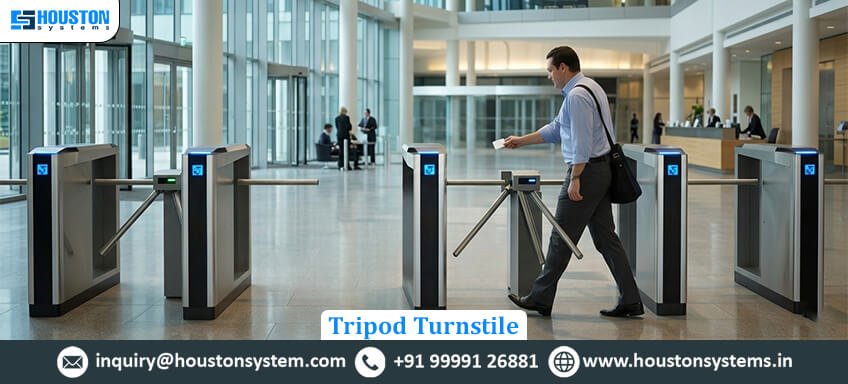
Organizations that create intuitive entry experiences often reduce uncertainty before it develops into confusion. Many achieve this by designing controlled entry environments that help people understand where they are, what is expected, and what should happen next.
Visitors move with greater confidence.
Employees encounter fewer interruptions.
Interactions become more predictable.
Often, the best guidance is the guidance people barely notice.
Final Perspective
Building entrances communicate continuously.
They shape expectations, influence behavior, and create first impressions long before conversations begin.
Most people never consciously analyze these interactions.
Yet they affect how organizations, workplaces, and facilities are experienced every day.
The most successful entry environments are rarely the most complicated.
They are the ones that help people understand where they are and what to do next without needing to think about it.