What Affects Modular Kitchen Pricing in Delhi? A Cost Calculator Walkthrough
By Novella Kitchens 09-10-2026 10
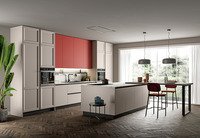
Planning a home upgrade involves critical financial decisions. Designing a culinary space in the National Capital Region requires balancing aesthetics, material durability, and long-term utility. Understanding how costs accumulate helps homeowners make informed choices without exceeding their planned budget.
When evaluating options for a Modular Kitchen in Delhi, price variations often stem from raw material choices, hardware mechanisms, and layout complexities. Many homeowners face unexpected cost increases because they rely on generic estimates rather than evaluating structural requirements early in the process.
This guide breaks down every cost driver clearly. You will learn how material grades, spatial configurations, and hardware selections shape the final figure, helping you plan your project with complete clarity.

1. Core Factors Driving Kitchen Costs in Delhi
Every kitchen quote consists of distinct structural components. Below are the primary elements that dictate your total investment:
Total Kitchen Cost = Core Materials + Surface Finishes + Cabinet Hardware + Layout Complexity
Core Material Selection: High-Density High-Moisture-Resistant (HDHMR) boards and Boiling Water-Proof (BWP) marine plywood serve as the backbone. BWP plywood costs more initially but prevents swelling near wet areas.
External Finish: Finishes like laminates, acrylics, and PU lacquers protect surface panels while adding visual appeal. High-gloss acrylics cost more than standard matte laminates.
Hardware & Accessories: Soft-close hinges, tandem boxes, and lift-up mechanisms from European brands add convenience and longevity, though they increase hardware expenses.
Appliance Integration: Built-in hobs, chimneys, micro-ovens, and dishwashers require specialized carcass modules with reinforced load capacities and ventilation gaps.
2. Material Options and Their Price Impact
Selecting cabinet cores and exterior finishes directly impacts both durability and budget. Here is how popular materials perform and compare in overall pricing:
Material / Finish | Moisture Resistance | Durability Level | Relative Price Range |
|---|---|---|---|
Commercial Plywood | Moderate | Standard | Budget-Friendly |
HDHMR Board | High | High | Mid-Range |
BWP Marine Plywood | Exceptional | Heavy-Duty | Premium |
Laminate Finish | Moderate | Scratch-Resistant | Economic |
Acrylic Finish | High | UV & Scratch-Resistant | Mid to High |
PU Lacquer Finish | Superior | Seamless & Durable | Premium |
Using BWP marine plywood around sink areas prevents structural degradation caused by moisture, protecting your investment for decades.
3. How Kitchen Layouts Influence Final Quotes
Layout geometry dictates the total running feet of cabinetry required. Simple layouts use fewer materials, whereas complex setups require custom corners and specialized pull-out hardware.
Straight Layout (Lowest Cost) ➔ L-Shaped Layout ➔ Parallel Layout ➔ U-Shaped / Island Layout (Highest Cost)
Straight Layouts: Ideal for compact studio apartments. They use minimal wall coverage, making them the most economical choice.
L-Shaped Layouts: Popular across Delhi apartments. They optimize the ergonomic work triangle—connecting sink, stove, and refrigerator—without excessive cabinetry.
Parallel & U-Shaped Layouts: Excellent for high-utility households needing extra counter space and maximum storage capacity.
Island Configurations: Suited for larger homes and villas, requiring freestanding units and perimeter cabinetry.
4. How to Use a Modular Kitchen Cost Calculator
Estimating expenses before consulting designers prevents budget surprises. Using an online Modular Kitchen Cost Calculator gives you a clear baseline before starting your project.
Steps to Calculate Your Estimate:
Measure Spatial Dimensions: Measure your wall lengths in running feet or convert your floor space into square feet.
Select Layout Type: Pick the configuration that fits your architectural plan (L-Shape, Parallel, or U-Shape).
Choose Core Materials: Select BWP marine plywood for wet zones and HDHMR or commercial ply for dry storage modules.
Pick Exterior Finishes: Match your visual preferences with choices like matte laminate, high-gloss acrylic, or PU lacquer.
Add Essential Accessories: Include internal drawers, pantry pull-outs, and corner dead-space solutions.
At Novella Kitchens, precision-manufactured modules are built using German CNC equipment in an 11,000 sq. ft. factory. This industrial approach ensures exact material estimates and transparent pricing.
- 5. Smart Ways to Manage Your Budget
To maintain quality without overspending, consider these practical planning strategies:
Mix Core Materials Strategically: Use premium BWP plywood for sink carcasses and wet zones, while utilizing HDHMR for dry wall cabinets.
Prioritize High-Touch Hardware: Invest in top-tier soft-close hinges for daily-use drawers, while using standard fittings for less frequent storage.
Choose Semi-Modular Options for Existing Countertops: If your home already features builder-provided granite slabs, factory-fabricated shutters and internal drawers fit beneath the existing stone, saving up to 30% on raw materials.
Avoid common pitfalls like skipping moisture protection around sink zones or using low-grade edge banding. Precision zero-joint edge sealing prevents steam and grime from penetrating structural cores over time.
Conclusion
Determining exact kitchen pricing requires understanding how spatial dimensions, core materials, surface finishes, and hardware choices interact. By selecting BWP cores for wet areas and picking finishes that suit your lifestyle, you build a space that offers long-term value. Leveraging a Modular Kitchen Cost Calculator helps you control expenses early and plan with confidence.
Frequently Asked Questions (FAQs)
- 1. What is the starting cost for a modular kitchen in Delhi?
Starting prices vary based on dimensions and material grades. Entry-level laminate setups in compact floorplans start around ₹1.5 Lakhs, while mid-range to premium configurations using acrylic or PU finishes range between ₹3 Lakhs and ₹8 Lakhs or higher.
- 2. Is BWP plywood necessary for all kitchen cabinets?
BWP plywood is essential for wet zones, such as sink carcasses and under-counter dishwashers. Dry storage modules and overhead wall units can use HDHMR boards without compromising structural integrity, helping balance the overall budget.
- 3. How does factory manufacturing differ from local carpenter work?
Factory manufacturing uses high-precision German CNC machinery for exact edge-banding and accurate panel cuts. This guarantees seamless moisture sealing and structural alignment that manual hand tools and site-applied glues cannot replicate.
- 4. How long does site installation take after manufacturing?
Once custom modules pass quality control checks on the factory floor, on-site installation by certified technicians typically takes 3 to 5 working days, minimizing household disruption.
- 5. Can modular kitchens accommodate heavy built-in appliances?
Yes. Precision-engineered carcass modules feature double-layer reinforced support panels and rear ventilation channels. These structures easily handle heavy built-in ovens, microwave units, dishwashers, and high-suction chimneys.