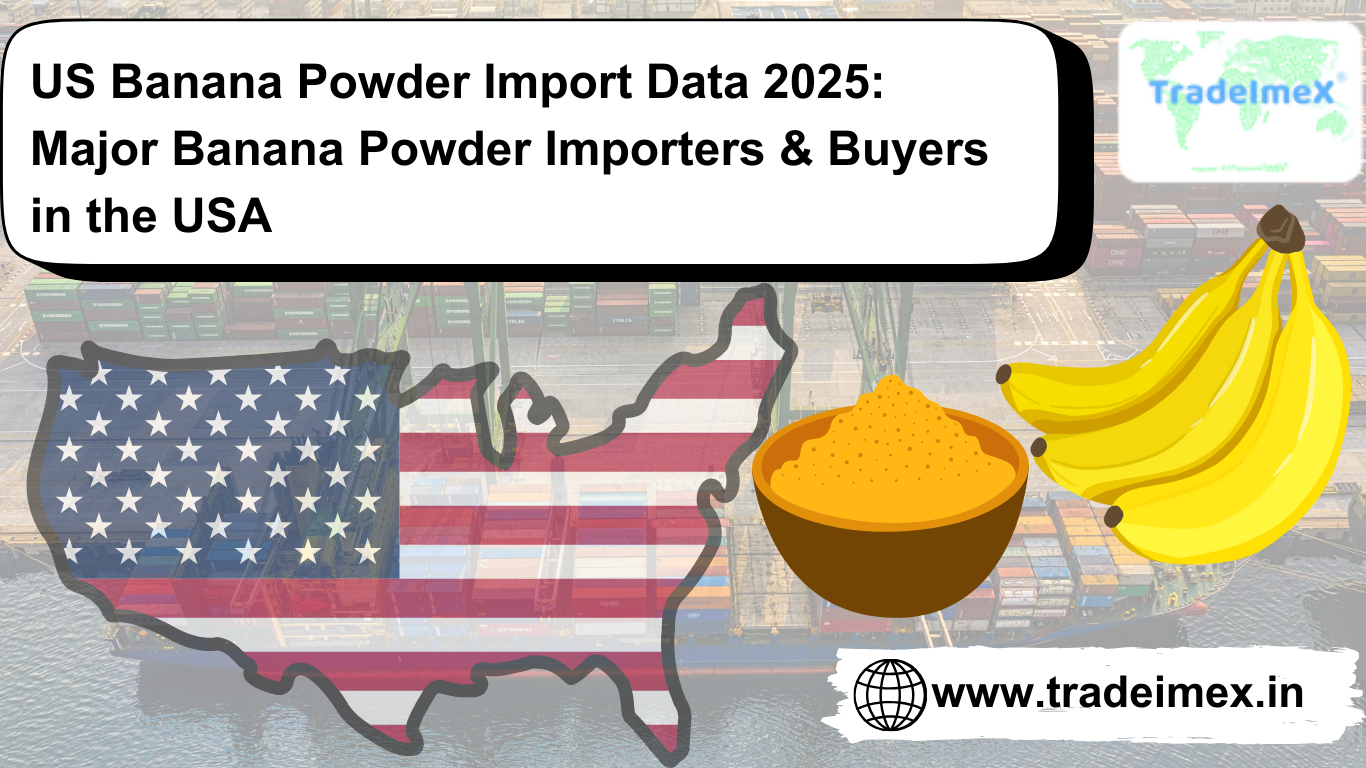
US Banana Powder Import Data 2025: Major Banana Powder Importers & Buyers in the USA
By TradeImeX 15-12-2025 59
<p>Banana powder, often traded interchangeably with banana flour, has become an important functional ingredient in the U.S. food and nutrition industry. What was once limited to baby food and flavoring applications is now widely used in gluten-free baking, sports nutrition, plant-based snacks, and clean-label formulations. As demand rises, U.S. manufacturers continue to rely heavily on imports due to limited domestic processing capacity. The overall value of US banana powder imports touched <strong>$2.82 billion in 2024, a 3% </strong>rise from the previous year, according to the most recent <a href="https://www.tradeimex.in/us-import"><strong>US import data</strong></a>. The US imported<strong> $1.44 billion</strong> worth of banana powder during the first <strong>two quarters of 2025</strong>, according to the <a href="https://www.usimportdata.com/data/us-banana-powder-import-data"><strong>US banana powder import data</strong></a>.</p>
<p>In 2025, U.S. banana powder imports reflect steady growth in volume, diversification of end-use industries, and a clear concentration of supply from banana-producing countries in Central and South America. This article analyzes U.S. banana powder import data for 2025, highlights major supplying countries, and profiles key banana powder importers and buyers in the United States.</p>
<h2><strong>Overview of US Banana Powder Imports in 2025</strong></h2>
<p>The United States remains one of the largest importers of banana-based ingredients globally. Banana powder is primarily imported under HS codes covering banana flour, meal, and powder derived from the Musa genus.</p>
<p>In 2025, total U.S. banana powder imports are estimated to be <strong>well over 40,000 metric tons</strong>, with an import value exceeding <strong>USD 150–180 million</strong>, depending on grade (organic vs. conventional), processing type, and packaging. Year-on-year growth is estimated between <strong>6% and 8%</strong>, driven by:</p>
<ul>
<li>Rising demand for gluten-free and grain-free alternatives</li>
<li>Increased use in infant nutrition and medical foods</li>
<li>Growth of plant-based and clean-label snack products</li>
<li>Expansion of dietary fiber and resistant starch applications</li>
</ul>
<p>While banana powder represents a small fraction of overall banana trade volumes, its <strong>value per metric ton is significantly higher</strong> than fresh bananas, making it an attractive export product for producing countries.</p>
<h2><strong>Major Banana Powder Supplying Countries to the U.S.</strong></h2>
<h3><strong>1. Guatemala – Leading Supplier</strong></h3>
<p>Guatemala is the largest supplier of banana powder to the U.S. market in 2025, accounting for an estimated <strong>35–40% of total import volume, as per the data on </strong><a href="https://www.tradeimex.in/data/bl-data/US-080390-import-data/country-guatemala"><strong>US banana powder imports from Guatemala by HS code</strong></a>.</p>
<p>Key advantages:</p>
<ul>
<li>Strong banana cultivation base</li>
<li>Established fruit processing infrastructure</li>
<li>Competitive labor and processing costs</li>
<li>Proximity to U.S. ports (short transit times)</li>
</ul>
<p>Guatemalan banana powder is widely used in:</p>
<ul>
<li>Bakery mixes</li>
<li>Snack coatings</li>
<li>Ingredient blends for foodservice</li>
</ul>
<p>Both conventional and organic grades are commonly exported.</p>
<h3><strong>2. Ecuador – High-Volume, Industrial Supplier</strong></h3>
<p>Ecuador ranks among the top suppliers, contributing approximately <strong>18–22%</strong> of U.S. banana powder imports.</p>
<p>Ecuador’s exports are characterized by:</p>
<ul>
<li>Large-scale production</li>
<li>Competitive pricing for bulk industrial grades</li>
<li>Strong supply consistency</li>
</ul>
<p>Ecuadorian banana powder is often used by:</p>
<ul>
<li>Large food processors</li>
<li>Flavor manufacturers</li>
<li>Animal nutrition and feed applications</li>
</ul>
<h3><strong>3. Costa Rica – Premium and Organic Grades</strong></h3>
<p>Costa Rica supplies roughly <strong>12–15%</strong> of U.S. banana powder imports and is especially strong in <strong>organic and traceable products</strong>.</p>
<p>Costa Rican suppliers focus on:</p>
<ul>
<li>Organic certification</li>
<li>Sustainability and ESG compliance</li>
<li>High-quality processing standards</li>
</ul>
<p>This origin is preferred by U.S. buyers supplying:</p>
<ul>
<li>Infant food brands</li>
<li>Health and wellness companies</li>
<li>Premium baking brands</li>
</ul>
<h3><strong>4. Colombia, Honduras, and Mexico</strong></h3>
<p>These countries collectively account for <strong>15–20%</strong> of U.S. imports.</p>
<ul>
<li><strong>Colombia</strong> supplies mid-grade and specialty powders</li>
<li><strong>Honduras</strong> focuses on cost-competitive conventional powder</li>
<li><strong>Mexico</strong> benefits from proximity and smaller shipment flexibility</li>
</ul>
<h3><strong>Types of Banana Powder Imported into the U.S.</strong></h3>
<p>U.S. import data shows banana powder is traded in multiple functional forms:</p>
<ol>
<li><strong>Ripe Banana Powder</strong></li>
<ul>
<li>Naturally sweet flavor</li>
<li>Used in bakery, beverages, and desserts</li>
</ul>
<li><strong>Green Banana Flour / Powder</strong></li>
<ul>
<li>High resistant starch content</li>
<li>Used in gut-health products, supplements, and gluten-free baking</li>
</ul>
<li><strong>Organic Banana Powder</strong></li>
<ul>
<li>Commands 20–35% price premium</li>
<li>Strong demand from health-focused brands</li>
</ul>
</ol>
<p>Packaging formats include 20–25 kg bags, multi-wall paper sacks with liners, and bulk totes for industrial buyers.</p>
<h2><strong>Top Banana Powder Importers & Buyers in the USA</strong></h2>
<p>U.S. buyers can be grouped into <strong>three main categories</strong>:</p>
<h3><strong>1. Large Food & Ingredient Corporations</strong></h3>
<p>These companies import banana powder directly or through subsidiaries for use in branded products and ingredient resale:</p>
<ul>
<li>Global fruit and produce companies</li>
<li>Multinational ingredient manufacturers</li>
<li>Infant nutrition producers</li>
</ul>
<p>These buyers typically:</p>
<ul>
<li>Import full container loads</li>
<li>Require strict quality documentation</li>
<li>Maintain long-term supply contracts</li>
</ul>
<h3><strong>2. Specialty Ingredient Distributors</strong></h3>
<p>Mid-sized distributors form a significant share of U.S. banana powder imports.</p>
<p>Typical characteristics:</p>
<ul>
<li>Import 5–20 shipments per year</li>
<li>Serve bakery, snack, and supplement brands</li>
<li>Repack and distribute domestically</li>
</ul>
<p>Examples include:</p>
<ul>
<li>Natural and organic ingredient distributors</li>
<li>Ethnic and specialty food suppliers</li>
<li>Functional food raw material traders</li>
</ul>
<p>These buyers are highly active in sourcing both organic and conventional banana powder.</p>
<h3><strong>3. Snack, Bakery, and Health Food Brands</strong></h3>
<p>A growing number of U.S. brands import banana powder directly to control quality and costs.</p>
<p>These include:</p>
<ul>
<li>Gluten-free snack brands</li>
<li>Plant-based baking companies</li>
<li>Sports nutrition and supplement manufacturers</li>
</ul>
<p>Shipment volumes are smaller, but margins are higher, and these buyers often value product differentiation over price alone.</p>
<h3><strong>Pricing and Import Trends in 2025</strong></h3>
<p>Average landed prices in the U.S. vary widely:</p>
<ul>
<li><strong>Conventional banana powder</strong>: USD 2,200 – 2,800 per metric ton</li>
<li><strong>Organic banana powder</strong>: USD 3,000 – 4,200 per metric ton</li>
<li><strong>Green banana flour (premium grades)</strong>: Up to USD 4,500 per metric ton</li>
</ul>
<p>Key trends observed in 2025:</p>
<ul>
<li>Increased demand for organic and clean-label powders</li>
<li>Higher scrutiny of moisture content and microbiological standards</li>
<li>Preference for suppliers offering consistent year-round availability</li>
</ul>
<h3><strong>Key Takeaways for Exporters and Traders</strong></h3>
<ul>
<li>The U.S. banana powder market is <strong>import-dependent and growing steadily</strong></li>
<li>Guatemala, Ecuador, and Costa Rica dominate the supply</li>
<li>Buyer demand is shifting toward <strong>organic, functional, and traceable products</strong></li>
<li>Successful exporters focus on quality specs, certifications, and flexible shipment sizes</li>
</ul>
<h3><strong>Conclusion</strong></h3>
<p>In 2025, banana powder remains a high-potential import product in the United States, supported by strong demand from food manufacturers, ingredient distributors, and health-focused brands. With diversified applications and stable growth, the U.S. continues to offer attractive opportunities for banana powder exporters who understand buyer segmentation, quality requirements, and pricing dynamics. For suppliers, aligning production with U.S. regulatory standards and targeting the right buyer category is the key to long-term success in this evolving market.</p>
<p>You can visit <strong>TradeImeX </strong>for more information on the <a href="https://www.tradeimex.in/us-export"><strong>US export-import data</strong></a>, or to <a href="https://www.tradeimex.in/search-live-data"><strong>search live US banana powder import data by country</strong></a>. Contact <a href="mailto:info@tradeimex.in"><strong>info@tradeimex.in</strong></a> to get customized trade reports & a verified database of the <a href="https://www.tradeimex.in/company/bl-data/us-banana-powder-importer"><strong>top banana powder importers & buyers in the US</strong></a>.</p>