Union Budget 2026 Highlights: A Roadmap for Viksit Bharat
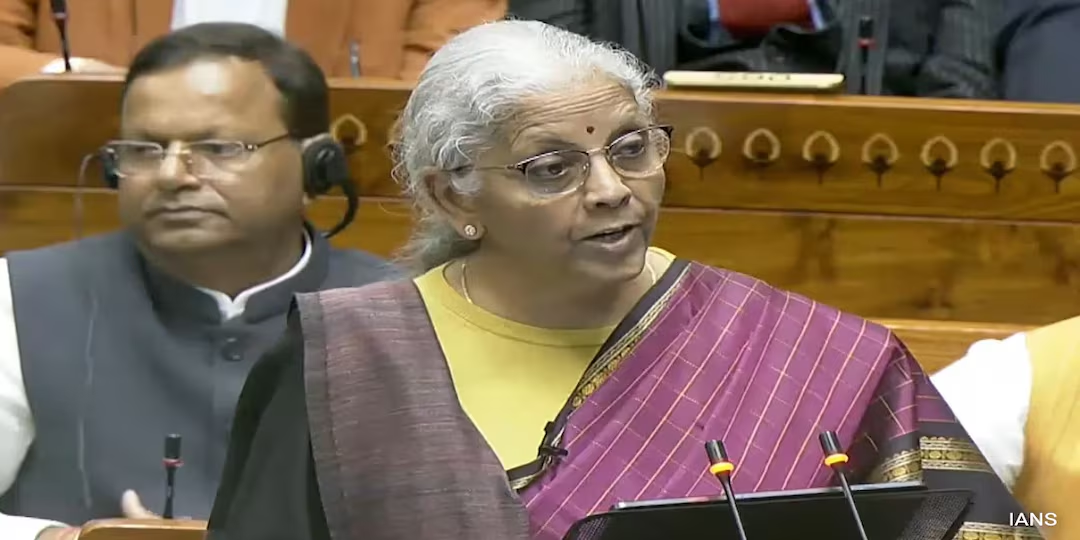
On February 1, 2026, Finance Minister Nirmala Sitharaman presented the Union Budget 2026-27 in Parliament. This budget, the first to be prepared in the new 'Kartavya Bhawan,' centers on the vision of a developed India by 2047. The Union Budget 2026 Highlights showcase a strategic balance between aggressive infrastructure spending and disciplined fiscal consolidation. With a total expenditure estimated at ₹53.5 lakh crore, the government is doubling down on manufacturing, youth empowerment, and rural development to stabilize the Indian Economy 2026.
Infrastructure Surge: Record Capex Budget 2026
To maintain the momentum of economic growth, the Capex Budget 2026 has been increased to a historic ₹12.2 Lakh Crore. This represents a significant rise from the previous year and is aimed at creating "Growth Connectors" across the country.
Key infrastructure announcements include:
- High-Speed Rail: Seven new corridors, including Mumbai-Pune and Delhi-Varanasi.
- National Waterways: 20 new waterways to be operationalized over five years.
- City Economic Regions (CER): Mapping and developing specific growth hubs with an allocation of ₹5,000 crore per CER.
Strengthening the Backbone: Budget 2026 MSME Updates
Recognizing the small-scale sector's role in employment, the Budget 2026 MSME provisions include the launch of the SME Growth Fund with an initial outlay of ₹10,000 crore. This fund is designed to transform high-performing small businesses into "Champion SMEs."
Furthermore, the government has mandated the use of the TReDS platform for all MSME purchases by Central Public Sector Enterprises (CPSEs). This ensures better liquidity and faster payment cycles, which are critical for the survival of small-scale industries in the Indian Economy 2026.
Fiscal Prudence: Targeting a Lower Fiscal Deficit 2026
Despite the massive spending on infrastructure, the government remains committed to fiscal health. The Fiscal Deficit 2026 is targeted at 4.3% of GDP, a reduction from the revised estimate of 4.4% for the previous fiscal year. This path of consolidation is intended to reduce the debt-to-GDP ratio to roughly 50% by 2031, ensuring that the Indian Economy 2026 remains resilient against global volatility.
Healthcare and Innovation: Biopharma & Semiconductors
The Union Budget 2026 Highlights place a heavy emphasis on high-tech manufacturing. The Semiconductor Mission 2.0 was launched with a massive ₹40,000 crore outlay to build a self-reliant chip ecosystem.
In healthcare, the "Biopharma Shakti" scheme was introduced with a ₹10,000 crore budget to boost the domestic production of biologics. Additionally, the budget provided immediate relief to citizens by exempting basic customs duty on 17 life-saving cancer drugs, significantly lowering treatment costs.
Digital Transformation and the "Orange Economy"
The Nirmala Sitharaman Budget 2026 also introduced a push for the creative economy. Over 15,000 secondary schools will now house AVGC (Animation, Visual Effects, Gaming, and Comics) Content Creator Labs. This initiative aims to tap into "Yuva Shakti" by preparing the youth for high-growth digital sectors.
Conclusion: A Strategic Vision for 2027
The Union Budget 2026-27 is more than just a financial statement; it is a blueprint for structural reform. By optimizing the New Income Tax Slabs 2026-27, increasing the Capex Budget 2026, and maintaining a steady hand on the Fiscal Deficit 2026, the government has provided a stable environment for both domestic and foreign investors.