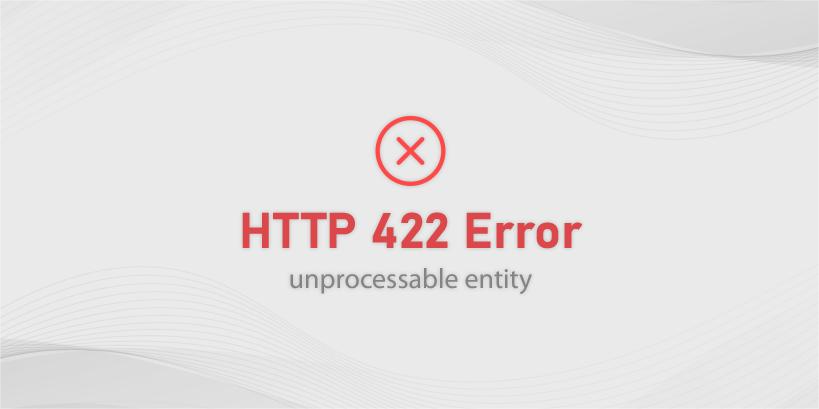
When working with APIs, modern web applications, or form-based submissions, developers may encounter the 422 status code. Unlike common errors such as 404 (Not Found) or 500 (Server Error), this one can feel confusing because the request looks correct at first glance. However, the 422 error signals a deeper validation or semantic issue that the server cannot process. Understanding why this happens—and how to avoid it—is essential for maintaining smooth, predictable application behavior.
What Is the 422 Status Code?
The 422 status code, officially known as Unprocessable Entity, is part of the HTTP/1.1 WebDAV extension. It indicates that the server recognizes the client’s request and understands its structure, but cannot process it due to semantic errors. In simpler terms, the request format is correct, but the data inside it does not meet the requirements the server expects.
This makes the 422 error particularly useful for APIs and applications that rely on strict data validation. Instead of returning a generic error, the server uses a 422 status code to highlight that something is wrong with the submitted content.
Common Causes of a 422 Status Code
1. Validation Failures
One of the most common reasons for triggering the 422 status code is failing server-side validation. This happens when the provided data breaks rules defined by the application.
Examples include:
Submitting an email field without the “@” symbol
Sending a name that is too short or too long
Providing a date in an invalid format
Although the request is correctly formatted as JSON, XML, or form-data, the content inside fails validation.
2. Missing Required Fields
Modern APIs typically require certain fields to be present. If the request omits a key field—such as username, password, or product ID—the server cannot process it. Instead of dropping the request entirely, the server responds with a 422 status code to indicate the missing or incomplete data.
3. Incorrect Data Types
If your application expects an integer but receives a string, or expects a Boolean and receives a number, the server may reject the request. Many frameworks, such as Laravel, Rails, and Django Rest Framework, use the 422 status code to highlight type mismatches.
4. Logical or Semantic Errors
Sometimes the data is valid in structure but invalid in meaning. For example:
Trying to schedule an appointment in the past
Entering a product quantity that exceeds available stock
Submitting duplicate entries where uniqueness is required
These are semantic issues, not formatting errors.
How to Diagnose a 422 Status Code
1. Inspect Validation Rules
Check the server or API documentation to confirm what rules apply to each field. Correcting even one small input value can resolve the error.
2. Review Error Messages
Most well-built APIs return detailed error messages along with the 422 status code. These messages usually include exactly which field failed and why.
3. Check Client-Side Data
Debug your request from the client side:
Verify JSON structure
Confirm required fields
Check for correct data types
Ensure no malformed values exist
4. Use Testing Tools
Platforms like Postman, Insomnia, or built-in browser dev tools allow you to view raw request and response data. This helps pinpoint mistakes faster.
Preventing the 422 Status Code
Implement Strong Client-Side Validation
Ensure user inputs are validated before they reach the server. This prevents unnecessary failed requests.
Follow API Documentation Strictly
API specifications often include examples and expected formats. Adhering closely to these guides reduces semantic and validation errors.
Return Helpful Error Messages
If you’re developing an API, meaningful error responses help users quickly identify and fix issues.
Conclusion
The 422 status code plays an important role in modern web and API development by signaling that a request is correctly formatted but semantically incorrect. Understanding why it occurs—whether due to validation errors, missing fields, incorrect data types, or logical issues—helps developers fix problems faster and ensure more reliable application behavior.
Tags : #HTTP422 #StatusCodes