Understanding Surgical Instruments: Types, Uses, and Selection Tips
Surgical procedures depend on precision, consistency, and properly designed equipment. From routine clinical procedures to complex operations, medical professionals rely on specialized tools to perform tasks such as cutting, grasping, holding, dissecting, suturing, and manipulating tissue. Choosing the appropriate equipment is therefore an important part of maintaining an organized and efficient surgical environment.
For hospitals, clinics, medical students, and healthcare professionals, understanding the different categories of surgical instruments can make it easier to select appropriate tools for specific procedures and training requirements.
What Are Surgical Instruments?
Surgical instruments are specialized medical tools designed to assist healthcare professionals during surgical or clinical procedures. Each instrument generally has a specific function, although some tools may be suitable for several related tasks.
The design of an instrument can vary according to its intended application. Factors such as shape, size, material, handle design, and working end can all affect how the instrument performs.
Common materials include stainless steel and other medical-grade alloys because they can provide durability and support appropriate cleaning and sterilization processes when handled according to manufacturer and facility guidelines.
Common Categories of Surgical Instruments
Medical instruments can be grouped according to their primary function. Understanding these categories helps students and healthcare professionals become familiar with the tools they may encounter in clinical environments.
Cutting and Dissecting Instruments
Cutting instruments are designed for controlled cutting or dissection. Scalpels, surgical scissors, and related tools are commonly included in this category.
Surgical scissors are available in different configurations, including straight and curved designs. The appropriate design depends on the procedure and the type of tissue or material being handled.
Grasping and Holding Instruments
Grasping instruments help professionals hold tissue, materials, or other objects during procedures. Forceps are among the most recognizable examples.
Different forceps feature different tips and jaw configurations. Some are designed for delicate handling, while others provide a more secure grip for specific clinical applications.
Clamping Instruments
Clamping instruments are used when controlled pressure or temporary occlusion is required. Hemostatic clamps and related instruments are common examples.
Their construction allows users to maintain a controlled grip while keeping their hands positioned away from the working area.
Retracting Instruments
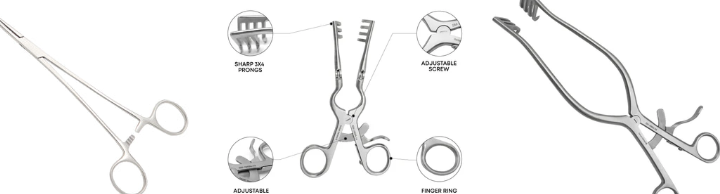
Retractors help provide access and visibility by holding tissue or other structures away from the operative field. They may be manually operated or designed to remain in position during a procedure.
Retractors come in different shapes and sizes, so selection depends on the procedure, anatomical area, and required exposure.
Suturing Instruments
Suturing instruments are used during wound closure and other procedures involving sutures. Needle holders are a common example.
A suitable needle holder should provide a controlled grip while allowing the user to manipulate the needle accurately. Different sizes and jaw designs are available for different applications.
Why Instrument Quality Matters
The quality and condition of medical instruments can affect workflow and handling during procedures. Instruments should be manufactured to appropriate standards and inspected regularly for signs of wear, corrosion, damage, or malfunction.
Poorly maintained equipment may be difficult to operate and can interfere with the consistency of a procedure. For this reason, healthcare facilities typically establish processes for inspection, cleaning, sterilization, storage, and maintenance.
Quality should also be considered when purchasing instruments for medical education. Students practicing basic surgical techniques benefit from tools that allow them to become familiar with realistic instrument handling.
Choosing the Right Instruments
Selecting medical instruments should begin with the intended application. Instead of choosing equipment based only on appearance or price, buyers should consider several practical factors.
Intended Procedure
The first consideration is the procedure or training activity for which the instrument will be used. A tool designed for grasping may not be appropriate for cutting or suturing.
Size and Design
Instrument dimensions can affect handling and accessibility. Smaller instruments may be useful for precise work, while larger designs may be appropriate for procedures requiring greater reach or grip.
Material
Medical-grade stainless steel is widely used because of its durability and suitability for repeated cleaning and sterilization when the instrument is designed for that purpose.
Ergonomics
Handle shape, locking mechanisms, finger rings, and overall weight can influence comfort and control. Instruments should allow the user to maintain a stable and controlled grip.
Maintenance Requirements
Before purchasing, facilities should understand how instruments should be cleaned, sterilized, stored, and maintained. Following the manufacturer's instructions is important for preserving instrument condition.
Surgical Instruments in Medical Education
Medical students and trainees often need practical experience with basic surgical instruments before working in clinical environments. Training kits can introduce students to commonly used tools such as forceps, scissors, needle holders, and clamps.
Hands-on practice can help students understand how different instruments are held and manipulated. It can also reinforce the relationship between instrument selection and procedural technique.
Educational institutions should ensure that training equipment is appropriate for its intended educational use and that reusable instruments are processed according to applicable safety and sterilization procedures.
Proper Care and Maintenance
Instrument care is an essential part of maintaining medical equipment. Reusable instruments should be cleaned and processed according to the manufacturer's instructions and the healthcare facility's established protocols.
After use, instruments should be inspected for visible contamination, damage, corrosion, or mechanical problems. Hinged instruments may require particular attention because debris can accumulate around joints and locking mechanisms.
Proper storage is also important. Instruments should be kept in suitable conditions that protect them from unnecessary moisture, contamination, and physical damage.
Final Thoughts
Surgical instruments are fundamental components of modern medical practice. Their specialized designs allow healthcare professionals to perform different tasks with controlled handling and precision.
Whether instruments are being purchased for a hospital, clinic, laboratory, or educational environment, buyers should consider the intended application, construction, ergonomics, maintenance requirements, and manufacturer guidance.
A clear understanding of instrument categories also helps medical students and healthcare professionals become more familiar with the tools used in different procedures. With appropriate selection, handling, maintenance, and processing, medical instruments can support an organized and effective clinical environment.