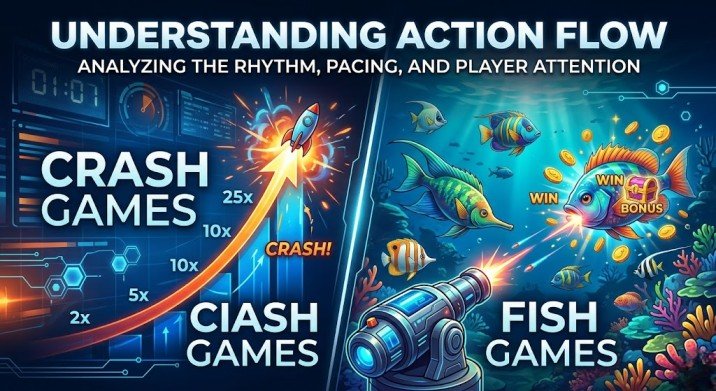
Action flow is one of the clearest ways to compare modern real-time gaming formats. In crash games systems, action moves through a rising multiplier and a single decision point that determines whether a round ends successfully or not. In online fish games, action is continuous, visual, and target-driven, with players making repeated aiming decisions inside a moving environment.
Both formats rely on momentum, timing, and rapid response, but they organize those elements differently. That difference shapes how players read the screen, how they make decisions, and how they stay engaged during a session.
What Action Flow Means in These Formats?
Action flow refers to how gameplay progresses from one moment to the next. It covers pacing, decision timing, visual rhythm, and the way outcomes are delivered to players.
In crash games, the flow is compressed into a short cycle. A round begins, the multiplier climbs, and the player decides when to exit before the crash happens. In fish games, the flow is less segmented. Players remain active throughout the session, selecting targets, adjusting aim, and responding to movement in real time.
This difference is important because it changes the type of attention each format demands. Crash formats require timing judgment. Fish formats require sustained coordination.
Action Flow in Crash Games
The core flow in crash systems is built around anticipation. A round starts with a growing multiplier, and the challenge is to decide when to leave before the round collapses.
In crash games, each round has a very clear structure. There is a beginning, a rising phase, and an abrupt ending. That structure creates tension because the player is always balancing the possibility of a larger return against the risk of waiting too long.
The flow is therefore event-based. Each round is isolated, and the player resets mentally after every decision. That creates a sharp rhythm where focus rises quickly, then drops once the round ends.
Action Flow in Fish Games
Fish-style formats work differently because the action never really stops. In fish games online, targets move across the screen continuously, and players must decide when and where to fire.
This creates a fluid loop rather than a round-based cycle. The player is always adjusting, always observing, and always reacting to changes in movement patterns. The action flow is shaped by motion rather than by a single decisive moment.
Because of that, fish games tend to feel more active over time. The player stays inside the gameplay loop for longer, with fewer hard resets and more continuous engagement.
How Timing Changes Between the Two?
Timing is the point where the two formats separate most clearly. In crash games, timing is about exit control. The player must choose the right moment to stop before the multiplier collapses.
In fish games, timing is about target interaction. The player must decide when a target is worth engaging, how long to track it, and whether to shift attention elsewhere.
One format asks, “When should I leave?” The other asks, “What should I focus on now?” That difference changes the entire feel of the session.
Why Flow Affects Player Attention?
Action flow directly influences how players pay attention. In crash systems, attention is concentrated into short bursts. Players watch the multiplier rise and make a decision within a narrow window.
In this can create a high-tension environment because the player has limited time to react. The mental load is brief but intense.
In fish games online, attention is stretched across longer periods. Players need to track movement, assess target value, and respond continuously. This creates a different kind of focus, one that rewards consistency more than a single quick decision.
Session Rhythm and Player Behavior
Session rhythm also differs a lot between the two. Crash formats often produce short, repeated bursts of attention followed by a reset. Fish formats tend to create longer stretches of continuous interaction.
In crash games, players may build habits around quick decisions, early exits, or waiting for certain multiplier behavior. In fish games online, players are more likely to settle into rhythm-based play, where timing, movement, and target selection develop over time.
These habits shape how players experience the session. One format feels like repeated decisions. The other feels like an ongoing movement.
Why Action Flow Matters for Game Choice?
Understanding action flow helps players choose the format that matches their preference. Some players prefer the sharp, concentrated decision pattern of crash systems. Others prefer the continuous, reactive nature of fish games.
In crash games, the appeal is in the short cycle and the tension that comes from timing the exit correctly. In fish games, the appeal is in sustained interaction and visual movement.
Neither structure is better in general. They simply serve different play styles. The key is understanding how the flow of action changes the experience before choosing a format.
Summary
Action flow is the bridge between game design and player experience. In crash games, it creates a fast, round-based rhythm built around timing and decision pressure. In fish games online, it creates a continuous loop built around movement, targeting, and ongoing interaction.
That difference shapes everything from attention span to session rhythm. When players understand how action unfolds inside each format, they can better choose the type of gameplay that fits their style and expectations.
FAQs
What is action flow in crash and fish games?
Action flow refers to how gameplay progresses over time, including pacing, timing, decision-making, and how players interact with the game environment during a session.
Why do crash games feel more intense?
In crash games formats, decisions happen within short timing windows as multipliers rise quickly before stopping unexpectedly, which creates concentrated pressure.
How is action flow different in fish games?
In fish games online, gameplay is continuous rather than round-based. Players constantly track targets, adjust aim, and react to movement without frequent resets between actions.
Tags : crash games fish games online