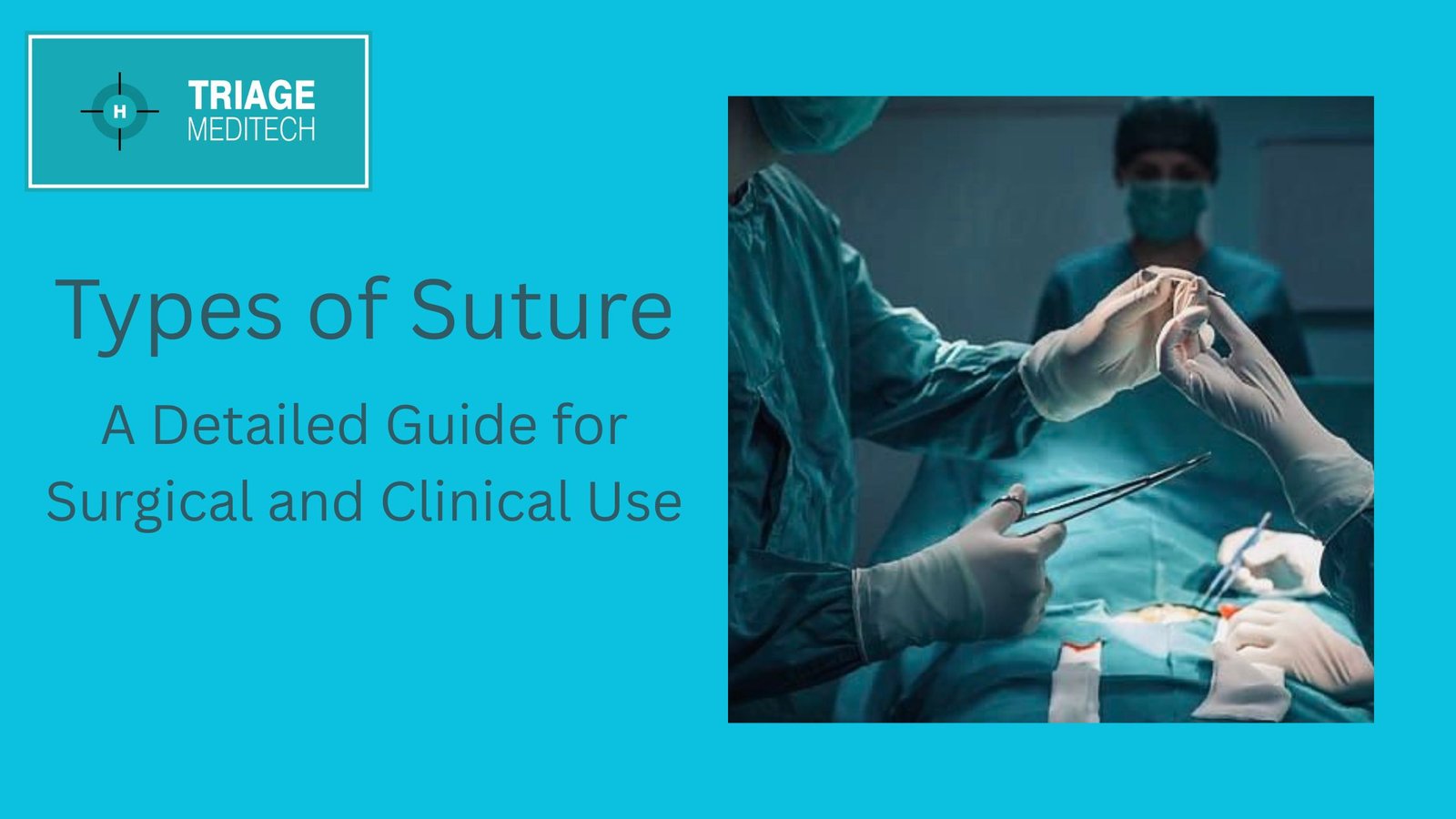
Sutures play a vital role in modern surgery and wound management. From closing minor skin cuts to securing deep tissues after major surgical procedures, the choice of suture material can significantly impact healing, infection risk, and cosmetic outcomes. Understanding the types of suture is essential for surgeons, nurses, medical students, and healthcare professionals involved in patient care.
This detailed guide explores the classification, materials, and clinical uses of sutures to help you make informed decisions in medical practice.
What Is a Suture?
A suture is a sterile medical thread used to hold body tissues together after injury or surgery. Sutures help promote proper wound healing by maintaining tissue alignment and reducing the risk of bleeding or infection. They may be absorbable or non-absorbable, natural or synthetic, and vary in thickness and strength depending on the surgical requirement.
Classification of Types of Suture
Sutures are broadly classified based on absorbability, origin, and structure. Each classification serves specific clinical purposes.
Absorbable vs Non-Absorbable Sutures
Absorbable Sutures
Absorbable sutures are designed to break down naturally in the body through enzymatic or hydrolytic processes. They eliminate the need for suture removal and are commonly used for internal tissues.
Common absorbable sutures include:
Catgut (Plain and Chromic): Natural sutures derived from collagen; chromic catgut lasts longer due to chromium salt treatment.
Polyglycolic Acid (PGA): Synthetic, braided suture with predictable absorption.
Polyglactin 910 (Vicryl): Widely used synthetic absorbable suture for soft tissue approximation.
Polydioxanone (PDS): Monofilament suture with prolonged tensile strength, ideal for slow-healing tissues.
Uses: Internal organs, muscle layers, subcutaneous tissues, and pediatric surgery.
Non-Absorbable Sutures
Non-absorbable sutures are not broken down by the body and may need removal once healing is complete. Some remain permanently for long-term tissue support.
Common non-absorbable sutures include:
Silk: Natural, braided suture with excellent handling but higher tissue reaction.
Nylon: Synthetic monofilament with high tensile strength and minimal tissue reaction.
Polypropylene (Prolene): Smooth monofilament ideal for vascular and plastic surgery.
Polyester: Braided synthetic suture used in cardiovascular and orthopedic procedures.
Stainless Steel: Extremely strong suture used in bone fixation and sternum closure.
Uses: Skin closure, cardiovascular surgery, orthopedic procedures, and tendon repair.
Natural vs Synthetic Sutures
Natural Sutures
Natural sutures are derived from biological sources and tend to cause more tissue reaction.
Examples: Catgut, silk
Advantages:
Good handling properties
Cost-effective
Disadvantages:
Increased inflammation
Less predictable absorption
Synthetic Sutures
Synthetic sutures are man-made and designed for consistent performance and minimal tissue response.
Examples: Vicryl, PDS, Nylon, Prolene
Advantages:
Predictable strength and absorption
Lower risk of infection
Minimal tissue reaction
Monofilament vs Multifilament Sutures
Monofilament Sutures
Monofilament sutures consist of a single smooth strand.
Advantages:
Lower infection risk
Less tissue drag
Disadvantages:
Reduced knot security
Stiffer handling
Examples: Nylon, Prolene, PDS
Multifilament (Braided) Sutures
Multifilament sutures are made of multiple twisted fibers.
Advantages:
Better knot security
Easier handling
Disadvantages:
Higher risk of bacterial colonization
Examples: Silk, Vicryl, Polyester
Suture Sizes and Selection
Suture sizes range from 11-0 (very fine) to 5 (very thick). Smaller numbers indicate thicker sutures. The choice depends on:
Tissue type
Tension at wound site
Healing time required
Cosmetic considerations
For example, facial wounds require finer sutures, while abdominal fascia needs stronger, thicker sutures.
Clinical Applications of Different Types of Suture
Skin closure: Nylon, polypropylene
Internal soft tissue: Vicryl, PGA
Vascular surgery: Prolene
Orthopedic surgery: Stainless steel, polyester
Pediatric surgery: Absorbable sutures like Vicryl or PDS
Conclusion
Understanding the types of suture is fundamental to achieving optimal surgical outcomes. Each suture material offers unique properties suited to specific tissues and procedures. Selecting the appropriate suture reduces complications, improves healing, and enhances patient satisfaction. Whether absorbable or non-absorbable, natural or synthetic, the right suture choice plays a crucial role in modern surgical practice.
By mastering suture selection, healthcare professionals can ensure safer surgeries and better wound management across all medical specialties.