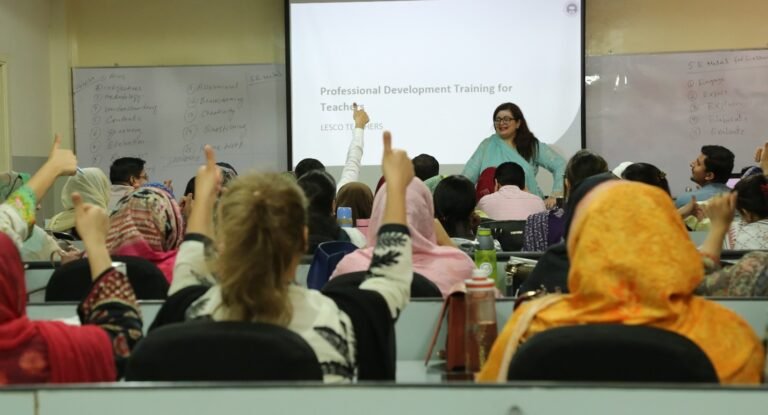
In today’s evolving academic landscape, educational leadership and management workshops are redefining how educators, administrators, and academic professionals approach institutional excellence. These specialized training programs are designed to enhance the capabilities of school leaders, coordinators, and teachers who aspire to lead with vision, strategy, and empathy. In Pakistan, where the education sector continues to grow and adapt to modern challenges, the demand for effective leadership in education has never been more pressing.
Educational leadership is not just about administrative efficiency—it’s about inspiring change, fostering innovation, and cultivating environments where learning thrives. These workshops provide educators with the knowledge, tools, and confidence to transform schools into hubs of creativity and progress.
Shaping the Future: The Role of Educational Leadership and Management Workshops in Modern Learning
The education sector in Pakistan is experiencing a shift from traditional management styles to more progressive, learner-centered approaches. Educational leadership and management workshops are bridging this gap by equipping participants with modern skills in communication, organizational development, decision-making, and performance evaluation.
These programs encourage participants to think beyond conventional administrative tasks. Instead, they focus on cultivating visionary leaders who can navigate the complexities of curriculum design, teacher development, student engagement, and community partnerships. The result? Schools that operate not just efficiently but effectively—where leadership is about creating opportunities for growth rather than merely enforcing structure.
Building Capacity and Confidence through Leadership Training
Strong leadership in education stems from understanding both people and processes. Educational leadership and management workshops provide structured opportunities for participants to explore real-world challenges faced by school leaders. Through interactive sessions, role-playing exercises, and reflective discussions, participants learn how to balance administrative responsibilities with the human side of education.
These workshops also highlight the importance of emotional intelligence, a crucial element in leading diverse teams. By learning to manage conflict, foster collaboration, and motivate staff, educators become capable of driving meaningful change within their institutions. This development of soft skills ensures that leadership goes beyond the classroom—it influences school culture, community involvement, and long-term academic success.
Enhancing Strategic Thinking and Organizational Growth
The education system thrives when its leaders think strategically. The best educational leadership and management workshops focus on developing this very ability. Participants are guided through modules on institutional planning, resource allocation, and sustainable growth.
Strategic leadership involves understanding data, identifying trends, and making informed decisions that align with institutional goals. These workshops emphasize how to design policies that support teachers and students alike, ensuring academic outcomes that reflect both excellence and equity.
Furthermore, leaders are trained to set measurable objectives, track progress, and adapt to evolving educational landscapes. Whether it’s implementing new technology, refining teaching methodologies, or building stronger community relationships, strategic management becomes the cornerstone of effective leadership.
Nurturing the Next Generation of Educational Leaders
In Pakistan’s dynamic educational environment, nurturing emerging leaders is vital. Educational leadership and management workshops serve as an incubator for the next generation of visionary educators. By offering hands-on learning and expert mentorship, these workshops help participants develop a deep understanding of leadership styles, motivation theories, and performance improvement strategies.
The goal is not just to create administrators but to cultivate mentors—leaders who can guide their teams, inspire innovation, and promote a culture of continuous learning. These training initiatives contribute to strengthening the educational fabric of Pakistan, empowering institutions to meet the expectations of modern learners and global standards.
This is where Ali Institute of Education stands out, providing high-quality professional development opportunities that combine practical experience with academic insight. With a commitment to fostering excellence in education, the institute continues to empower educators across Pakistan, helping them embrace leadership roles with confidence and purpose.
Creating Sustainable Impact through Leadership Development
The long-term success of any educational institution depends on its leadership. Through educational leadership and management workshops, participants learn how to implement sustainable systems and processes that ensure continued institutional growth.
Workshops encourage reflective practice, continuous improvement, and accountability—all key attributes of effective leadership. By cultivating a mindset that values adaptability, integrity, and collaboration, these programs ensure that leaders can respond to both challenges and opportunities with clarity and foresight.
Moreover, participants often report a renewed sense of motivation and direction. They return to their institutions equipped not only with new skills but also with a refreshed perspective on what it means to lead with purpose and compassion.
Conclusion: Educational Leadership and Management Workshops – Building the Future of Learning in Pakistan
In conclusion, educational leadership and management workshops play a vital role in shaping the quality of education across Pakistan. They empower teachers and administrators to become agents of change—capable of driving innovation, fostering inclusive learning environments, and maintaining organizational excellence.
Through these workshops, educational leaders gain the confidence and expertise to make informed decisions, inspire their teams, and build institutions that truly make a difference. By investing in leadership development today, Pakistan is investing in a brighter, more sustainable educational future for tomorrow.
Frequently Asked Questions (FAQs)
1. What are educational leadership and management workshops?
These workshops are professional training programs designed to develop leadership, management, and strategic planning skills among educators, administrators, and school heads. They focus on improving both organizational performance and learning outcomes.
2. Who should attend these workshops?
They are ideal for teachers, principals, coordinators, and education managers who aim to enhance their leadership skills, manage teams effectively, and implement innovative strategies within their institutions.
3. How do these workshops benefit schools and educational institutions?
By developing competent leaders, schools experience better staff performance, improved communication, higher student engagement, and more efficient resource management—leading to overall institutional growth.
4. What topics are typically covered in leadership and management workshops?
Common topics include strategic planning, educational policy, communication skills, emotional intelligence, team building, curriculum management, and school improvement strategies.
5. Are these workshops suitable for the Pakistani education system?
Absolutely. The content and approach of these workshops are tailored to meet the specific challenges and opportunities within Pakistan’s education sector, ensuring relevance and practical impact for local educators and institutions.