The best wedding shoes balance secure fit, stable support, outfit harmony and venue practicality. For Indian weddings, bridal sneakers, block heels, wedges, flats, juttis, kitten heels and platform sandals cover most needs across the pheras, sangeet and reception. Choose a pair that holds your heel, gives your toes enough room and works with the final length of your lehenga, saree or gown. Style matters, but the right pair should still feel good after the photographs. This guide compares seven useful options and explains who each one suits.
Which Wedding Shoe Should You Choose? Quick Answer
Choose bridal sneakers or flats for long hours and dancing. Pick block heels or wedges when you want height with a broader base. Kitten heels and platform sandals suit more formal looks, while juttis bring a traditional finish to Indian wedding outfits.
What Makes Wedding Footwear Comfortable?
Comfort starts with fit, not heel type. Your shoe should match the length, width and depth of your foot, keep the heel secure and leave space for your toes to move.
The Oxford Health NHS footwear guide recommends about 1 cm between the longest toe and the end of the shoe. It also advises a soft upper without hard seams and a fastening that holds the foot in place. That advice matters during an Indian wedding, where one event can involve standing, stairs, dancing and several hours in a heavy outfit.
For general foot health, the East London NHS footwear leaflet recommends a round, deep toe box and a broad, stable heel below 4 cm. Wedding heels may sit higher, but the principle stays useful. The higher or narrower the heel, the more carefully you should test balance, fit and walking comfort.
What Are the Top 7 Wedding Shoes for an Indian Bride?
No single style wins every wedding. Your best choice depends on the event, the venue, your outfit length and the heel height you already wear with confidence.
1. Bridal Sneakers for Long Celebrations
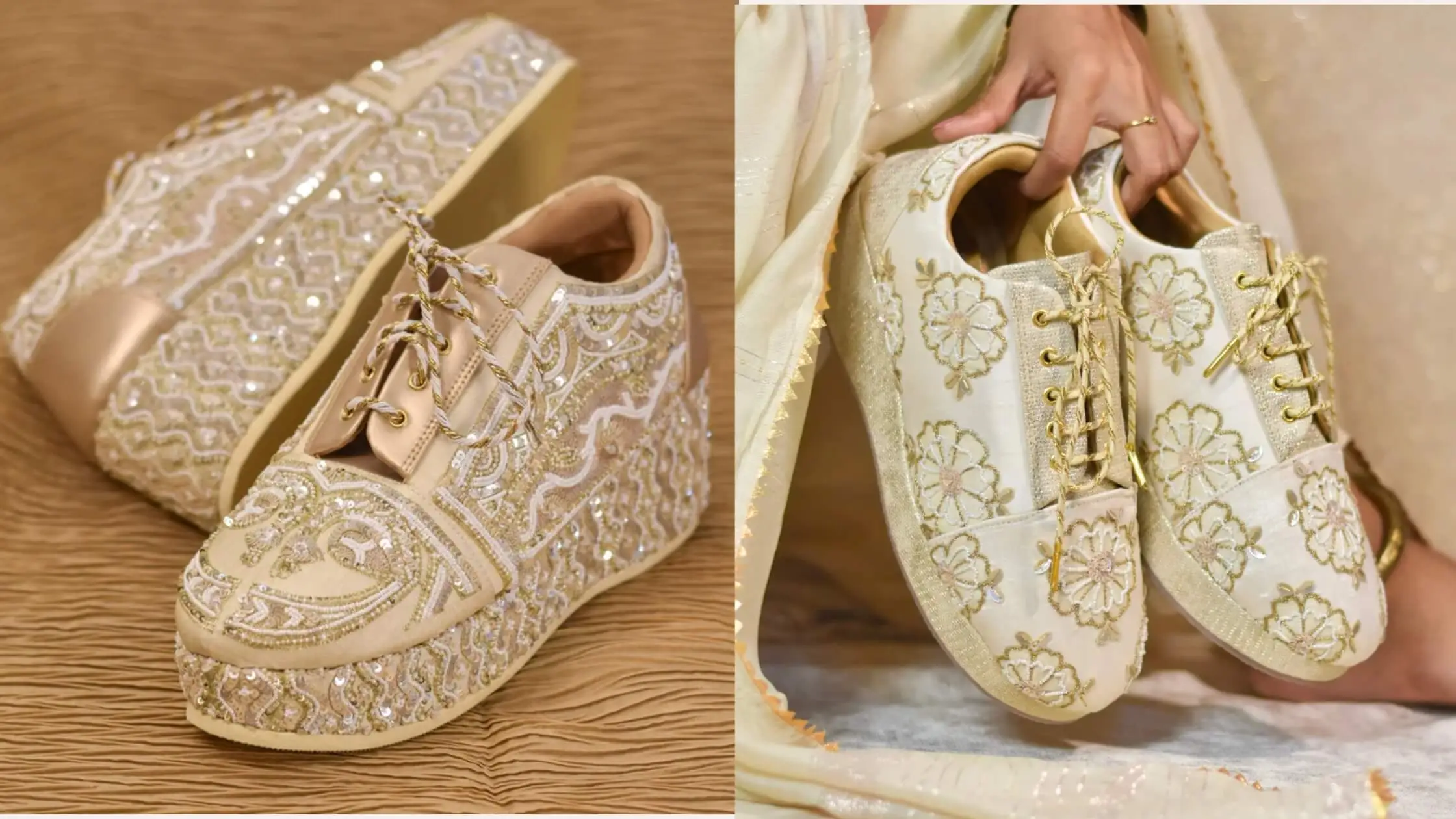
Bridal sneakers suit sangeet nights, reception dancing and brides who expect a long day. A closed upper and laces can hold the foot securely, while a cushioned sole helps during extended standing and walking.
Choose embroidery that picks up one detail from your outfit instead of copying every motif. A tonal ivory, gold or pastel pair often feels easier to rewear. Explore a bridal sneaker collection to compare flat sneakers with sneaker wedges before deciding.
2. Block Heels for Ceremony-Worthy Stability
Block heels give formal bridal footwear a broader contact point than stilettos. They work well with sarees, lehengas and gowns when you want visible height without choosing the narrowest heel.
Look for a snug heel counter or an adjustable ankle strap. Test the pair on stairs and on the same type of floor as your venue. A polished marble hall, lawn and carpeted stage can make the same heel feel completely different.
3. Ethnic Wedges for Height and a Wider Base
Ethnic wedges pair especially well with heavier lehengas because the continuous sole creates a broad base under the foot. They also make a practical choice for lawns or venues with small floor gaps that can catch a thin heel.
Do not judge a wedge by height alone. Check its weight, front cushioning, sole grip and the actual slope from heel to toe. Compare ethnic wedges for women while wearing an outfit with a similar hem length.
4. Bridal Flats for Mehendi, Haldi and Backup
Bridal flats work for floor seating, relaxed daytime functions and brides who rarely wear heels. They also make a sensible second pair for the reception, especially once the formal photographs finish.
A flat sole does not guarantee comfort. Check cushioning, flexibility and heel security, and avoid a narrow toe shape that presses the toes together. Browse bridal flats for Indian weddings in shades that can return to your festive wardrobe.
5. Embellished Juttis for a Traditional Finish
Juttis bring an unmistakably Indian finish to lehengas, shararas and sarees. They suit mehendi, haldi and wedding ceremonies where the bride wants a low silhouette with embroidery, zari or beadwork.
Focus on the inside as much as the upper. Feel for rough seams, stiff edges and pressure across the widest part of your foot. A beautiful jutti that pinches after ten steps belongs in the display, not in your wedding plan.
6. Kitten Heels for a Refined, Modest Lift
Kitten heels offer a small lift and a clean shape for sarees, gowns and reception looks. They suit brides who want a heel but do not need dramatic height under the outfit.
Choose a stable heel placement, enough toe room and a back or strap that prevents slipping. Pointed styles can look sharp, but the toe box should still match your foot rather than force it into a new shape.
7. Platform Sandals for Height With Less Foot Angle
Platform sandals raise both the heel and forefoot. Compared with a non-platform shoe of the same total heel height, this can reduce the height difference between the back and front of the foot.
The platform must still feel stable. Check the sole grip, front flexibility and strap placement, then walk, turn and climb a few steps. You can compare platforms, sandals and heels in a complete bridal footwear collection before matching the pair to your main event.
How Do You Match Wedding Shoes With Your Outfit and Venue?
Start with function, then colour. A lawn favours flats, sneakers, wedges or block heels. A smooth indoor venue gives you more freedom, but you should still test the route from the bridal room to the stage.
Take your chosen shoes to the final outfit fitting. The heel height changes the fall of a lehenga or gown, and last-minute shoe swaps can leave the hem dragging or sitting too high.
For colour, match one element, such as zari, jewellery metal, embroidery thread or blouse detail. Your shoes do not need to copy the lehenga exactly. Gold, champagne, ivory and muted metallics often work across several functions, while a bold pair can anchor a simpler outfit.
Wear the pair indoors before the wedding and test both feet. Use the same hosiery, toe rings or insoles planned for the event. If the shoe pinches, slips or changes your walk, fix the fit or choose another pair. Hope is not a cushioning material.
Final Verdict
The best wedding shoes are the pair that fit your feet, your outfit and your actual schedule. Sneakers and flats lead on ease, wedges and block heels balance height with a broader base, and kitten heels or platforms create a more formal finish.
Choose early, test the pair with your outfit and keep venue surfaces in mind. To compare styles without treating comfort as an afterthought, explore the wedding footwear options at Around Always and use this guide as your fitting checklist.
FAQs
Which wedding shoes are most comfortable for an Indian bride?
Bridal sneakers, cushioned flats and well-fitted wedges usually suit long events. The most comfortable option still depends on your foot shape, secure fit and usual heel tolerance.
What heel height should a bride choose?
Choose the lowest height that gives you the look and outfit length you want. If you rarely wear heels, your wedding day is a poor time to test a dramatic new height.
Should wedding shoes match the lehenga exactly?
No. Match a key detail such as gold zari, silver work, pearls or an embroidery colour. A coordinated neutral can look intentional and offer better rewear value.
Should you buy wedding shoes one size bigger?
Do not size up automatically. Measure both feet, follow the maker's size guide and choose enough length, width and depth without heel slippage.
What wedding shoes work best for grooms?
Mojaris, embroidered loafers and clean formal shoes can suit sherwanis, bandhgalas and Indo-western outfits. Compare wedding shoes for men by toe room, lining, sole grip and the amount of walking planned.