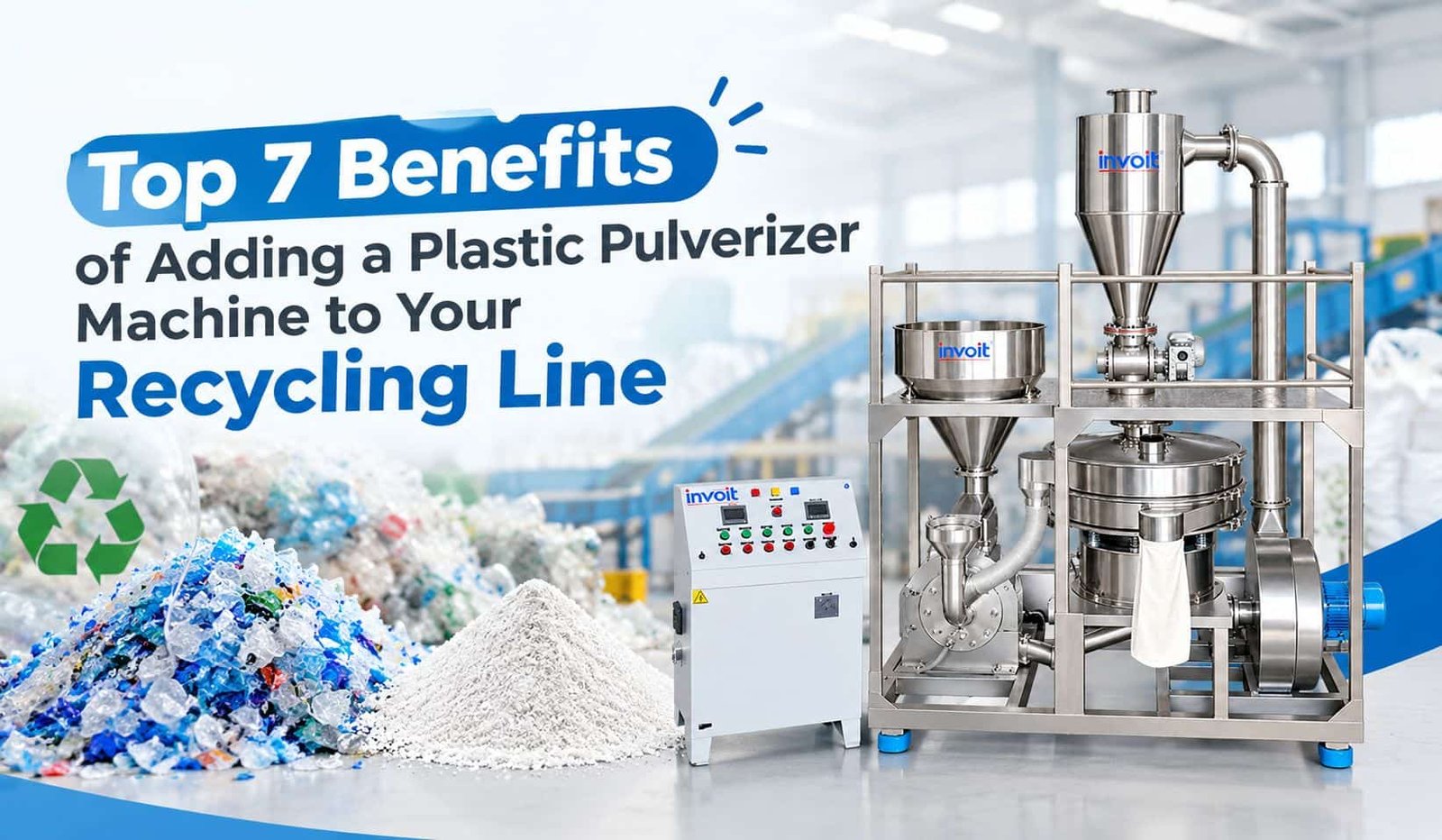
Top 7 Benefits of Adding a Plastic Pulverizer Machine to Your Recycling Line
By Invoit Plast Machinery PVT LTD 10-10-2026 36
The modern plastics recycling and manufacturing landscape is evolving rapidly. As industries focus more on sustainability, waste reduction, and cost control, recycling facilities must continuously look for smart ways to optimize their processing lines. While traditional granulators and shredders play a crucial role in breaking down large plastic scrap, they are often only the first step in the recycling journey.
To truly unlock the value of recovered plastics, especially rigid materials like PVC, polyethylene, and polypropylene, converting coarse scrap into fine, consistent powder is essential. This is where integrating a Plastic Pulverizer Machine into your existing setup makes a transformative difference.
Whether you process post-industrial waste or post-consumer plastics, turning solid waste into high-grade powder opens new revenue streams, improves manufacturing efficiency, and reduces raw material reliance. Below, we explore the seven key operational and business benefits of adding a pulverizer system to your plant.
Unlocks High-Value Powder Applications
Coarse plastic regrind has limited reuse applications. While granulators reduce large plastic parts into smaller flakes, these flakes cannot be used directly in many specialized manufacturing processes.
Processes like PVC pipe manufacturing, profile extrusion, rotational molding, and masterbatch compounding require fine, uniform powder rather than coarse granules. Granules melt unevenly in high-speed extrusion barrels, which can lead to structural flaws, air bubbles, and inconsistent wall thickness in finished products.
By adding a pulverizer to your line, you bridge the gap between low-value scrap and high-demand manufacturing materials. Fine plastic powder mixes smoothly with virgin polymers, heat stabilizers, and color pigments, allowing recyclers to sell their output at a premium or reuse it internally without compromising finished product quality.
Maximizes Material Reuse and Eliminates Factory Scrap
In any plastic manufacturing facility—whether producing pipes, fittings, sheets, or molded goods—scrap is an inevitable byproduct. Start-up trimmings, off-spec products, reject runs, and edge cuts represent a direct loss of capital if they are discarded or sold off at bottom-tier scrap prices.
A dedicated pulverizer enables factory floors to close the loop on their production waste. Instead of letting reject items pile up or relying on third-party processors, plants can process scrap on-site.
When scrap plastic is reduced to a uniform powder, it can be re-introduced directly back into the primary feed line. Because pulverization maintains clean particle size distribution, the recycled powder blends seamlessly with virgin resin. This drastically cuts reliance on costly virgin raw materials and helps plant managers achieve near-zero waste goals.
Boosts Overall Energy and Processing Efficiency Downstream
A common misconception in recycling plant design is that adding another stage of machinery increases total energy overhead unnecessarily. In reality, fine-powder preparation significantly reduces the thermal and mechanical strain on downstream equipment, such as extruders and compounding lines.
When an extruder processes large or uneven flakes, it requires more torque, higher heat inputs, and longer residence times to fully melt the polymer. Unmelted cores in large flakes can stall screws or cause pressure spikes inside the barrel.
In contrast, finely pulverized powder features a high surface-area-to-volume ratio. This allows for rapid, uniform heat absorption during extrusion. The machinery consumes energy far more predictably, melt pressure stabilizes, and processing throughput increases. By doing the heavy mechanical breakdown work upstream in a specialized pulverizer, you protect high-cost extrusion machinery from unnecessary wear and strain.
Enhances Mixing Uniformity with Additives and Pigments
For compounders and manufacturers who rely heavily on additives—such as UV stabilizers, impact modifiers, calcium carbonate fillers, and color concentrates—powder is far superior to flakes.
When dry-blending additives with coarse regrind flakes, gravity and particle size differences often cause segregation. Heavier additive particles settle at the bottom of mixers, leading to color streaking, variable strength, and weak spots in the final plastic products.
Pulverized plastic powder shares a similar particle scale with most dry additives and masterbatch powders. When blended, the particles lock together evenly. This ensures:
Consistent color dispersion without dark or light streaks.
Uniform distribution of stabilizers, leading to reliable structural integrity.
Higher absorption capability for liquid additives or plasticizers.
For companies striving to maintain strict quality standards while using recycled content, this level of blending consistency is essential.
Provides Essential Flexibility for PVC Scrap Processing
Polyvinyl Chloride (PVC) is one of the most widely used plastics globally, found extensively in pipes, window profiles, cable insulation, and rigid sheets. However, recycling rigid PVC presents unique physical challenges due to its heat sensitivity and mechanical characteristics.
Unlike many soft plastics that can be easily re-melted from flakes, rigid PVC requires precise thermal control during processing. Feeding rigid PVC flakes into an extruder can lead to localized overheating, polymer degradation, and machine clogging.
This is why choosing the right partner, such as a established Plastic Pulverizer Machine Manufacturer, is critical for facilities handling PVC scrap. Specialized PVC pulverizer systems utilize controlled airflow, temperature-monitored grinding chambers, and tailored disc configurations to reduce tough PVC scrap into fine powder without burning or degrading the polymer.
For processing facilities operating as a PVC Pulverizer Machine India hub or supplying global pipe and profile markets, having reliable pulverizing capability is a core requirement for handling rigid PVC scrap profitably.
Lowers Storage, Handling, and Logistics Costs
Bulk density plays a major role in the economics of recycling and logistics. Coarse plastic scrap, shredded parts, and uncompressed flakes have low bulk density. They take up vast amounts of floor space in storage bins, gaylord boxes, and warehouses, while creating empty air pockets during transportation.
Pulverized powder has a significantly higher bulk density than un-ground flakes. Converting bulky scrap into dense powder delivers immediate operational savings:
Storage Space: Powder occupies a fraction of the physical footprint needed for un-ground scrap, freeing up valuable floor space in production areas.
Freight Efficiency: Trucks and shipping containers can be loaded to their weight capacity rather than filling up on volume (air space), lowering transport costs per ton.
Automated Handling: Fine powder flows reliably through pneumatic conveying systems, silos, and automatic dosing equipment, reducing manual material handling and labor costs.
Key Considerations for Choosing the Right Pulverizer Solution
Integrating a pulverizer into your recycling workflow is a strategic long-term operational decision. To maximize your return on investment, keep the following practical guidelines in mind:
1. Match Machine Design to Your Specific Polymer
Different plastics behave differently under mechanical force. Ductile polymers like PE require different grinding disc profiles and cooling dynamics compared to rigid polymers like PVC or PC. Ensure your equipment partner evaluates your specific feed material before selecting a disc or blade layout.
2. Prioritize Thermal Management
Friction during pulverizing generates heat. Excess heat can melt the plastic inside the grinding chamber, causing buildup and downtime. Look for systems equipped with robust air-cooling mechanisms or water-jacketed cooling chambers to maintain steady operational temperatures.
3. Focus on Easy Maintenance and Disc Longevity
Grinding discs are wear components. Choosing equipment designed for easy access, quick disc inspection, and straightforward re-sharpening or replacement reduces planned maintenance downtime and keeps operating costs predictable.
4. Partner with an Experienced Equipment Builder
Working with an experienced Plastic Pulverizer Machine Manufacturer ensures that your machine is engineered for long-term reliability, backed by available spare parts, technical guidance, and responsive after-sales support. Reliable guidance during plant layout design helps avoid bottlenecking between your granulators, pulverizers, and packaging stations.
Conclusion
Upgrading your recycling line with a Plastic Pulverizer Machine is more than just an equipment addition—it is an operational strategy that converts hard-to-process scrap into high-value, versatile raw material.
By delivering fine particle sizes, protecting downstream equipment, reducing transportation costs, and enabling seamless reuse of factory scrap, a pulverizer boosts both your plant's profitability and environmental efficiency. For modern plastic recyclers and processors looking to stay ahead in a competitive market, pulverization provides the link between raw scrap and premium quality end products.