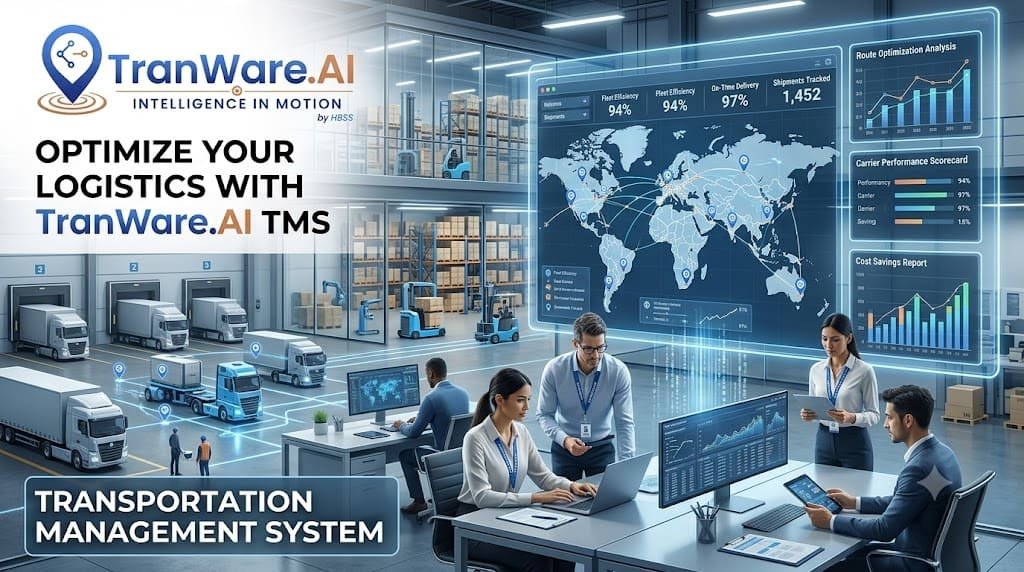
Transportation operations have become more complex as organizations manage growing fleets, multiple service requirements, customer expectations, and large amounts of operational data. TMS software helps businesses bring transportation activities into one centralized system, making it easier to coordinate planning, dispatching, tracking, reporting, and fleet operations.
For organizations managing complex transportation networks, enterprise transportation management software can provide the tools needed to connect different operational processes. Instead of relying on spreadsheets and disconnected applications, transportation teams can use a centralized platform to manage information and improve visibility across daily operations.
What Is a Transportation Management System?
A transportation management system software platform is designed to help organizations plan, execute, monitor, and analyze transportation activities. Depending on the business, this can include scheduling, dispatching, route planning, vehicle tracking, billing, fleet maintenance, reporting, and customer management.
An effective transportation management system can help transportation managers make informed decisions while giving dispatch teams access to important operational information.
Benefits of Enterprise TMS Software
Enterprise TMS software is particularly useful for organizations managing large or diverse transportation operations. It can provide centralized access to trip, vehicle, driver, customer, and operational data.
Key benefits include:
- Centralized transportation management
- Improved scheduling and dispatching
- Better fleet visibility
- Route optimization
- Automated operational workflows
- Integrated billing processes
- Real-time transportation reporting
- Data-driven decision-making
By connecting these functions, businesses can reduce repetitive administrative work and create more consistent transportation workflows.
TMS Cloud Software for Flexible Operations
Cloud-based technology has changed how transportation teams access and manage operational systems. TMS cloud software allows authorized users to access transportation information through connected devices without depending on a single local workstation.
Cloud-based systems can also support distributed transportation teams and make it easier to maintain centralized information. This flexibility can be valuable for organizations with multiple locations, growing fleets, or changing operational requirements.
Automated TMS for Transportation Efficiency
An automated TMS can reduce the amount of manual work required for repetitive transportation tasks. Automated processes may support scheduling, notifications, route planning, dispatching, reporting, and other operational activities.
Automation does not replace transportation professionals. Instead, it can help teams spend less time on repetitive administrative tasks and more time handling exceptions, customer needs, and operational decisions.
Transportation Analytics Software
Transportation managers need accurate information to understand how their operations are performing. Transportation analytics software can organize operational data into reports and useful performance information.
Analytics can help organizations review areas such as trip activity, fleet utilization, service performance, operational trends, and transportation costs. With better visibility into transportation data, managers can identify opportunities for process improvement.
ERP Integration and Transportation Management
Many organizations already use enterprise resource planning systems for finance, accounting, procurement, and other business functions. A transportation management system with ERP integration features can help connect transportation data with broader business processes.
Integration can reduce duplicate data entry and create a more connected flow of information between transportation and administrative systems. Before selecting a TMS, organizations should evaluate integration capabilities, scalability, security, reporting, and the specific workflows they need to support.
Choosing the Right TMS Software Provider
There are many TMS software providers, so organizations should evaluate platforms based on their operational requirements rather than selecting software based only on feature lists.
A suitable TMS software provider should offer flexible transportation management capabilities, reliable support, integration options, reporting tools, and solutions that can adapt as transportation operations grow.
TranWare AI provides transportation management technology designed for NEMT, paratransit, public transportation, microtransit, and mixed-use fleets. Its platform includes scheduling and dispatching, route optimization, fleet maintenance, vehicle tracking, billing, incident reporting, driver mobile applications, and other transportation management capabilities.
Final Thoughts
Modern transportation organizations need technology that can connect people, vehicles, trips, and operational data. TMS software can provide a centralized foundation for managing transportation activities while supporting automation, analytics, cloud access, and business integration.
Organizations evaluating transport management software, TMS software, or transportation management system software should focus on scalability, integration, usability, reporting, and the ability to support their specific transportation workflows. A well-selected TMS can help create more organized, connected, and efficient transportation operations.
FAQs
1. What is TMS software?
TMS software helps businesses manage transportation activities such as scheduling, dispatching, routing, tracking, billing, and reporting.
2. What are the benefits of enterprise TMS software?
Enterprise TMS software can improve transportation visibility, automate workflows, optimize routes, and centralize operational data.
3. What is cloud-based TMS software?
Cloud-based TMS software allows authorized users to access transportation management tools and data through internet-connected devices.
4. Can TMS software integrate with ERP systems?
Yes. Some transportation management systems provide ERP integration features to connect transportation data with broader business processes.
5. How do I choose a TMS software provider?
Consider scalability, integration capabilities, automation, analytics, support, security, and whether the platform fits your transportation workflows.